How Much Do Newsletter Ads Pay? Real CPM Rates & Revenue Examples (2026)
Discover real newsletter advertising rates, CPM benchmarks, and revenue calculations. See exactly how much creators earn from newsletter ads across different niches and audience sizes.

Let's talk about money. Specifically, the money sitting in your inbox that you're not collecting. You've built an email list—maybe 500 subscribers, maybe 5,000, maybe 50,000. You send regular newsletters. Your audience opens them. They click. They engage. But you're not making a cent from those opens and clicks.
I've had dozens of conversations with newsletter creators who assumed they needed 100,000+ subscribers before they could make meaningful money from ads. They're wrong. Dead wrong. In 2026, creators with just 1,000 engaged subscribers are earning $200-500 per month from newsletter advertising. Learn how to build that list. Creators with 10,000 subscribers? They're pulling in $2,000-8,000 monthly. And the six-figure newsletter creators? Many of them are earning more from ads than from paid subscriptions.
But here's the problem: Newsletter ad rates are confusing as hell. You'll hear CPM numbers ranging from $5 to $150, and nobody explains why the variance is so massive. Brands throw around terms like "flat rate sponsorships" and "programmatic fill rates" without defining them. And good luck finding transparent data on what newsletters actually earn.
This guide changes that. I'm going to show you real CPM rates across different niches, break down exactly how newsletter ads pay, share actual revenue examples from real newsletters, and give you the tools to calculate your own earning potential. By the end, you'll know exactly what your newsletter is worth and how to monetize it effectively.
Understanding Newsletter CPM: The Basics
Before we dive into specific rates, let's clarify what we're actually talking about. CPM stands for "Cost Per Mille" (mille is Latin for thousand). In newsletter advertising, CPM represents how much an advertiser pays for every 1,000 subscribers who receive an email containing their ad.
Here's a simple example: If your newsletter has 5,000 subscribers and an advertiser pays a $50 CPM, you earn $250 for that ad placement ($50 × 5 = $250). If you run one ad per newsletter and send 4 newsletters per month, that's $1,000 in monthly ad revenue from a 5,000-person list.
Why CPM Varies So Wildly
Not all newsletter subscribers are worth the same to advertisers. A tech professional subscribed to a B2B SaaS newsletter might be worth $100+ in CPM because they have purchasing power and intent. A casual subscriber to a general entertainment newsletter might only be worth $5-10 in CPM.
Think about it from the advertiser's perspective: They're willing to pay more to reach audiences who are more likely to buy expensive products or services. That's why you see such massive variance in rates.
Subscriber Count vs. Open Count: What Actually Matters
Here's where things get interesting. Some advertisers pay based on total subscriber count (everyone on your list), while others pay based on open count (only people who actually open your email). This distinction is crucial.
If your newsletter has 10,000 subscribers but only 3,000 people open each email (30% open rate), here's how the math works:
- Subscriber-based pricing: $50 CPM × 10 = $500 per ad
- Open-based pricing: $75 CPM × 3 = $225 per ad
Subscriber-based pricing is more common for direct sponsorships. Programmatic ads (automated ad networks) typically pay on opens or clicks. We'll explore both models in detail.
2026 Newsletter CPM Rates by Niche
Now for the numbers you actually care about. These rates are based on real data from hundreds of newsletters across different niches in 2026. I've included both direct sponsorship rates (what brands pay directly) and programmatic rates (what automated ad networks pay).
High-Value Niches ($75-150+ CPM)
These niches command premium rates because subscribers have high purchasing power and brands are willing to pay top dollar to reach them:
- B2B SaaS/Technology: $100-150 CPM for direct sponsors, $25-40 CPM programmatic. Newsletter example: A DevOps newsletter with 8,000 subscribers charging $120 CPM earns $960 per sponsored email.
- Finance/Investing: $90-140 CPM direct, $30-50 CPM programmatic. These audiences make financial decisions and have money to invest, making them extremely valuable.
- Executive/Leadership: $85-130 CPM direct, $25-45 CPM programmatic. CEOs, founders, and senior leaders command premium rates due to decision-making authority.
- Crypto/Web3: $80-120 CPM direct, $20-35 CPM programmatic. Still highly valuable despite market volatility, especially for newsletters focused on serious investors rather than speculators.
- Healthcare/Medical: $75-110 CPM direct, $20-30 CPM programmatic. Particularly valuable when targeting healthcare professionals or high-income health-conscious consumers.
Mid-Value Niches ($30-75 CPM)
These niches represent the bulk of newsletter advertising. Solid rates with consistent advertiser demand:
- Marketing/Growth: $50-75 CPM direct, $15-25 CPM programmatic. Marketing professionals are always looking for tools and services, making this audience consistently monetizable.
- E-commerce/DTC: $45-70 CPM direct, $12-22 CPM programmatic. E-commerce brands advertising to e-commerce operators creates a natural fit.
- Career/Professional Development: $40-65 CPM direct, $15-25 CPM programmatic. Courses, coaching, and career tools all target this audience.
- Creator Economy: $40-60 CPM direct, $12-20 CPM programmatic. Tools, platforms, and services for content creators are abundant advertisers.
- Design/Creative: $35-55 CPM direct, $10-18 CPM programmatic. Design tools, templates, and resources drive advertising demand.
- Real Estate/Property: $35-55 CPM direct, $12-20 CPM programmatic. Both investors and homebuyers are valuable audiences.
- Parenting/Family: $30-50 CPM direct, $8-15 CPM programmatic. Baby products, family services, and educational tools create steady demand.
Standard-Value Niches ($15-30 CPM)
These niches still generate meaningful revenue but at lower rates. Volume becomes more important here:
- Food/Cooking: $25-40 CPM direct, $8-15 CPM programmatic. Kitchen products, meal kits, and cooking courses advertise here.
- Fitness/Wellness: $25-40 CPM direct, $8-15 CPM programmatic. Supplements, equipment, and fitness programs are consistent advertisers.
- Personal Finance (General): $20-35 CPM direct, $8-12 CPM programmatic. Less valuable than investment-focused finance newsletters but still monetizable.
- Travel: $20-35 CPM direct, $6-12 CPM programmatic. Travel brands, booking platforms, and gear companies target this audience.
- Productivity/Self-Improvement: $20-30 CPM direct, $6-12 CPM programmatic. Apps, courses, and tools for personal development.
- Fashion/Style: $18-30 CPM direct, $5-10 CPM programmatic. Clothing brands and fashion products drive demand.
- Local/Community: $15-25 CPM direct, $5-10 CPM programmatic. Local businesses and community-focused brands advertise here.
Lower-Value Niches ($5-15 CPM)
These niches can still generate revenue, but you need larger subscriber counts to make meaningful income:
- General News/Current Events: $10-20 CPM direct, $3-8 CPM programmatic. Broad audience means less advertiser specificity.
- Entertainment/Pop Culture: $8-15 CPM direct, $3-6 CPM programmatic. Large audiences but lower purchasing intent.
- Humor/Memes: $5-12 CPM direct, $2-5 CPM programmatic. Hard to monetize despite high engagement.
- General Lifestyle: $8-15 CPM direct, $3-7 CPM programmatic. Too broad to command premium rates.
Direct Sponsorships vs. Programmatic Ads: Revenue Models Explained
You've seen me reference "direct" and "programmatic" rates throughout this guide. Let's break down exactly what these mean and how they affect your earnings.
Direct Sponsorships: Higher Rates, More Work
Direct sponsorships are when a brand pays you directly to feature their ad in your newsletter. You negotiate the rate, create the ad content (often in collaboration with the sponsor), and include it in your newsletter. Direct sponsors typically pay based on your total subscriber count.
The advantages: Higher CPM rates (often 3-5x higher than programmatic), you maintain editorial control, you can negotiate additional benefits like affiliate commissions, and you build direct relationships with brands.
The disadvantages: Significant time investment finding sponsors, negotiating deals, and managing relationships. You need enough subscribers (usually 5,000+) to attract quality sponsors. Revenue can be inconsistent—some months you have sponsors, some months you don't.
Real example: A marketing newsletter with 12,000 subscribers charges $60 CPM for sponsorships. That's $720 per sponsored newsletter. They run 2 sponsored newsletters per month, earning $1,440. But they spend 10-15 hours monthly on sponsor outreach, negotiations, and management.
Programmatic Ads: Lower Rates, Zero Work
Programmatic ads are automated. You integrate an ad network into your newsletter, and ads are automatically inserted into each email you send. The ad network handles everything—finding advertisers, serving relevant ads, tracking performance, and paying you.
The advantages: Zero time spent on ad sales or management, you can monetize from day one (even with 500 subscribers), consistent revenue every single newsletter, and no awkward sponsor negotiations.
The disadvantages: Lower CPM rates (typically 20-40% of direct sponsorship rates), less control over which ads appear (though you can block categories), and revenue depends on "fill rate" (percentage of times an ad successfully serves).
Real example: The same marketing newsletter with 12,000 subscribers using programmatic ads at $18 CPM earns $216 per newsletter. Sending 4 newsletters per month generates $864. Lower than direct sponsorships, but requires zero time investment and is more consistent.
The Hybrid Approach: Best of Both Worlds
Smart creators don't choose between direct and programmatic—they use both. Here's the strategy that maximizes revenue:
- Primary ad slot: Sell direct sponsorships at premium rates when available
- Secondary ad slot: Use programmatic ads as a consistent revenue stream
- Backup strategy: When you don't have a direct sponsor, programmatic ads fill the gap
This approach ensures you're never leaving money on the table. During high-demand months, you earn premium rates from direct sponsors plus programmatic revenue. During slower months, programmatic ads provide baseline income while you line up new sponsors.
Real Newsletter Revenue Examples: What Creators Actually Earn
Let's look at real revenue examples across different newsletter sizes and niches. These are based on actual newsletters, though I've anonymized the details.
Small Newsletter: 1,500 Subscribers
Niche: Productivity and personal development
Publishing frequency: 2x per week (8x per month)
Open rate: 42%
Monetization strategy: Programmatic ads only (too small for direct sponsors)
Revenue calculation:
Programmatic CPM: $12
Revenue per newsletter: $12 × 1.5 (subscriber thousands) = $18
Monthly newsletters: 8
Monthly ad revenue: $144
This might not sound like much, but this creator started monetizing on day one. After 6 months, they'll have earned $864 from an audience that many platforms say is "too small to monetize." Plus, as their list grows, so does their revenue—without any additional work.
Medium Newsletter: 8,000 Subscribers
Niche: E-commerce and DTC brands
Publishing frequency: 3x per week (12x per month)
Open rate: 38%
Monetization strategy: 1 direct sponsor per month + programmatic ads
Revenue calculation:
Direct sponsorship: $55 CPM × 8 = $440 per sponsored newsletter × 1 per month = $440
Programmatic ads (remaining 11 newsletters): $16 CPM × 8 = $128 per newsletter × 11 = $1,408
Monthly ad revenue: $1,848
This creator spends about 5 hours per month managing their one direct sponsor relationship. That sponsor pays enough to make it worthwhile, while programmatic ads provide consistent baseline revenue for all other newsletters. Combined revenue of nearly $2,000/month from a list of 8,000 is solid ROI.
Large Newsletter: 25,000 Subscribers
Niche: SaaS and B2B technology
Publishing frequency: 2x per week (8x per month)
Open rate: 35%
Monetization strategy: 2 direct sponsors per month + programmatic ads
Revenue calculation:
Direct sponsorships: $110 CPM × 25 = $2,750 per sponsored newsletter × 2 per month = $5,500
Programmatic ads (remaining 6 newsletters): $30 CPM × 25 = $750 per newsletter × 6 = $4,500
Monthly ad revenue: $10,000
At this scale, ad revenue becomes serious income. This creator spends about 10-12 hours monthly on sponsor management but generates five figures in ad revenue alone. Many creators at this level earn more from ads than from paid subscriptions or other products.
Premium Newsletter: 50,000 Subscribers
Niche: Finance and investing
Publishing frequency: 5x per week (20x per month)
Open rate: 32%
Monetization strategy: 4 direct sponsors per month + programmatic ads
Revenue calculation:
Direct sponsorships: $125 CPM × 50 = $6,250 per sponsored newsletter × 4 per month = $25,000
Programmatic ads (remaining 16 newsletters): $35 CPM × 50 = $1,750 per newsletter × 16 = $28,000
Monthly ad revenue: $53,000
At this level, the newsletter itself is a serious media business. This creator has a dedicated part-time person managing sponsor relationships and produces high-quality content daily. The ad revenue alone generates over $600,000 annually. See the full creator economy breakdown. Combined with other revenue streams (paid subscriptions, courses, consulting), total revenue exceeds $1M annually.
Factors That Increase Your Newsletter CPM
Not all newsletters with the same subscriber count earn the same CPM. Here are the factors that command premium rates:
1. High Engagement Rate
Advertisers pay more for engaged audiences. A newsletter with a 45% open rate can charge 30-50% higher CPMs than one with a 25% open rate—even with the same subscriber count. Track your open rates, click rates, and engagement metrics. These numbers directly impact your earning potential.
Action step: Focus on engagement over subscriber count. Grow your list strategically to command premium CPMs. A smaller, highly engaged list is worth more than a larger disengaged list.
2. Specific, Defined Niche
"Marketing newsletter" is vague. "B2B SaaS growth marketing for Series A startups" is specific and valuable. The more narrowly you can define your niche while maintaining sufficient audience size, the higher rates you can command. Specificity signals relevance to advertisers.
Real example: A general marketing newsletter might charge $40 CPM. A newsletter specifically for email marketers at e-commerce brands charges $75 CPM because advertisers can precisely target their ideal customer.
3. Audience Demographics and Psychographics
Know your audience intimately. What's their average income? Job titles? Company sizes? Purchasing authority? The more you can tell potential sponsors about your audience, the more they'll pay. Create a simple one-page media kit and optimize your landing page for subscriber conversions. with this data.
Psychological factors matter too. Are your subscribers early adopters who love trying new products? Are they budget-conscious deal-seekers? Do they value premium quality over cost? Understanding these traits helps you attract relevant sponsors and justify higher rates.
4. Content Quality and Brand Safety
Advertisers pay premium rates to appear alongside premium content. Professional writing, thoughtful analysis, and consistent publishing schedule all signal quality. Conversely, controversial content, inflammatory language, or inconsistent publishing hurts your ability to command top rates.
This doesn't mean your content has to be boring or corporate. It means maintaining professional standards and building a trusted brand that advertisers feel comfortable associating with.
5. Proven Results for Sponsors
Once you run your first few sponsorships, track everything: clicks, conversions, feedback from sponsors. Share these results in your pitch to future sponsors. Nothing justifies higher rates like proven ROI.
Pro tip: Even if a sponsorship didn't perform amazingly well, position it constructively: "We drove 450 clicks and learned that audiences respond better to product-focused messaging than brand awareness content." Sponsors appreciate insights, not just raw numbers.
6. Strategic Ad Placement and Format
Not all ad placements are equal. Ads placed within editorial content (native ads) typically earn 2-3x higher CPMs than sidebar ads or footer placements. Video or interactive ads command higher rates than static text ads.
Consider offering multiple ad tiers: Primary sponsorship (top placement, higher CPM), secondary sponsorship (mid-content placement, moderate CPM), and programmatic ads (automated, lower CPM). This tiered approach maximizes revenue per newsletter.
Common Mistakes That Kill Newsletter Ad Revenue
I've seen creators make these mistakes repeatedly. Avoid them and you'll earn significantly more from newsletter advertising.
Mistake #1: Waiting Until You're "Big Enough"
The biggest mistake is not monetizing at all. Creators wait until they have 10,000 or 50,000 subscribers before even trying to monetize. Meanwhile, they send hundreds of newsletters to thousands of people and earn nothing.
With programmatic ads, you can monetize from your very first newsletter. Even earning $20-50 per newsletter adds up quickly. Plus, you're learning how ads perform with your audience, which positioning works best, and building momentum.
Mistake #2: Underpricing Your Sponsorships
New newsletter creators regularly charge 50-70% below market rates because they don't know better. If the market CPM for your niche is $60, don't charge $30 just because you're new. Charge $50-55 and emphasize your engagement rate, audience quality, and content expertise.
Underpricing devalues the entire creator ecosystem and trains sponsors to expect low rates. Plus, sponsors often equate price with quality—charge too little and they'll assume your audience isn't valuable.
Mistake #3: Running Too Many Ads
Cramming multiple ads into every newsletter kills engagement and damages trust. Your audience will tune out or unsubscribe. As a general rule: One primary sponsored ad per newsletter is ideal. You can add a secondary programmatic ad if it's clearly separated and not intrusive.
Remember, your newsletter's value comes from maintaining audience trust and engagement. Sacrifice that for short-term ad revenue and you'll lose both your audience and your monetization potential.
Mistake #4: Not Tracking Performance
If you can't tell sponsors how their ads performed, you can't negotiate higher rates or retain them for repeat sponsorships. Track clicks, conversions, and any feedback from the sponsor's team. Build a simple spreadsheet with sponsorship performance data.
This data becomes your most powerful sales tool. When approaching new sponsors, you can say: "Our average sponsorship drives 650 clicks at a 4.2% click-through rate, and sponsors typically see 3-5x ROI based on their tracking."
Mistake #5: Accepting Terrible Sponsors
Desperation leads to bad decisions. Don't accept sponsors that are obviously scammy, completely irrelevant to your audience, or ethically questionable just because they're willing to pay. One terrible sponsor can damage years of audience trust.
Your newsletter's reputation is worth more than any single sponsorship check. If a potential sponsor feels wrong, pass on it. There will be other opportunities.
How to Calculate Your Newsletter's Earning Potential
Let's get practical. Use this framework to estimate what your newsletter could earn from advertising.
Step 1: Determine Your Niche CPM Range
Based on the CPM rates earlier in this guide, identify where your niche falls. If you're in multiple niches, use the higher-value niche as long as your content meaningfully serves that audience.
Be realistic. If you're in a standard-value niche, don't assume you'll command premium rates without evidence. Start with realistic expectations and adjust as you prove results.
Step 2: Choose Your Monetization Model
Decide if you'll pursue direct sponsorships, programmatic ads, or both. Here's a simple decision framework:
- Under 2,000 subscribers: Start with programmatic ads only. Too small for most direct sponsors.
- 2,000-5,000 subscribers: Programmatic ads + explore direct sponsors if you have strong niche positioning.
- 5,000-15,000 subscribers: Mix of direct sponsors (1-2/month) + programmatic ads for remaining newsletters.
- 15,000+ subscribers: Prioritize direct sponsors with programmatic as backup/secondary revenue.
Step 3: Calculate Monthly Revenue
Use this formula:
For programmatic ads:
(Programmatic CPM × Subscriber Thousands) × Newsletters Per Month = Monthly Revenue
For direct sponsorships:
(Direct CPM × Subscriber Thousands) × Sponsored Newsletters Per Month = Sponsorship Revenue
Example calculation for a 6,000-subscriber marketing newsletter publishing 3x per week:
- Niche CPM: $50 direct, $15 programmatic
- Strategy: 1 direct sponsor per month + programmatic on all newsletters
- Direct sponsorship revenue: $50 × 6 × 1 = $300/month
- Programmatic revenue: $15 × 6 × 12 newsletters = $1,080/month
- Total monthly revenue: $1,380
Step 4: Project Growth Scenarios
Your subscriber count will grow over time. Project your revenue at different milestones to understand your earning trajectory. Here's that same newsletter at different growth stages:
- At 10,000 subscribers: $2,300/month
- At 20,000 subscribers: $4,600/month
- At 50,000 subscribers: $11,500/month
These projections help you understand the long-term value of building your newsletter. Even modest growth creates substantial revenue increases when you're monetizing effectively.
Getting Started with Newsletter Advertising: Your Action Plan
Theory is nice, but execution is what matters. Here's your step-by-step plan to start earning from newsletter ads.
For Newsletters Under 2,000 Subscribers
Week 1: Sign up for a programmatic ad platform that supports small newsletters. InfluencersKit, for example, lets you monetize from day one with no minimum subscriber requirement. Set up your ad integration and choose which ad positions work best for your format.
Week 2-4: Send your regular newsletters with ads enabled. Track which ad positions get the most engagement without annoying readers. Monitor your CPM rates and total earnings. Adjust ad placement if needed.
Month 2-3: Focus on list growth and engagement. Every new subscriber directly increases your ad revenue. A small newsletter growing from 1,000 to 2,000 subscribers doubles its ad revenue with zero additional work.
Goal: Generate your first $100-300 in ad revenue within 90 days while building toward the 2,000-subscriber threshold where direct sponsorships become viable.
For Newsletters with 2,000-10,000 Subscribers
Month 1: Set up programmatic ads for consistent baseline revenue. Create a simple media kit (one-page PDF) outlining your newsletter stats: subscriber count, open rate, audience demographics, and niche focus.
Month 2: Identify 10-15 brands that advertise to your audience. Our sponsorship guide shows you exactly how to pitch them. Look at what sponsors advertise in similar newsletters or on podcasts in your niche. Reach out with a personalized pitch email offering a discounted "first-time sponsor" rate to get testimonials.
Month 3: Close your first 1-2 direct sponsorships. Run the campaigns, track results meticulously, and ask for testimonials. Update your media kit with actual performance data from these campaigns.
Month 4+: Maintain a pipeline of 3-5 potential sponsors at all times. Aim for 1-2 direct sponsors per month while programmatic ads fill the gap. Reinvest some ad revenue into list growth (paid acquisition, content upgrades, etc.).
Goal: Generate $1,000-3,000 monthly in combined ad revenue within 6 months while establishing a reliable sponsor pipeline.
For Newsletters with 10,000+ Subscribers
Month 1: Audit your current monetization. Are you leaving money on the table? Calculate what you should be earning based on your niche CPM benchmarks. If you're significantly under-earning, adjust your strategy.
Month 2: Build a comprehensive media kit with detailed audience analytics, past campaign performance, and testimonials from previous sponsors. Consider hiring a designer to make it look professional.
Month 3: Develop a sponsor prospecting system. Dedicate 5-10 hours weekly to sponsor outreach and relationship management. At this scale, treating sponsorships like a sales pipeline generates serious returns.
Month 4+: Aim for 2-4 direct sponsors per month at premium rates. Use programmatic ads for all non-sponsored newsletters. Consider offering multi-newsletter packages or exclusive sponsorship categories to command higher rates.
Goal: Generate $5,000-15,000+ monthly in ad revenue while building long-term sponsor relationships that provide recurring revenue.
Advanced Strategies to Maximize Newsletter Ad Revenue
Once you've mastered the basics, these advanced strategies can significantly boost your earnings.
Strategy #1: Create Tiered Sponsorship Packages
Don't just offer one sponsorship option. Create three tiers that give sponsors choices while maximizing your revenue:
- Bronze Tier: Secondary ad placement, 1 newsletter, lower CPM ($40-50 in most niches)
- Silver Tier: Primary ad placement, 1 newsletter, standard CPM ($70-90 in most niches)
- Gold Tier: Primary placement in 4 newsletters + social media mentions, premium CPM ($100-120 in most niches)
Most sponsors will choose Silver, some will splurge for Gold, and budget-conscious brands will take Bronze. Either way, you're filling more ad inventory at higher average rates.
Strategy #2: Build a Private Sponsor Marketplace
Instead of pitching sponsors one-by-one, create a simple website page listing your sponsorship opportunities with a booking calendar. Include your media kit, past sponsor testimonials, and a "book now" option with transparent pricing.
This approach flips the dynamic—sponsors come to you, and you're not chasing deals. Plus, transparency in pricing often commands higher rates than negotiated deals where sponsors try to negotiate you down.
Strategy #3: Leverage Affiliate Commissions
For direct sponsors, negotiate both a flat CPM rate and an affiliate commission on any sales you drive. This aligns incentives—you're motivated to promote their product effectively, and they get better ROI. You earn more when campaigns perform well.
Example: Instead of just $500 for a sponsored newsletter, negotiate $400 flat rate + 15% commission on sales. If you drive $5,000 in sales, you earn $400 + $750 = $1,150 total—more than double your flat rate.
Strategy #4: Segment Your List for Higher CPMs
Not all subscribers are equally valuable to every advertiser. If you can segment your list by job title, company size, or interests, you can offer hyper-targeted sponsorships at premium rates.
Example: A B2B SaaS newsletter with 20,000 total subscribers might segment into 5,000 enterprise contacts and 15,000 SMB contacts. They can charge $150 CPM for enterprise-only sponsorships versus $90 CPM for the full list. Advertisers selling enterprise software happily pay the premium for better targeting.
Strategy #5: Create Sponsored Content Series
Instead of one-off ads, pitch multi-newsletter sponsorship series. Brands get more exposure and better results, you earn more per sponsor, and you reduce the time spent on sponsor acquisition.
Package example: "4-Part Sponsored Series" - $3,000 total (versus $800 for a single newsletter at $100 CPM with 8,000 subscribers). The sponsor gets 4 touchpoints with your audience, you earn 50% more per newsletter, and you secure a month of revenue from one sales conversation.
The Future of Newsletter Advertising in 2026 and Beyond
Newsletter advertising is evolving rapidly. Here's what's changing and how to stay ahead.
Programmatic Ads Are Improving
Early programmatic newsletter ads were clunky and low-paying. In 2026, programmatic ad platforms have sophisticated targeting, higher fill rates, and CPMs that are 30-50% higher than they were two years ago. This trend will continue as more advertisers shift budgets to newsletters.
What this means for you: Even small newsletters can earn meaningful revenue from programmatic ads. Don't dismiss this revenue stream as "not worth it"—it's becoming increasingly valuable.
Performance-Based Pricing Is Growing
More sponsors want to pay based on results (clicks, conversions) rather than impressions. This can work in your favor if you have a highly engaged audience. Performance-based deals often pay 2-3x more than CPM-based deals when you drive strong results.
Opportunity: If your newsletter consistently drives above-average click rates, pitch performance-based pricing. You'll earn more, and sponsors will love the ROI-focused model.
Native Advertising Is Standard
Readers have ad blindness. They ignore obvious ads. Native advertising—where sponsored content is formatted like your regular content—performs 3-5x better than traditional display ads. In 2026, this is the expected format for premium newsletter sponsorships.
What this means: Develop your native ad writing skills. Sponsors will pay more for native ads that feel like genuine recommendations rather than intrusive promotions.
Privacy Changes Are Shifting Value to Email
iOS privacy changes, cookie deprecation, and ad-blocking are making traditional digital advertising less effective. Meanwhile, email remains a privacy-compliant, direct channel to engaged audiences. This is driving more ad budgets toward newsletters.
The opportunity: Newsletter advertising budgets are growing while social media and display ad budgets are flat or declining. Position yourself to capture this shifting budget by building your email audience now.
Common Questions About Newsletter Ad Rates
How many subscribers do I need before I can monetize?
With programmatic ads, you can monetize from day one—even with 100 subscribers. For direct sponsorships, most brands want at least 2,000-5,000 subscribers, though exceptional niche newsletters can attract sponsors with 1,000+ highly targeted subscribers.
Should I charge based on subscribers or opens?
Charge based on total subscribers for direct sponsorships—this is industry standard and easier to explain. Programmatic ads typically pay based on impressions (opens) automatically. Never volunteer to charge based on opens for direct sponsors unless they specifically request it.
How do I find sponsors for my newsletter?
Start by identifying brands that advertise to your audience. Look at what sponsors appear in similar newsletters, podcasts in your niche, or targeted display ads you see. Research their marketing teams on LinkedIn, find the right contact (usually someone in partnerships or growth marketing), and send a personalized pitch.
What if my open rate is lower than average?
Focus on improving it before aggressively pursuing sponsors. Clean your list (remove inactive subscribers), improve your subject lines, segment your audience for relevance, and send more valuable content. A 5% improvement in open rate can justify a 20-30% increase in CPM.
Can I run ads and still charge for subscriptions?
Absolutely. Many successful newsletters use a hybrid model: free subscribers see ads, paid subscribers get an ad-free experience (or fewer ads). This maximizes revenue from both audiences. Just be transparent about the difference so free subscribers understand the value of upgrading.
Your Newsletter Is Sitting on Untapped Revenue
If you're sending newsletters without monetizing them, you're leaving money on the table. Not small money—potentially thousands of dollars every single month. The newsletter creator sending to 5,000 subscribers twice a week could be earning $800-1,500 monthly from ads. That's $10,000-18,000 annually from content they're already creating.
The beautiful thing about newsletter advertising is that it scales with your effort. You're already writing newsletters. You're already building your audience. Monetization is simply capturing the value you're already creating.
Start small if you need to. Enable programmatic ads and earn your first $50 from next week's newsletter. That's $50 more than you'd earn otherwise, and it compounds as you grow. Or reach out to one potential sponsor and close your first deal. That confidence and experience will fuel your next ten deals.
The creators earning $5,000, $10,000, $50,000 monthly from newsletter ads didn't start there. They started exactly where you are now—knowing they had value to offer but unsure how to monetize it. The difference between them and creators still earning zero? They started. They figured it out. They built their monetization muscle over time.
You have everything you need: an audience (no matter how small), content (you're already creating it), and now knowledge (you understand how newsletter ads work and what rates to charge). The only missing piece is action.
Your next newsletter could include your first monetized ad. Your next month could generate your first $100, $500, or $1,000 in ad revenue. And six months from now, you could look back at this moment as when everything changed—when you stopped leaving money on the table and started building a sustainable, profitable newsletter business.
Start Monetizing Your Newsletter Today
InfluencersKit makes newsletter monetization simple with built-in programmatic ads, sponsor management tools, and detailed analytics. Start earning from your very first newsletter—no minimum subscriber count required.
Get started free for 14 days. Set up takes less than 10 minutes. Send your next newsletter with ads enabled and start earning immediately. See exactly how much you could be making with our revenue calculator.
Stay Updated
Get the latest insights, strategies, and tips delivered directly to your inbox. Join thousands of creators who are building their email communities with our weekly newsletter.
No spam, unsubscribe at any time. We respect your privacy.
Related Articles
Programmatic Ads for Newsletters: The Easiest Way to Monetize Your Email List (2026 Guide)
Start earning from your newsletter today with programmatic advertising. No sales calls, no minimum subscribers, just automated revenue. Learn which networks pay best, optimal ad placement, and realistic earnings at every subscriber tier.

Newsletter Sponsorship Guide: How to Make $5,000+/Month from Your Email List
Learn the exact process successful newsletter creators use to land high-paying sponsors, from pricing your placements to building recurring revenue. A complete guide to newsletter sponsorship monetization.

Newsletter Upsell Strategies: How to Sell Digital Products to Your Email Subscribers
Email converts digital product sales at 40x the rate of social media — yet most newsletter creators undermonetize because they upsell incorrectly. The complete architecture: the 7-email post-subscribe sequence that warms subscribers before the pitch, the four mid-issue CTA formats ranked by conversion rate, dedicated launch issue structure, product-type positioning for courses/templates/ebooks/coaching, segmentation-based upselling, and the non-buyer re-engagement approach that reaches subscribers on their own timeline.

Flodesk vs InfluencersKit: Which Email Platform Is Right for Your Creator Business?
Flodesk was built for beautiful emails. InfluencersKit was built for creator revenue. That design philosophy drives every product decision — and determines which platform is right for your business model. Honest comparison across pricing (including the flat-rate illusion), automation, monetization (where the gap is decisive), analytics, growth tools, and a three-year opportunity cost calculation that most platform reviews never run.

How to Create a Paid Membership Newsletter: Tiers, Pricing, and Content Strategy
Paid newsletters generate revenue that compounds with every subscriber and is immune to algorithm changes. The complete framework: pricing that reflects actual content value, the free-to-paid content split that converts without giving everything away, founding member launch mechanics, retention systems that reduce churn, and the platform fee math that decides how much you actually keep.

Newsletter Strategy for Course Creators: Build Your List, Warm Your Audience, Fill Your Program
Course sales require the deepest trust of any creator product. Email is the only channel that builds that trust systematically. The complete system: lead magnets that pre-qualify students, a 10-email welcome sequence designed for enrollment, inter-launch content strategy, launch sequence framework, post-launch re-engagement, and evergreen enrollment system.

Affiliate Marketing for Newsletter Creators: Building a Recurring Commission Base in 2026
The gap between $200/month and $4,000/month in affiliate income usually isn't audience size — it's programme selection (recurring vs. one-time commissions), recommendation quality, and placement architecture. The complete system: which programmes compound, how to integrate recommendations without damaging editorial trust, and the month-by-month build to a passive recurring base.

How to Price Newsletter Sponsorships: The Complete Rate Card Guide for 2026
Most newsletter creators undercharge because they don't understand how newsletter advertising is actually priced. CPM benchmarks by niche, the variables that justify rates above the benchmark, how to price small-list sponsorships without CPM, placement tiers, package structures, and how to build a media kit that gets the conversation to yes.
How to Monetize a Small Newsletter: Making Real Money with Under 1,000 Subscribers
The 10,000-subscriber threshold is a myth. Creators are making $1,000-$3,000/month with under 500 subscribers — using the right monetization model matched to their audience depth. The 5 models that work at small scale, what fails before you have volume, and a realistic revenue stack for under-1,000-subscriber creators.
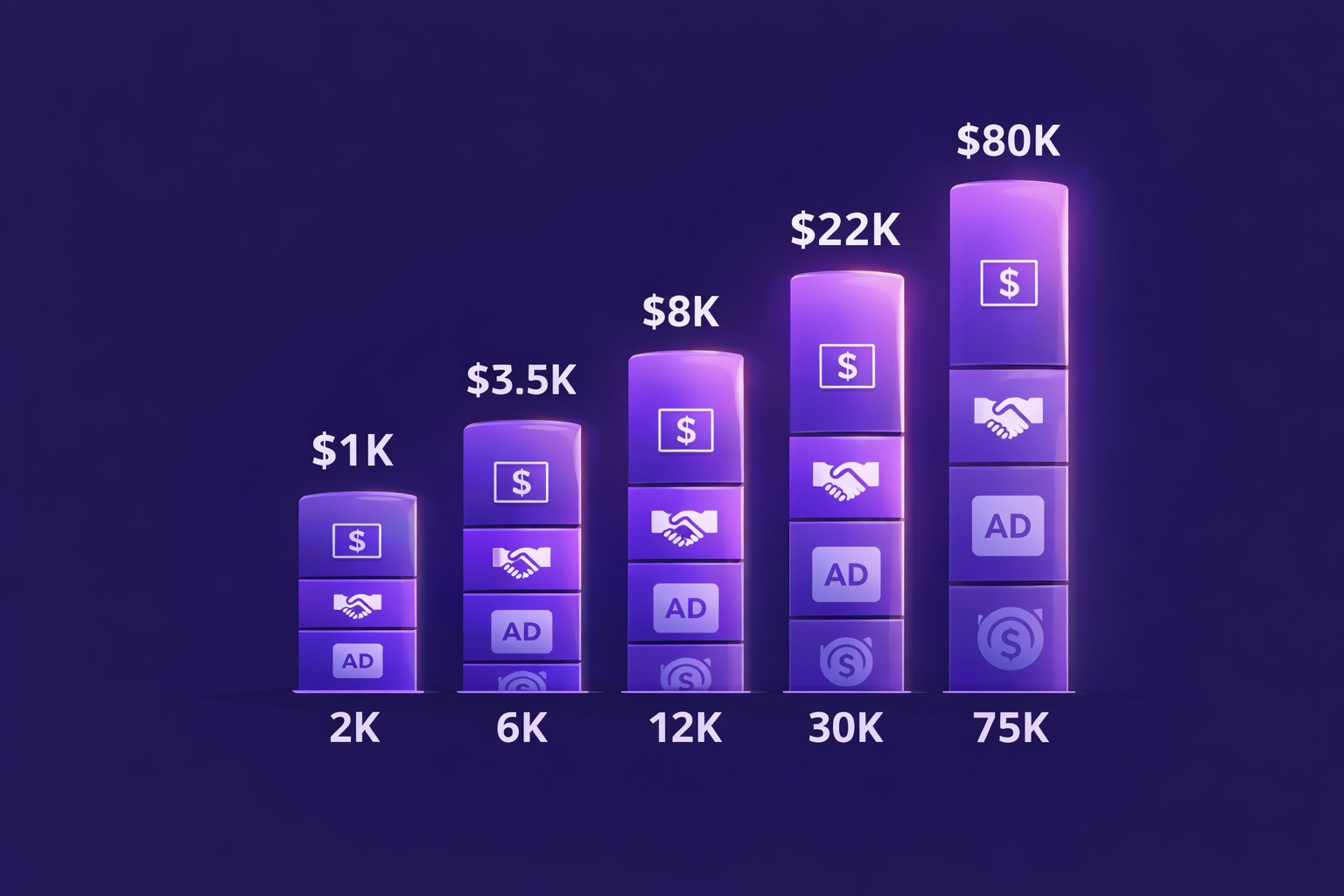
Real Newsletter Income Reports: How Creators Make $1K to $100K/Month (Actual Numbers)
The real data that creators search for but can't find. 5 detailed income profiles at different subscriber tiers — from $1,000/month at 2,000 subscribers to $80,000/month at 75,000 — with full revenue breakdowns by source, time invested, platform used, and the one decision that mattered most at each stage.
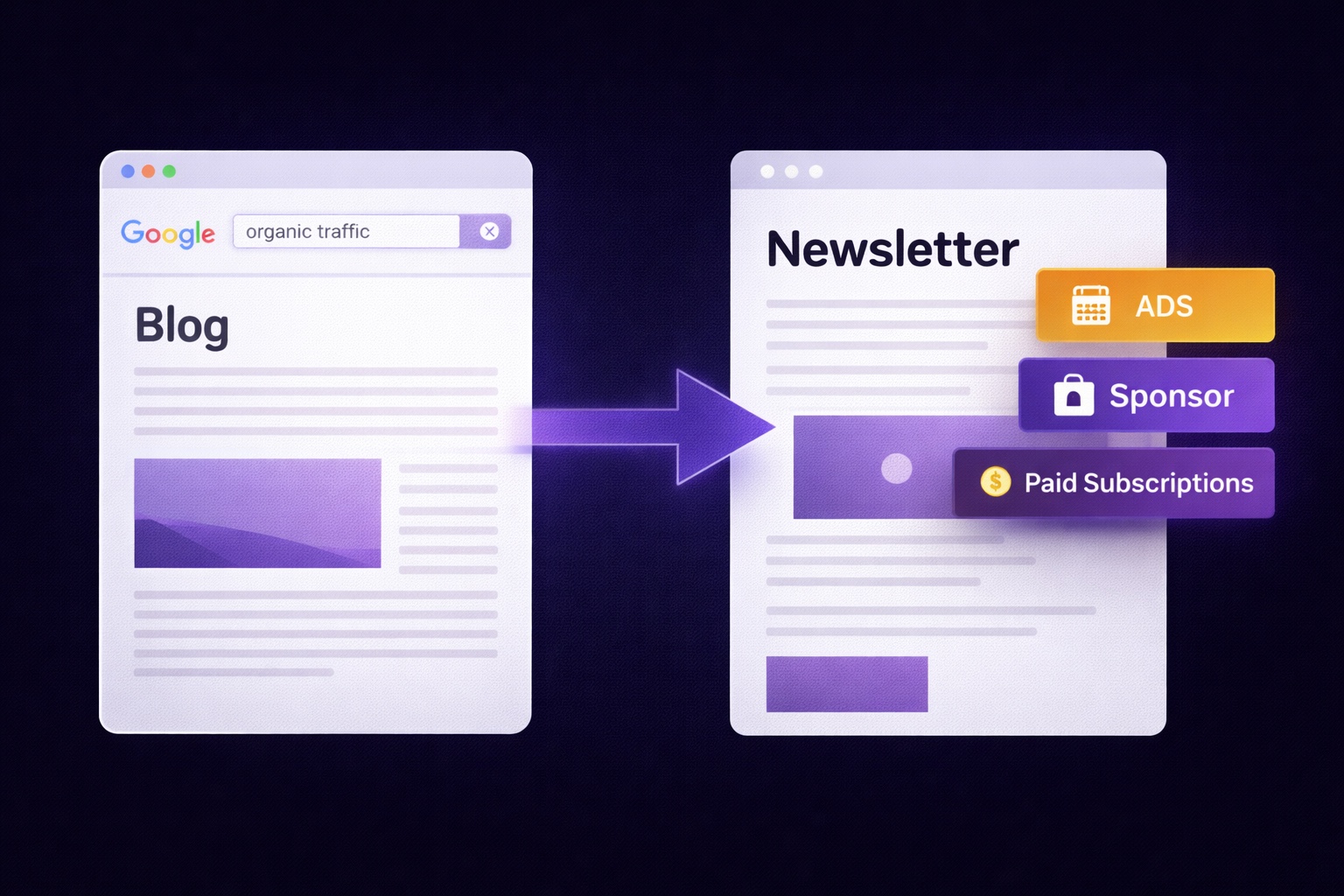
Bloggers & Writers: How to Turn Your Blog Into a $5,000+/Month Newsletter Business
Bloggers already have the hardest parts: proven content demand, warm traffic, and writing discipline. The step-by-step system to convert that foundation into a newsletter business — content upgrades that convert at 15-35%, migrating from Substack or Ghost, the SEO + newsletter flywheel, and 6 revenue streams that replace display ad income.
How to Launch a Paid Newsletter: Complete Step-by-Step Guide for 2026
The paid newsletter market is $2B+ and growing. But most creators launch wrong — wrong pricing, wrong timing, wrong content split. This is the definitive playbook: when you're actually ready, how to price it, the 14-day pre-launch sequence, and why 0% platform fees matter enormously at scale.