Substack vs InfluencersKit: Which Platform Is Actually Better for Creators in 2026?
Substack's 10% fee costs you $6,000/year at $5,000/month in subscription revenue. A fair but complete comparison: pricing at every revenue tier, monetization features (where the gap is enormous), growth tools, and who should actually use which platform.
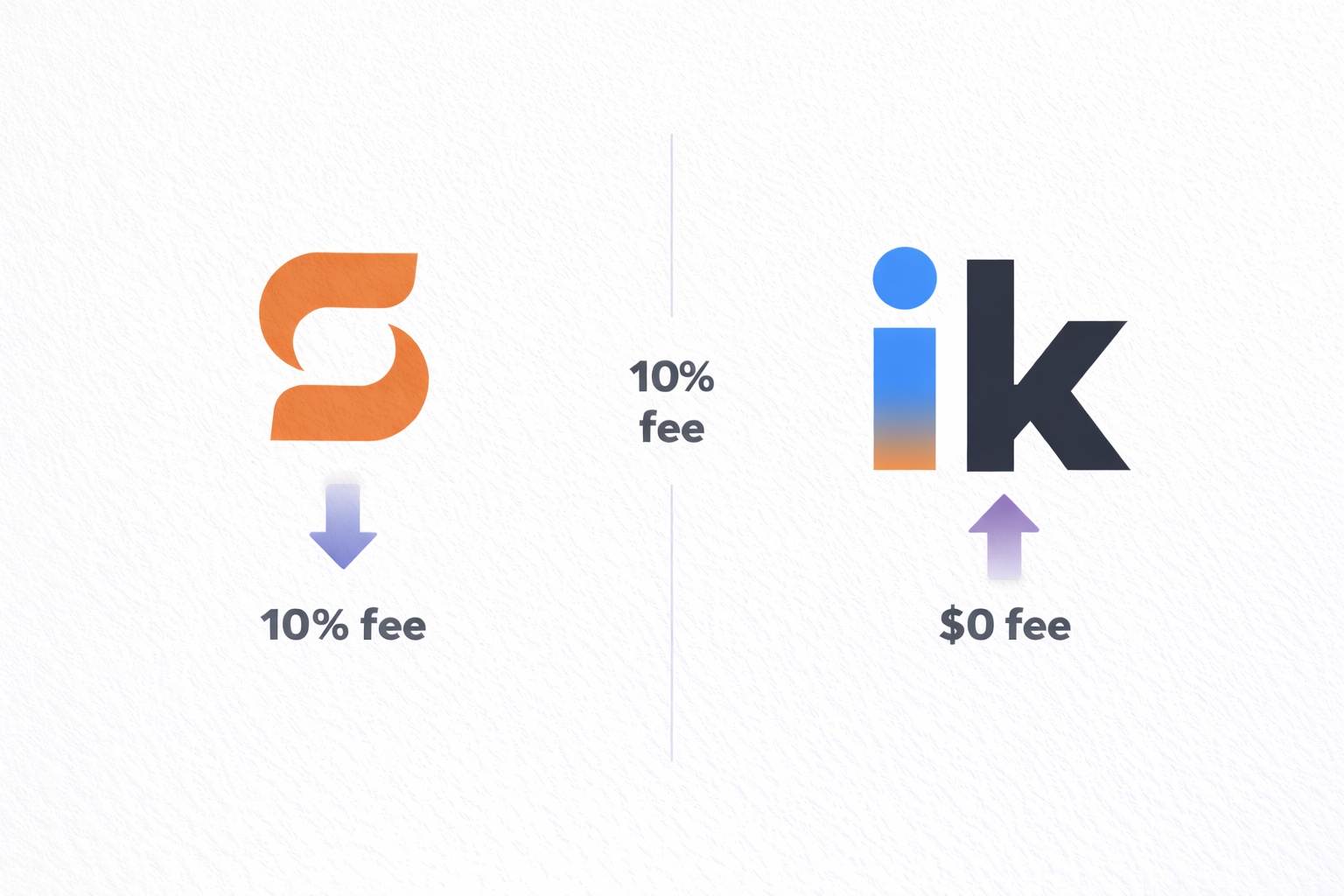
Every month, thousands of creators land on Substack's homepage and think: this looks simple, this looks clean, and the discovery network might help me grow. So they sign up. They start publishing. Some of them even build paying audiences of 200, 500, 1,000+ paid subscribers.
And then they do the math.
At $10/month with 500 paid subscribers, Substack takes $500 every single month. Not $500 once. $500 every month, forever, for as long as you keep those subscribers. That's $6,000 a year — not for hosting, not for support, not for infrastructure. Just for the privilege of using Substack's platform. At 1,000 paid subscribers, it's $12,000/year. At 2,000 paid subscribers, $24,000/year.
This is the Substack equation most creators never run before they sign up. And by the time they do, they've built an audience there and switching feels painful. This guide is for creators who are still deciding — and for those who've already built on Substack and are wondering if the math makes sense anymore.
We're going to do what most comparison articles won't: be completely honest about what Substack is genuinely good at, where InfluencersKit is the clear winner, and who should use which platform. No fluff. Just the data you need to make the right call.
The Real Cost of Substack (What the 10% Fee Actually Costs You)
Let's start with money, because that's usually the deciding factor once creators actually see the numbers side by side.
Annual Cost Comparison at Different Revenue Levels:
$1,000/month paid subscription revenue:
- Substack: $100/month fee → $1,200/year to platform
- InfluencersKit: $0 platform fee → $0/year to platform
- Annual difference: $1,200 in your pocket
$3,000/month paid subscription revenue:
- Substack: $300/month fee → $3,600/year to platform
- InfluencersKit: $0 platform fee → $0/year to platform
- Annual difference: $3,600 in your pocket
$5,000/month paid subscription revenue:
- Substack: $500/month fee → $6,000/year to platform
- InfluencersKit: $0 platform fee → $0/year to platform
- Annual difference: $6,000 in your pocket
$10,000/month paid subscription revenue:
- Substack: $1,000/month fee → $12,000/year to platform
- InfluencersKit: $0 platform fee → $0/year to platform
- Annual difference: $12,000 in your pocket
Note: Both platforms use Stripe for payment processing (2.9% + $0.30/transaction) — that cost is identical and unavoidable on any platform. The 10% above is Substack's cut on top of Stripe.
Substack's justification for the 10%: their discovery network. The Substack Recommendations feature and reader app can surface your newsletter to other Substack readers. For a handful of creators, this drives meaningful subscriber growth. For most creators, the data tells a different story — the overwhelming majority of paid subscribers come from your own content marketing, social media, and free-to-paid conversions, not Substack discovery.
You're effectively paying 10% of your subscription revenue for a discovery feature that may or may not be driving a meaningful percentage of your paid subscribers. At scale, this is an expensive bet on a feature you can't fully control or verify.
Feature-by-Feature Comparison
Email & Writing Experience
Substack:
- Clean, distraction-free writing interface — genuinely excellent
- Beautiful reader experience on web and app
- Simple formatting with minimal complexity
- Native podcast embedding and video support
- Substack app for readers (discovery benefit)
InfluencersKit:
- Intuitive email editor built for newsletter creators
- More formatting and customization options
- Branded email templates
- Mobile-optimized templates with drag-and-drop
- No native reader app (email delivery only)
Honest verdict: Substack wins on writing experience and reader app. If the act of writing and the reading experience is your primary concern, Substack's interface is genuinely better.
Monetization Features
Paid Subscriptions:
- Substack: Built-in, 10% platform fee + Stripe (effectively ~13% total)
- InfluencersKit: Built-in, 0% platform fee + Stripe only (2.9% + $0.30)
Programmatic Ads (automated newsletter advertising):
- Substack: ❌ Not available — no programmatic ad integration
- InfluencersKit: ✅ Built-in, available from day one, no subscriber minimum
Sponsorship Management:
- Substack: ❌ No dedicated sponsor tools — you manage sponsors manually
- InfluencersKit: ✅ Built-in sponsor dashboard, performance tracking, analytics
Affiliate Marketing Tools:
- Substack: ❌ No affiliate tracking built in
- InfluencersKit: ✅ Built-in affiliate link tracking and revenue attribution
Revenue Analytics:
- Substack: Basic — subscription revenue only
- InfluencersKit: Comprehensive — all revenue streams, subscriber LTV, CPM tracking
Honest verdict: InfluencersKit wins decisively. Substack monetizes ONLY through paid subscriptions. InfluencersKit supports programmatic ads, sponsorships, affiliate marketing, and paid subscriptions — all in one place, all tracked together.
This is the most important gap. A creator on InfluencersKit can earn from programmatic ads on every issue, sell direct newsletter sponsorships, AND charge paid subscriptions. A creator on Substack is limited to subscriptions only (unless they manually manage sponsors outside the platform). That single limitation caps earning potential significantly.
Growth Tools
Referral Programs:
- Substack: Basic recommendations feature (cross-promote other Substack newsletters)
- InfluencersKit: ✅ Full referral program — reward subscribers for bringing new subscribers
Landing Pages:
- Substack: Your Substack URL is your landing page — limited customization
- InfluencersKit: ✅ Unlimited custom landing pages, conversion-optimized templates, A/B testing
Email Automation:
- Substack: Basic welcome email — no sequences, no automation
- InfluencersKit: ✅ Full automation sequences — welcome series, drip campaigns, re-engagement
Segmentation:
- Substack: Free vs. paid segments only
- InfluencersKit: ✅ Tag-based segmentation, behavioral tracking, interest segmentation
Analytics:
- Substack: Basic open rates, subscriber count, revenue — no engagement scoring
- InfluencersKit: ✅ Full engagement analytics, subscriber scoring, revenue attribution by source
Pricing Structure
Substack Pricing:
- Free for free newsletters: $0/month
- Paid newsletters: 10% of subscription revenue (no cap)
- No fixed monthly platform fee — Substack only charges when you earn
InfluencersKit Pricing:
- Starter tier: Fixed monthly fee, 0% transaction fees on subscriptions
- Scales by subscriber count, not your revenue
- At $5,000+/month in subscription revenue, InfluencersKit costs dramatically less
Check current pricing for exact tier costs — fixed monthly fees are always cheaper than 10% of revenue once you're earning consistently.
Who Should Stay on Substack (Honest Assessment)
This guide isn't trying to convince everyone to leave Substack. There are specific creators for whom Substack is genuinely the best option. Be honest with yourself about whether you fit this profile:
Substack Makes Sense If:
- Writing is your entire product — You're a journalist, essayist, or writer and the newsletter IS your business, not a channel supporting other revenue
- You monetize exclusively through paid subscriptions — No desire for programmatic ads, sponsorships, or affiliate marketing
- You're just starting out and want zero complexity — Substack genuinely has the simplest setup of any platform
- The Substack brand association matters — In journalism and literary circles, publishing on Substack carries brand credibility
- Discovery is actually driving your growth — If you can attribute a meaningful portion of new subscribers to Substack recommendations, the 10% might be worth it
- You have a small audience and aren't earning much yet — 10% of $200/month is $20. Not a life-changing cost. Substack's simplicity may outweigh the fee at this scale
Who Should Choose InfluencersKit
InfluencersKit Is the Clear Choice If:
- You want multiple revenue streams — Programmatic ads + sponsorships + paid subs together dramatically outperform subscriptions alone
- You're earning $1,000+/month in subscriptions — The 10% fee savings alone more than covers the platform cost
- You're a content creator across platforms — YouTube, Instagram, LinkedIn, or podcast creators using email as a monetization layer
- You need growth tools — Referral programs, lead magnets, automation, and landing page optimization drive list growth that Substack doesn't support
- You want real analytics — Revenue attribution, engagement scoring, and subscriber lifetime value tracking require more than Substack's basic dashboards
- You're building a newsletter business, not just publishing — The combination of features, economics, and monetization tools is built for this
How to Migrate from Substack in Under 2 Hours
The most common objection to switching: "I've built my audience on Substack, migration is risky." The honest reality — migrating a subscriber list is straightforward, and Substack provides an export function precisely for this reason. Here's the process:
Step-by-Step Substack Migration:
- Step 1 (15 min): Export your subscriber list from Substack — Settings → Subscribers → Export. You'll get a CSV with subscriber emails and their free/paid status
- Step 2 (20 min): Set up your InfluencersKit account, configure your newsletter settings, import subscriber CSV
- Step 3 (20 min): Recreate your Substack publication settings — newsletter name, description, brand colors, sending domain
- Step 4 (20 min): Set up paid subscription tiers with matching or improved pricing. Configure Stripe connection
- Step 5 (15 min): Write and schedule a migration announcement email: "We're moving our home base to a new platform — here's what changes (nothing for you) and what improves"
- Step 6 (10 min): Set up your welcome sequence and automation in InfluencersKit
What About Paid Subscribers?
Free subscribers migrate with zero friction — they just start receiving emails from a new sending domain. Paid subscribers require manual migration. They need to cancel their Substack subscription and re-subscribe on your new platform. To make this easy: offer a discounted rate for the first year as a thank-you for making the switch, send a personal email to every paid subscriber explaining the migration, and use the savings from the 10% fee to fund that discount.
After migration, immediately set up your programmatic ads — you can be earning from every issue the same day you migrate, which is revenue Substack never made available to you.
Make the Switch. Keep What You Earn.
InfluencersKit gives you everything Substack does for writing and publishing, plus programmatic ads, sponsorship management, referral programs, advanced automation, and real analytics — with 0% platform fees on subscriptions. At meaningful revenue levels, the platform pays for itself many times over.
Start your free trial — migrate your Substack in an afternoon. Your first full month of 0% fees is often more than you'd spend on the platform all year.
Stay Updated
Get the latest insights, strategies, and tips delivered directly to your inbox. Join thousands of creators who are building their email communities with our weekly newsletter.
No spam, unsubscribe at any time. We respect your privacy.
Related Articles

Flodesk vs InfluencersKit: Which Email Platform Is Right for Your Creator Business?
Flodesk was built for beautiful emails. InfluencersKit was built for creator revenue. That design philosophy drives every product decision — and determines which platform is right for your business model. Honest comparison across pricing (including the flat-rate illusion), automation, monetization (where the gap is decisive), analytics, growth tools, and a three-year opportunity cost calculation that most platform reviews never run.
MailerLite vs Kit (ConvertKit): Which Email Platform Is Better for Creators in 2026?
MailerLite costs 59% less than Kit at every subscriber tier. But for course creators running complex product funnels, Kit's automation and commerce capabilities justify the premium. For newsletter-first creators, neither is optimal. Honest comparison across pricing, automation depth, monetization, growth tools, ease of use, integrations, and migration — with a clear verdict by creator revenue model.

Beehiiv vs Substack: The Honest Platform Comparison for Newsletter Creators (2026)
Substack charges 10% on paid subscriptions forever. Beehiiv charges 2.9% with growth tools and an ad network. But the real comparison runs deeper — discovery networks, automation depth, data ownership, and who each platform was actually built for. A complete breakdown including when neither is the right answer.
Mailchimp vs Beehiiv: Which Is Actually Better for Newsletter Creators in 2026?
Mailchimp was built for e-commerce businesses. Beehiiv was built for newsletter publishers. That philosophical difference drives every feature decision — and determines which platform is right for your specific creator business. Honest comparison across pricing at every tier, monetization, growth tools, deliverability, and the third option most creators never evaluate.