Mailchimp vs Beehiiv: Which Is Actually Better for Newsletter Creators in 2026?
Mailchimp was built for e-commerce businesses. Beehiiv was built for newsletter publishers. That philosophical difference drives every feature decision — and determines which platform is right for your specific creator business. Honest comparison across pricing at every tier, monetization, growth tools, deliverability, and the third option most creators never evaluate.
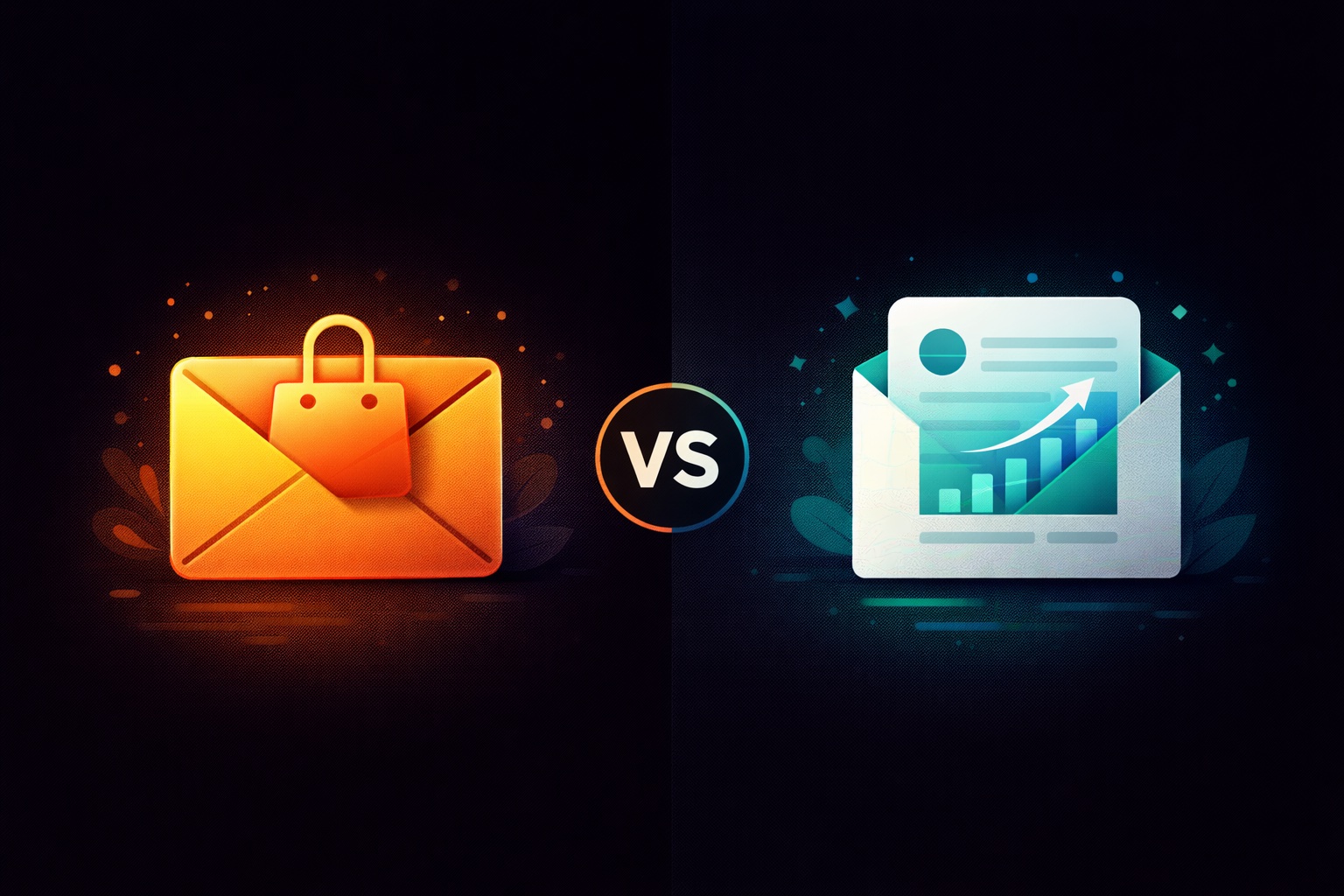
Mailchimp and Beehiiv were built for fundamentally different people at fundamentally different moments in email's history. Mailchimp launched in 2001 as a tool for small businesses sending promotional campaigns to customer lists — think retail stores, local services, product companies. Beehiiv launched in 2021 specifically for newsletter creators, designed from the ground up around editorial publishing, subscriber growth, and content-driven monetization. Choosing between them in 2026 is not a close call for most creators, but the reasons why matter — because the decision criteria reveal what you actually need from an email platform, not just what sounds impressive in a features list.
This comparison covers both platforms with specificity: pricing at every subscriber tier, the monetization models each platform supports, automation and segmentation depth, growth tools, deliverability, and the creator types for whom each platform genuinely makes sense. We also include InfluencersKit in the relevant comparisons, because for a significant segment of creators the right answer is neither Mailchimp nor Beehiiv — and understanding why helps clarify the full decision landscape.
The Fundamental Product Philosophy Difference
Mailchimp is an email marketing platform that has evolved toward a small-business marketing suite. Its core design assumptions are: you have an existing customer relationship (you've sold them something, they've signed up for your service), you want to communicate promotions and updates to that list, and email is one channel in a broader multi-channel marketing mix. The features Mailchimp has invested in over two decades reflect this: e-commerce integrations, retargeting ads, social posting, landing pages for product campaigns, CRM functionality. It is, at its core, a tool for businesses marketing to customers.
Beehiiv is a newsletter platform. Its core design assumptions are: you are a writer or creator publishing original content, your subscribers opted in specifically for that content, and your goals are growing a subscriber base, maintaining high engagement, and eventually monetizing through content-adjacent revenue (paid tiers, sponsorships, ad networks). Everything in Beehiiv's product — the writing interface, the referral program, the analytics, the ad network — is designed around this model. It is a tool for publishers building media businesses.
This philosophical difference is not abstract. It determines which platform's defaults, UX decisions, and feature investments align with your actual workflow. A creator who opens Mailchimp and tries to build a newsletter-first business will fight the platform's assumptions constantly. A creator who opens Beehiiv and tries to run complex sales automation for a coaching business will hit walls almost immediately. Knowing which category you belong to before evaluating features saves significant time and migration pain.
Pricing: What You Actually Pay at Every Scale
Pricing comparisons between email platforms are notoriously misleading because platforms use different subscriber tier breakpoints, different feature gatekeeping by plan, and different structures (per-subscriber vs. flat rate vs. revenue percentage). Here is the honest, tier-by-tier comparison.
Beehiiv Pricing
Beehiiv operates on a three-tier model. The Launch plan is free for up to 2,500 subscribers with unlimited sends — a genuinely strong free tier that includes the core newsletter editor, basic analytics, and subscriber management. The Grow plan at $49/month (billed monthly) or $42/month (billed annually) unlocks advanced analytics, custom domains, referral programs, and paid subscriptions with a 2.9% platform fee. The Scale plan at $99/month unlocks the ad network (which requires 2,500+ subscribers and editorial approval separately), A/B testing, and priority support.
The 2.9% platform fee on paid subscriptions is a meaningful cost that compounds with scale. At $10/month paid tier with 200 paid subscribers ($2,000/month revenue), the Beehiiv fee is $58/month on top of your plan cost and Stripe's payment processing fee (~2.9% + $0.30 per transaction). At $20/month with 500 paid subscribers ($10,000/month), the platform fee is $290/month plus Stripe processing — a significant drag at scale. This is explicitly where platforms like Substack (10% fee) and InfluencersKit (0% fee) diverge most sharply, and Beehiiv sits in the middle.
Mailchimp Pricing
Mailchimp's pricing structure is considerably more complex and more expensive at scale. The Free plan supports up to 500 contacts with 1,000 monthly email sends — a limit so restrictive it's effectively a trial, not a usable free plan for any serious newsletter creator. The Essentials plan starts at $13/month for 500 contacts. The Standard plan starts at $20/month for 500 contacts and adds automation series, retargeting ads, and custom-coded templates. The Premium plan starts at $350/month.
Cost comparison at common subscriber counts (monthly billing, Standard plan features):
- 500 subscribers: Beehiiv free / Mailchimp $20/month
- 2,500 subscribers: Beehiiv free / Mailchimp $45/month
- 5,000 subscribers: Beehiiv $49/month / Mailchimp $75/month
- 10,000 subscribers: Beehiiv $49/month / Mailchimp $135/month
- 25,000 subscribers: Beehiiv $99/month / Mailchimp $270/month
- 50,000 subscribers: Beehiiv $99/month / Mailchimp $450/month
Mailchimp pricing scales by contact count and is estimated from current published rates. Verify on Mailchimp's pricing page as tiers change frequently.
The pricing gap widens significantly at scale, and Mailchimp's contact-count billing also means you pay for unsubscribed and inactive contacts unless you manually clean your list — a practice that matters for both cost management and email deliverability. Beehiiv bills on active subscribers only, which is the correct model for newsletter creators whose lists naturally accumulate some inactive contacts over time.
The Newsletter Writing and Editing Experience
For newsletter creators, the editing interface is where you spend the most time. This is where Beehiiv and Mailchimp diverge most visibly in their product philosophy.
Beehiiv's editor is built for long-form editorial content. It works like a modern writing tool — clean, distraction-free, with a formatting toolbar that prioritizes text-first elements: headings, subheadings, bold, inline links, blockquotes, and dividers. Images drop in smoothly but the interface doesn't push you toward visual-first design. The writing experience is closer to a publishing tool than a campaign builder, which is appropriate for newsletter creators publishing original content weekly. The web archive view (every newsletter issue has a public URL) looks clean and professional without configuration.
Mailchimp's editor is built for marketing campaigns. It defaults to a block-based drag-and-drop builder that encourages visual hierarchy, image blocks, button blocks, and multi-column layouts — the design patterns that work well for promotional emails but feel structurally wrong for an editorial newsletter. Getting to a clean, text-forward newsletter design in Mailchimp requires actively working against the editor's default behavior. Writers consistently find Mailchimp's editor cumbersome for long-form content; designers and e-commerce marketers find it excellent for what it was designed for.
Monetization: The Most Critical Comparison for Creators
This is where the comparison becomes decisive for any creator whose primary goal is generating revenue from their newsletter. The platforms are not comparable — they support fundamentally different revenue models at different levels of development.
Beehiiv Monetization
Beehiiv has invested seriously in creator monetization and has three distinct channels built into the platform. Paid subscriptions are available on the Grow plan and above, with the 2.9% platform fee noted above. The Beehiiv Ad Network — available on Scale plan with 2,500+ subscribers and editorial approval — connects newsletters with brand advertisers and pays CPM rates in the $3–$15 range depending on niche and audience quality. Beehiiv handles the ad matching, insertion, and payment, which removes the operational burden of direct sponsor outreach for creators who qualify. Boosts — Beehiiv's cross-promotion network — allows newsletters to recommend each other and earn per verified subscriber referral, typically $1–$3 per subscriber depending on the referring newsletter's niche and engagement quality.
The Beehiiv monetization suite is genuinely creator-focused and more developed than most platforms offer. Its main limitation is subscriber minimums and approval requirements — the ad network is not available to new newsletters, which means early-stage creators can't access the most passive monetization channel. For the segment of creators who clear these thresholds, it's a strong suite. For creators monetizing at under 1,000 subscribers, the paid subscription feature is the only immediately accessible tool.
Mailchimp Monetization
Mailchimp has no newsletter-native monetization features. It does not support paid subscription tiers. It does not have an ad network. It does not have a referral or Boosts program. Its monetization is entirely indirect — you use Mailchimp to communicate with your audience and then drive them to external revenue mechanisms (Shopify store, Stripe payment page, external course platform, external membership tool). For e-commerce businesses, this integration model works well because the revenue mechanism (the store) is the primary product and email is the re-engagement channel. For newsletter creators who want email to be the direct monetization vehicle, Mailchimp provides nothing.
This is the clearest reason Mailchimp is the wrong platform for newsletter creators who want to monetize content directly. If your revenue model involves programmatic newsletter ads, direct sponsorships, or a paid subscription tier, Mailchimp does not support any of these natively. You would need to build each revenue stream externally and manage them independently of your email platform — a significant operational overhead that platforms like Beehiiv and InfluencersKit eliminate entirely.
Automation and Segmentation Depth
Automation is where Mailchimp has a genuine, significant advantage — not for newsletter creators, but for the use cases Mailchimp was actually designed for. Its automation capabilities are mature: multi-step sequences, conditional logic, e-commerce behavioral triggers (abandoned cart, purchase follow-up, product recommendations based on browsing history), and integration with its CRM for contact-level data. These are powerful tools for businesses where customer behavior drives communication — the triggered email someone receives after browsing a product page and not buying is a Mailchimp strength that newsletter platforms don't prioritize.
For newsletter creator use cases — welcome sequences, re-engagement campaigns, segmented content delivery based on subscriber interests, post-purchase sequences for digital products — Mailchimp is functional but overcomplicated. You can build a 7-email welcome sequence in Mailchimp, but the interface is designed for marketing automation, not editorial sequences, and the workflow feels labored for the task.
Beehiiv's automation is simpler and more newsletter-appropriate but meaningfully less powerful. Automated sequences, welcome flows, and tag-based segmentation are available and work well for typical newsletter use cases. If your automation needs are: welcome sequence, re-engagement campaign, segmented content by subscriber interest, and occasional post-purchase sequence — Beehiiv handles all of these. If your automation needs include complex conditional branching, lead scoring, CRM integration, or multi-channel marketing orchestration — Beehiiv will not meet those requirements and a platform like ActiveCampaign or a dedicated CRM integration is more appropriate.
Segmentation for newsletter creators typically involves subscriber source, engagement level (active vs. inactive), content interests, and paid vs. free tier status. Both platforms handle these segmentation needs adequately. Mailchimp's segmentation has more variables available (including purchase history and product interactions, which are irrelevant to most newsletter creators). Beehiiv's segmentation is simpler but covers everything a newsletter-first creator actually needs. For automation sequences that actually serve newsletter creator goals, Beehiiv's lighter approach is often less error-prone.
Growth Tools: Referrals, Landing Pages, and Discovery
Newsletter growth infrastructure is where Beehiiv has built its most distinctive advantage over Mailchimp. Beehiiv's referral program — built into the Grow plan — allows you to create milestone-based reward programs where existing subscribers earn rewards for referring new subscribers. This is the same mechanism that drove Morning Brew and The Hustle to millions of subscribers, and Beehiiv provides it natively without requiring SparkLoop or any third-party tool. The referral program is meaningfully easier to configure in Beehiiv than in any platform that requires external tools to achieve the same result.
Beehiiv's Boosts network adds a second growth mechanism: you can pay to be recommended by other newsletters in the Beehiiv ecosystem (paying per verified subscriber) or earn by recommending others (earning per verified subscriber you send). For newsletters with established audiences and budget for subscriber acquisition, Boosts can generate meaningful subscriber volume at predictable cost-per-subscriber rates.
Mailchimp offers landing pages, but they are designed for product campaigns and lead generation in a business marketing context — not newsletter sign-up optimization. The templates available are campaign-oriented rather than newsletter-subscription-oriented, and the conversion rate optimization features (A/B testing on landing pages, subscriber source tracking, engagement analytics by sign-up source) are less developed for the newsletter growth use case. For a newsletter landing page optimized for subscriber conversion, Beehiiv's native pages are substantially more appropriate.
Beehiiv's analytics are meaningfully better for newsletter operators. Open rates, click rates, subscriber growth by source, revenue per subscriber, and engagement trend data are all available in a dashboard designed for newsletter performance tracking. Mailchimp's analytics are comprehensive but oriented toward campaign-level performance in a marketing context — the metrics that matter for an e-commerce company evaluating an email campaign are different from those that matter for a newsletter creator evaluating content and growth strategy. The practical implication: Beehiiv's analytics answer the questions newsletter creators actually ask. Mailchimp's analytics require more navigation and configuration to surface the same answers. See the complete newsletter analytics framework for context on which metrics matter most and why.
Deliverability: What the Evidence Shows
Email deliverability — the rate at which your emails actually reach subscribers' inboxes rather than spam or promotions folders — is one of the most important platform attributes and one of the hardest to evaluate accurately from the outside. Both Mailchimp and Beehiiv have strong deliverability reputations by industry standards.
Mailchimp's deliverability is well-established through two decades of sending infrastructure. It has robust authentication systems (DKIM, SPF, DMARC), dedicated sending infrastructure, and compliance systems that have been tested at very large scale. Its shared sending infrastructure means your deliverability is partially dependent on other Mailchimp users' sending behavior, but Mailchimp's abuse prevention is mature enough that this is not typically a significant problem for legitimate newsletter creators.
Beehiiv's deliverability is strong for a younger platform. Its newsletter-specific sending patterns (regular, content-forward emails to opt-in subscribers) are exactly the sending profile that inbox providers respond to most favorably. The platform's custom domain authentication and sending infrastructure are well-implemented. Creators with established Beehiiv newsletters consistently report strong inbox placement. The broader point about deliverability best practices — list hygiene, consistent sending schedules, engaged subscriber pools — applies equally to both platforms, and good practices matter more than platform choice for most deliverability outcomes.
Integrations and Ecosystem
Mailchimp has a substantially larger integration ecosystem, reflecting its age and market position. It integrates natively with Shopify, WooCommerce, Magento, Salesforce, QuickBooks, Facebook Ads, Google Analytics, and hundreds of other tools through Zapier and native connections. For creators running adjacent product businesses — physical products, software, online courses on third-party platforms — this integration depth can be relevant.
Beehiiv's integrations are more limited but growing. Zapier support enables connections to most tools, and native integrations cover the most common creator stack components (payment processors, website builders, analytics tools). For newsletter-first creators whose primary tool is their email platform, the integration gap is rarely a practical limitation — the newsletter workflow doesn't require deep CRM or e-commerce integration the way a product business does. For creators building more complex technology stacks, Mailchimp's integration ecosystem is a genuine advantage.
Migration: Moving Between Platforms
Migration between email platforms is a decision that many creators face after starting on the wrong platform, and both Mailchimp and Beehiiv handle the incoming migration process reasonably well. Both platforms allow subscriber list import via CSV, and both provide export capabilities for leaving creators. The practical migration steps — exporting your subscriber list, importing to the new platform, setting up authentication, migrating automations, and communicating the change to your audience — are covered in the platform migration guide and apply regardless of which platforms you're moving between.
The content migration situation differs. Mailchimp does not have a public archive of your newsletter issues; if you've been publishing on Mailchimp, your issue archive exists only in Mailchimp's campaign database and is not easily portable to a new platform's web archive. Beehiiv has a public web archive for every issue, and migrating this content to a new platform (or preserving it) requires exporting individual issues — a manageable but manual process at scale.
Who Should Choose Beehiiv
Beehiiv is the right platform for creators who are building a newsletter-first publishing business — their primary content vehicle is a regularly published newsletter, their audience relationship is primarily through email, and their monetization comes from content-adjacent revenue: paid subscriptions, sponsorships, and ad network participation. Specifically, Beehiiv makes sense if you have or are targeting 2,500+ subscribers (to unlock the full feature set), you want referral growth tools natively integrated, and you value a clean publishing interface over marketing automation complexity.
The Beehiiv ad network is a distinctive asset for creators who qualify — the ability to earn from your newsletter without personally managing sponsor relationships is significant operational leverage. Newsletters that are part of the Beehiiv ecosystem also benefit from Boosts cross-promotion visibility, which has no equivalent in most other platforms. If you're comparing specifically between newsletter-native platforms and want to understand the full competitive set, the three-way comparison of Beehiiv, ConvertKit/Kit, and InfluencersKit covers the decision in more depth.
Who Should Choose Mailchimp
Mailchimp is the right platform for creators who operate adjacent to a product business — they sell physical products, run an e-commerce store, or use email primarily as a customer retention and re-engagement channel rather than as the primary content and relationship vehicle. Creators with existing Shopify integrations, those who need sophisticated e-commerce behavioral triggers, or those operating in a small business context where email is one channel in a broader marketing mix will find Mailchimp's feature set genuinely superior for their use case.
Mailchimp is not appropriate for newsletter-first creators who want to build an editorial publishing business, monetize directly through the email platform, or prioritize subscriber growth over customer re-engagement. For those creators, the platform mismatch will be a persistent friction rather than a manageable inconvenience. The full Mailchimp alternatives analysis covers which platforms better serve creators who discover Mailchimp isn't the right fit.
The Third Option: InfluencersKit
For a significant segment of creators evaluating Mailchimp vs. Beehiiv, the honest answer is that neither platform is optimal. Mailchimp lacks newsletter-native features; Beehiiv has subscriber minimums on its most valuable monetization tools and a platform fee on paid subscriptions. InfluencersKit was built specifically for this gap: a creator-first platform with 0% platform fee on paid subscriptions, built-in programmatic ad support from any subscriber count, direct sponsorship tools, referral programs, and landing pages optimized for newsletter conversion — without the subscriber minimums and approval gates that limit Beehiiv's monetization to established newsletters.
The key differentiator matters most for small newsletter creators monetizing early and for creators at scale where Beehiiv's 2.9% platform fee on paid subscriptions becomes a significant revenue drag. At $10,000/month in paid subscription revenue, Beehiiv's platform fee is $290/month before Stripe processing costs; InfluencersKit's is $0. Over a year, that difference is $3,480 — at $50,000/month, it's $17,400 annually. The detailed three-way comparison and the current pricing page provide the full picture for creators doing this calculation seriously.
Making the Decision: A Framework
Choose Beehiiv if:
- Newsletter publishing is your primary content medium
- You are at or approaching 2,500 subscribers (to access the full feature set)
- You want a built-in referral program without third-party tools
- The ad network and Boosts discovery are part of your growth plan
- You prefer a clean, writer-focused interface over complex marketing tools
- The 2.9% paid subscription fee is acceptable at your expected revenue scale
Choose Mailchimp if:
- You run an e-commerce or product business where email is a re-engagement channel
- You need deep Shopify, WooCommerce, or Salesforce integration
- Your automation needs involve purchase-triggered behavioral sequences
- Email is one channel in a multi-channel marketing strategy, not your primary content vehicle
Consider InfluencersKit if:
- You want to monetize from day one without subscriber minimums or approval gates
- You need 0% platform fee on paid subscriptions at any revenue level
- You want the full monetization suite (programmatic ads, sponsorships, paid tiers, referrals) in one platform
- You are a creator-first publisher building a newsletter business, not a product business using email marketing
The right platform choice compounds over time — you build subscriber lists, automations, and content archives on whichever platform you choose, and migration has real costs both technically and in lost history. Making the right choice now, based on where your newsletter business is actually going rather than where it currently is, saves significant time and money compared to migrating later. Read the free vs. paid email platform breakdown and the creator email marketing fundamentals guide as additional context before committing.
List Growth Infrastructure: Where Beehiiv Pulls Ahead
Beehiiv's subscriber acquisition tooling is genuinely integrated in a way Mailchimp's is not. Sign-up forms, landing pages, the referral program, and the Boosts network are parts of a single growth system — not separate tools sharing a database. When a subscriber joins through a Beehiiv referral link, their referred-by data is automatically tracked, the referrer's milestone counter updates, and reward delivery triggers without manual action. This tight integration reduces the operational overhead of running growth programs significantly. The referral program mechanics that drive hundreds of subscriber additions per month are baked into Beehiiv's platform in a way that makes them accessible to creators who would never build them from scratch using external tools.
Running a referral program on Mailchimp requires a third-party integration — SparkLoop or a custom-built solution — neither trivial to maintain. For a creator whose primary growth lever is subscriber acquisition, this matters: the friction of configuring and maintaining growth programs on Mailchimp is meaningfully higher than on Beehiiv. The list-building strategies that compound most effectively require platform-native support for referral tracking, welcome sequence automation, and landing page optimization — all of which Beehiiv handles more cohesively than Mailchimp.
On subscriber retention, Beehiiv's engagement analytics give you the data to act on declining trends before they become churn problems. Identifying subscriber cohorts with falling open rates and targeting them with a re-engagement sequence is straightforward in Beehiiv's interface. Mailchimp offers similar data but requires more manual segmentation to act on it practically. For creators who want to actively manage list health — running re-engagement automations proactively rather than passively watching churn accumulate — Beehiiv's UX is better suited to that workflow.
Content Discovery: How Platform Architecture Affects Your SEO
Beehiiv automatically publishes every newsletter issue to a public web archive that is indexed by search engines. Each issue becomes a permanent, crawlable page at a URL on your custom domain — which means your newsletter content accumulates as a searchable content library over time, generating organic subscriber acquisition alongside direct email sends. The newsletter SEO strategy that generates compounding organic subscribers depends on this public archive being clean, well-structured, and consistently updated — Beehiiv's architecture meets these requirements without any additional configuration.
Mailchimp campaigns can be shared publicly, but the experience is not designed for ongoing content discovery or SEO. There is no native, branded web archive optimized for search engine crawling, and the public campaign URLs are not structured to accumulate domain authority the way a custom-domain blog or newsletter archive does. Creators who want their newsletter content to compound as a discoverable content asset — not just a direct communication channel — will find Beehiiv's architecture materially more effective for that goal. Combine this with the writing principles that drive high open rates and you have content that performs well both as a direct send and as a discoverable web resource. The cumulative SEO effect of a two-year Beehiiv archive — where every issue is a public page accruing search visibility — is a differentiated asset that Mailchimp's campaign model cannot replicate. For newsletter creators whose long-term strategy involves organic subscriber acquisition, this architectural difference between the platforms is material: it determines whether your writing compounds as a search asset or exists solely as a point-in-time email send. Pair your publishing strategy with a structured content calendar so the platform's archive infrastructure has consistent, high-quality material to build upon each week.
The Verdict: Platform Fit Over Platform Prestige
The Mailchimp vs. Beehiiv comparison resolves clearly when you start from use case rather than from feature lists. Mailchimp is a well-built tool for the problem it was designed to solve — email marketing in service of a product or e-commerce business. It is the wrong tool for newsletter-first creators who want editorial publishing, content-native monetization, and growth tools built around subscriber acquisition rather than customer retention. Beehiiv is a well-built tool for newsletter creators who are building or scaling a publishing business — it handles the editorial, growth, and monetization workflows that define that business model, at pricing that scales reasonably.
The decision framework is practical: if your primary content vehicle is a regularly published newsletter and your revenue model is content-adjacent (sponsorships, paid tiers, programmatic ads), Beehiiv is the stronger platform. If your newsletter is a communication channel that supports a product business — maintaining customer relationships, driving repeat purchases, announcing new products — Mailchimp is the stronger platform. If you want all the newsletter-native capabilities of Beehiiv without the subscriber minimums on monetization tools and without the 2.9% platform fee on paid subscriptions, InfluencersKit is worth evaluating alongside both. The three-way comparison provides the next level of detail for creators who have narrowed to newsletter-native platforms and want to see the full competitive set side by side.
Built for Newsletter Creators from Subscriber 1
InfluencersKit gives you the newsletter monetization features Mailchimp doesn't have and removes the subscriber minimums and platform fees that limit Beehiiv — with list-building tools, referral and growth programs, and full monetization from the first day, regardless of subscriber count.
Start your free trial — no credit card required. Compare the full feature set against Beehiiv and Mailchimp before making your final decision.
Stay Updated
Get the latest insights, strategies, and tips delivered directly to your inbox. Join thousands of creators who are building their email communities with our weekly newsletter.
No spam, unsubscribe at any time. We respect your privacy.
Related Articles

Flodesk vs InfluencersKit: Which Email Platform Is Right for Your Creator Business?
Flodesk was built for beautiful emails. InfluencersKit was built for creator revenue. That design philosophy drives every product decision — and determines which platform is right for your business model. Honest comparison across pricing (including the flat-rate illusion), automation, monetization (where the gap is decisive), analytics, growth tools, and a three-year opportunity cost calculation that most platform reviews never run.
MailerLite vs Kit (ConvertKit): Which Email Platform Is Better for Creators in 2026?
MailerLite costs 59% less than Kit at every subscriber tier. But for course creators running complex product funnels, Kit's automation and commerce capabilities justify the premium. For newsletter-first creators, neither is optimal. Honest comparison across pricing, automation depth, monetization, growth tools, ease of use, integrations, and migration — with a clear verdict by creator revenue model.

Beehiiv vs Substack: The Honest Platform Comparison for Newsletter Creators (2026)
Substack charges 10% on paid subscriptions forever. Beehiiv charges 2.9% with growth tools and an ad network. But the real comparison runs deeper — discovery networks, automation depth, data ownership, and who each platform was actually built for. A complete breakdown including when neither is the right answer.
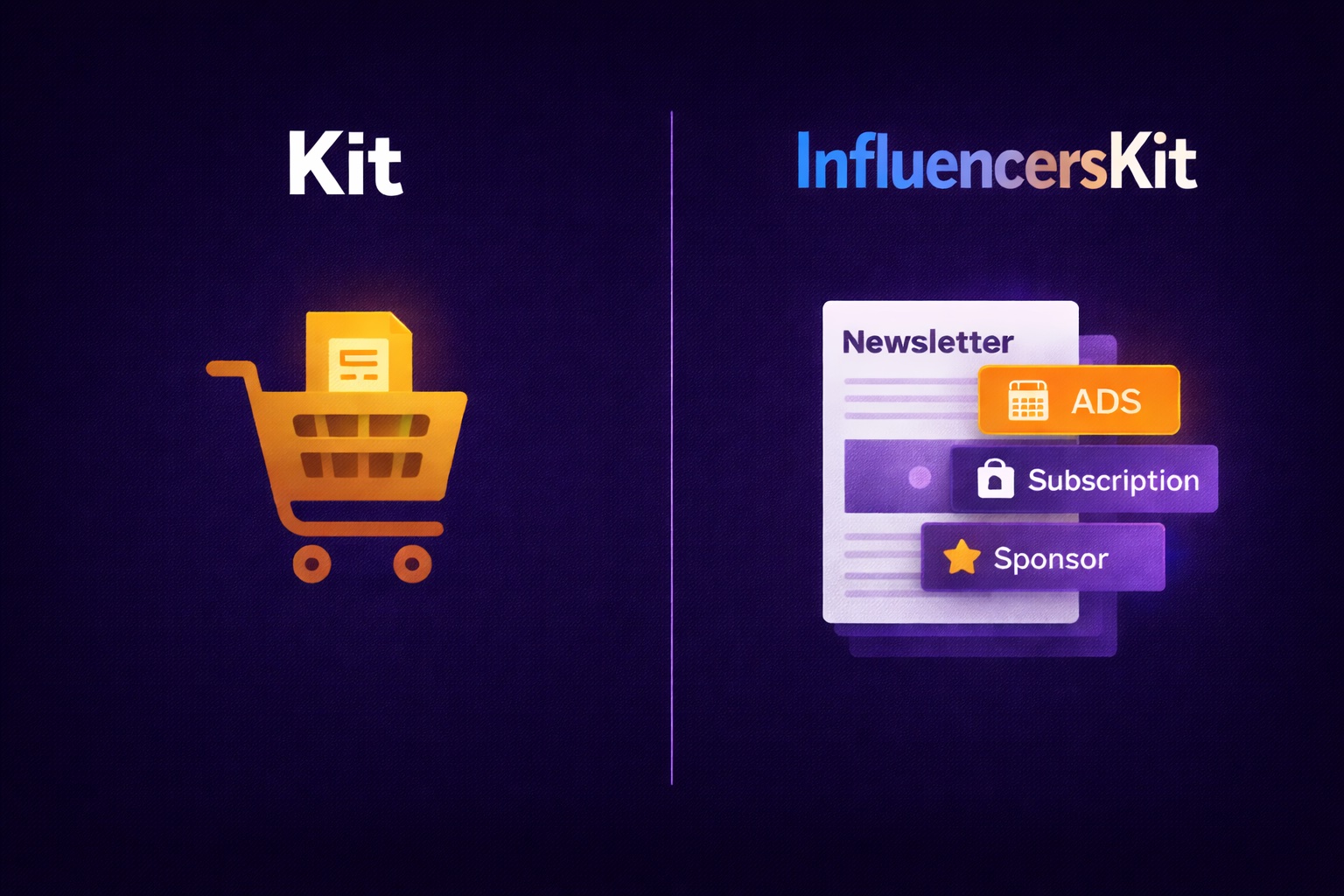
Kit (ConvertKit) vs InfluencersKit: The Honest Comparison for Creators Who Want to Monetize
Kit was built for creators who sell courses and digital products. InfluencersKit was built for creators who monetize through ads, sponsorships, and paid subscriptions. Direct, fair, data-driven comparison — with real pricing at every tier and a clear verdict by creator type.