How to Write a Newsletter People Actually Read: The Format That Gets 45%+ Open Rates
Two newsletters, same niche, same frequency — one gets 48% open rates, one bleeds subscribers. The gap is the writing. This covers the 4 formats that build loyal audiences, subject line formulas, the structure that holds attention, and the 4-hour workflow that keeps you consistent.
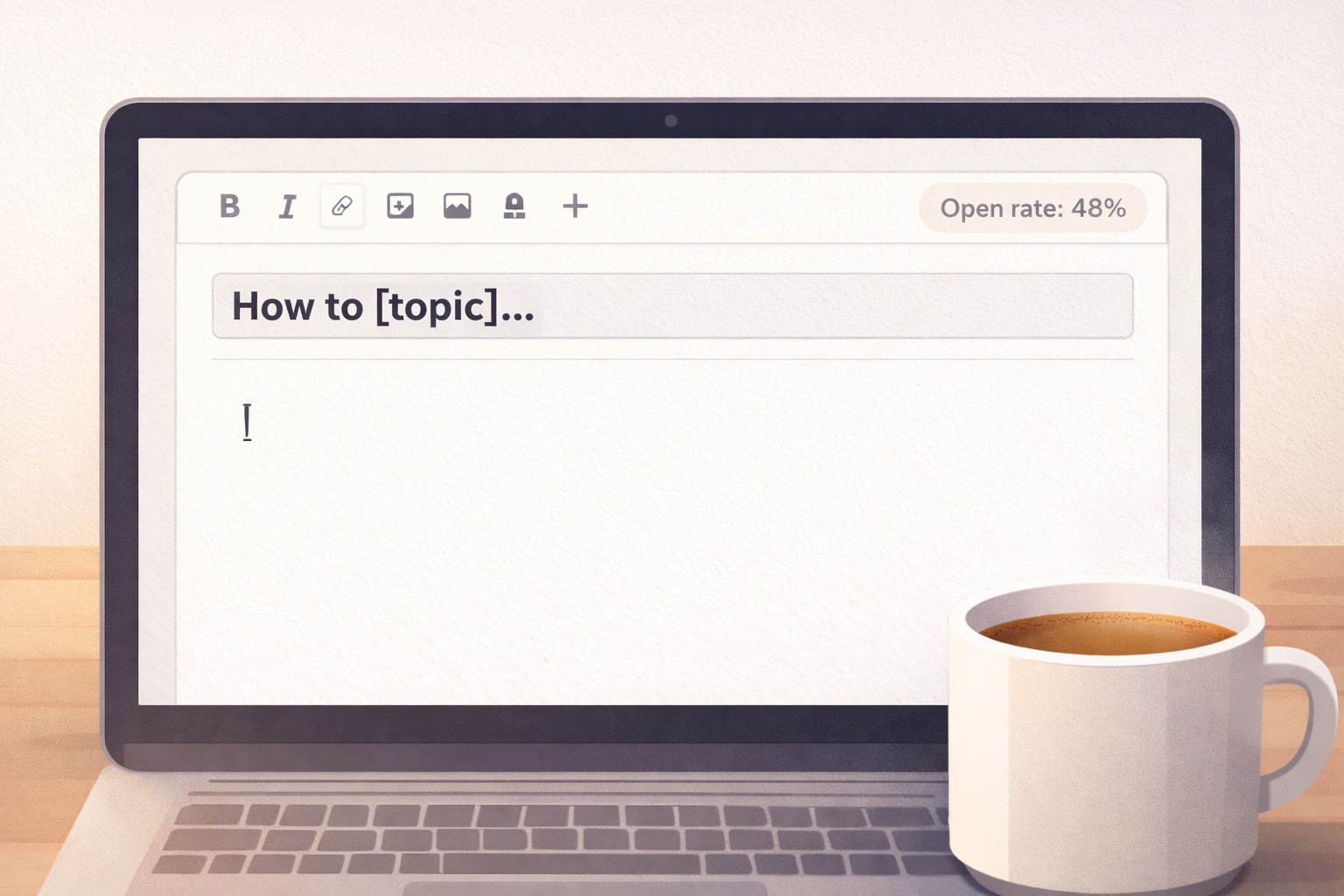
Two newsletters. Same niche. Same posting frequency. One has a 48% open rate and readers who forward it to colleagues. The other sits at 19% and slowly bleeds subscribers every month.
The gap isn't audience size. It isn't posting consistency. It isn't even topic selection. It's the writing itself — the structure, the voice, the specific techniques that make someone stop whatever else they're doing and actually read what you sent them.
Most newsletter advice focuses on growth tactics: how to get more subscribers, how to run ads, how to build a referral program. All of that matters. But none of it compounds if your content doesn't hold people. You can pour subscribers into a leaky bucket forever. The bucket has to work first.
This is the guide to making the bucket work. We're covering the four newsletter formats that actually build loyal audiences, the subject line formula that drives 45%+ open rates, the structure that holds attention from first sentence to last, and the workflow that lets you write well consistently without burning out.
What Separates Newsletters People Open vs. Newsletters People Ignore
Before we get to formats and formulas, it's worth understanding the psychology of why people open email at all. Your newsletter arrives in an inbox alongside 50-200 other messages. The decision to open takes less than two seconds and is based almost entirely on two things: who it's from, and what the subject line promises.
The "who it's from" part — your sender reputation — builds over months. Every time you deliver something genuinely valuable, you deposit into an account. Every time you waste someone's time, you withdraw from it. Eventually, some subscribers reach the point where they open your newsletter before reading the subject line, purely because they've learned it's always worth it.
But sender reputation takes time. The subject line is what you control today. And once they're inside the email, the content either earns the next open or it doesn't. These are the three leverage points: subject line, opening paragraph, and content delivery. We're going to cover all three.
The 4 Newsletter Formats (And How to Choose Yours)
Most newsletters fail not because of bad writing, but because they're built on the wrong format for their creator and audience. Choosing the right format is a strategic decision that affects everything downstream.
Format 1: The Original Essay
What it is:
One focused topic, one perspective, your original thinking. Usually 600-1,500 words of straight prose — no curation, no roundups, just your ideas developed in depth.
Who it's for:
Creators with a strong point of view who write well and have genuine expertise or experience to draw from. Writers, analysts, thought leaders, subject matter experts.
Open rate potential:
Highest ceiling (40-60%+ is achievable) but also highest floor — if your writing isn't compelling, this format fails faster than any other.
Examples:
A marketing strategist writing a weekly breakdown of one campaign or trend. A finance creator writing a deep analysis of one company or economic development. A career coach writing one essay on a workplace dynamic or decision framework.
The key rule:
One topic. One thesis. Start with your most interesting point, not background or context. Every sentence should earn its place by advancing the idea.
Format 2: The Curation Newsletter
What it is:
A curated collection of 5-10 items from across the web — articles, tools, ideas, resources — selected by you and annotated with your commentary. Your job is editor, not author.
Who it's for:
Creators who consume a lot in their niche and have good taste, but don't necessarily want to generate all-original ideas weekly. Also works well for very busy niches where there's always fresh content to curate.
Open rate potential:
Steady 25-40%. Readers value the curation service, but it's harder to build deep personal connection through a curation format than an original essay.
The key rule:
Your commentary is everything. Don't just link to things — tell readers what you think about each item, why it matters, and what to do with it. Without commentary, you're just a bookmarks list. With strong commentary, you're irreplaceable.
Format 3: The Hybrid Newsletter
What it is:
A short original piece (200-400 words) followed by curated items, tools, or resources. You get the personal connection of original writing with the easy-to-produce consistency of curation.
Who it's for:
Most creators. This is the most sustainable format because the structure is predictable (for readers and writers), the workload is manageable, and it allows for personality without demanding a full essay every week.
Open rate potential:
30-50%. The original section builds relationship; the curated section delivers consistent value. Readers know what they're getting and come to rely on it.
Example structure:
- Section 1: 300-word original take on something this week
- Section 2: "This week's best reads" — 3-5 curated links with 2-sentence commentary each
- Section 3: One tool, resource, or quick tip
- Section 4: One-line CTA (upgrade, referral, or reply prompt)
Format 4: The How-To / Tutorial Newsletter
What it is:
Each issue teaches the reader how to do something specific. Step-by-step, tactical, immediately actionable. The entire issue is structured around one skill, technique, or process.
Who it's for:
Creators in skill-based niches: marketing, design, coding, finance, productivity, fitness. Works especially well when your audience is trying to get better at something professionally.
Open rate potential:
35-55%. People open because each issue has a concrete promise that it delivers. "Learn to do X in 10 minutes" is one of the strongest value propositions in email.
The key rule:
Readers must be able to implement what you taught within the same day. If the tutorial is too abstract or requires resources the reader doesn't have, it fails. Make it immediately usable.
Subject Line Formulas That Achieve 45%+ Open Rates
Your subject line is the most important sentence you'll write for any given issue. More important than the opening paragraph. More important than the headline. If they don't open, nothing else matters.
Most creators approach subject lines as an afterthought — something you write in the 5 minutes before you hit send. The best newsletter creators treat them as a first-class craft. Here are the six formulas that consistently produce the highest open rates:
The 6 Subject Line Formulas:
Formula 1: The Specific Curiosity Gap
Opens a question the reader's brain can't ignore
- "The email that changed how I think about pricing"
- "Why your best readers never reply (and what to do about it)"
- "The mistake I made with my first sponsor deal"
Key: Specific beats vague every time. "Something interesting happened" fails. "The thing that surprised me most about 10,000 subscribers" works.
Formula 2: The Specific Number
Numbers create credibility and set clear expectations
- "7 things I'd tell myself before starting a newsletter"
- "The 3 emails that drive 80% of my revenue"
- "I analyzed 50 newsletters with 40%+ open rates. Here's what I found."
Key: Odd numbers outperform even numbers. Specific numbers ("143" vs "hundreds") signal research and credibility.
Formula 3: The Personal, Conversational Hook
Feels like a message from a friend, not a broadcast
- "Quick question for you"
- "I almost didn't send this one"
- "Can I be honest about something?"
- "You asked about this last week — here's my answer"
Key: Only works once you've built a relationship. Using this formula before you have an engaged audience feels hollow. Earn it first.
Formula 4: The Counterintuitive Statement
Challenges assumptions, demands engagement
- "Your open rate doesn't matter"
- "Stop trying to grow your newsletter"
- "The worst advice about newsletters (that everyone still gives)"
Key: Must be something you can actually defend inside the email. Clickbait that disappoints destroys trust and kills future open rates.
Formula 5: The Direct Value Promise
Crystal clear about what they're getting
- "How to write a welcome email that converts at 30%"
- "The sponsor pitch template that gets responses"
- "5 tools I use every week to run my newsletter in 4 hours"
Key: Works best for how-to format newsletters. Clear promise, clear value, no ambiguity. Especially effective with new subscribers who haven't built trust yet.
Formula 6: The FOMO / Time-Sensitive Frame
Creates urgency without fake deadlines
- "This pricing trend won't last — here's how to use it now"
- "What's happening in [niche] this week (and what you should do)"
- "Before everyone else catches on to this"
Key: Best for news-adjacent niches. Should feel genuinely timely, not manufactured. Overuse kills it — use 1 in every 5-6 issues maximum.
The Newsletter Structure That Holds Attention Start to Finish
Most readers decide in the first 10 seconds whether they'll read your newsletter or close it and move on. Your opening paragraph is everything.
The Opening Paragraph Rules
What your opening paragraph must do:
- Create immediate forward momentum — The reader should feel pulled into the next sentence before they consciously decide to keep reading
- Establish what's in it for them — Within the first 3 sentences, readers should know what they're going to get from this issue
- Sound like you — Not like a newsletter intro, not like marketing copy, not like a blog post. Like a person talking to another person
Opening techniques that work:
- Start with a specific scene: "Last Tuesday, I got an email from a reader who had 6,200 subscribers and hadn't earned a dollar from them." Specificity creates immediate intrigue.
- Start with a counterintuitive statement: "The best newsletter I read this week had no subject line strategy. That's exactly why it worked."
- Start with a question readers are already asking themselves: "If you've been publishing for more than six months and still haven't launched a paid tier, this is for you."
- Start with the payoff: "Here's what I found after reading 50 high-performing newsletters: the format matters far less than everyone thinks."
Opening techniques that fail:
- "Welcome to this week's issue of [Newsletter Name]!"
- "I hope you're having a great week."
- Starting with context or background before the interesting part
- Apologizing for anything before delivering value
Length: How Long Should Your Newsletter Actually Be?
The correct answer depends entirely on your format and what you promised your audience. The wrong answer is "as long as it needs to be" — because unconstrained, most writers default to too long.
Length Guidelines by Format:
- Original essay: 600-1,500 words. Below 600 feels thin; above 1,500 requires exceptional writing to sustain.
- Curation newsletter: 400-800 words total (50-100 words of commentary per item × 5-8 items)
- Hybrid newsletter: 600-1,000 words total
- How-to / tutorial: 800-2,000 words. Tutorials need enough space to be genuinely useful; don't truncate them into uselessness
The editing rule:
Write your full draft, then cut 20%. Every newsletter benefits from 20% less. If a sentence doesn't advance your idea, cut it. If a section restates something you already said, cut it. Length is earned, not assumed.
Voice and Personalization: Why People Read You, Not Just Your Topic
There are a hundred newsletters on every topic. The ones that build loyal audiences aren't the ones with the best information — they're the ones with the most distinctive voice. Information is everywhere. Perspective is scarce.
Voice is the collection of small decisions you make consistently: sentence length, the way you open sections, whether you use data or stories or both, how direct you are, whether you share personal opinions, the metaphors you reach for. It's not a style you can copy or force. It emerges from writing consistently and editing ruthlessly until what's left sounds genuinely like you.
Three things that build distinctive voice:
- Specific examples from your own experience: "Last year when I was pitching my first sponsor" hits differently than "when creators pitch sponsors." Your specifics build trust and differentiation simultaneously.
- Actual opinions: Newsletters that say "some people think X, others think Y" are forgettable. Newsletters that say "here's what I actually think and why" are re-read and forwarded.
- Consistent framing: The most memorable newsletters have a consistent framework they apply to their niche — a lens that's uniquely theirs. Readers learn to expect it and look for it.
The P.S. That Generates 15% of All Clicks
The P.S. line is one of the most underused tools in newsletter writing. Eye-tracking studies on email consistently show that readers who scroll to the bottom of an email look at the P.S. almost as often as they look at the opening. It's the second most-read part of most newsletters.
What to put in your P.S.:
- Your single most important CTA: If you have one thing you want readers to do this week — upgrade to paid, use a referral link, join your community — put it in the P.S. It performs because it's separate from the content and feels lower pressure
- A teaser for next issue: "Next week I'm writing about the one thing most newsletter creators get wrong about their first sponsor pitch. Don't miss it." Creates anticipation and improves next open rate
- A personal note: Something that humanizes you — an observation, a question, a recommendation. "I've been re-reading this book and it's changed how I think about [topic]. Highly recommend."
- A reply prompt: "Hit reply and tell me: what's the one thing you'd want me to cover next?" Replies boost deliverability and give you editorial intelligence
Rotate between these approaches. A reply prompt every issue becomes a habit readers ignore. Mix them up to keep the P.S. feeling fresh and worth reading.
Consistency Without Burnout: The 4-Hour Newsletter Workflow
The single biggest threat to any newsletter isn't bad writing or slow growth. It's creator burnout. Newsletters that try to produce too much too fast either decline in quality or go on hiatus — both of which damage subscriber trust far more than a lower volume of consistently excellent issues.
The 4-Hour Weekly Newsletter Workflow:
- Monday (30 min): Capture raw inputs. While going through your normal week, keep a running note of observations, ideas, and interesting things you encounter. Monday review — what's worth writing about this week?
- Tuesday (1 hour): Write a rough draft. Don't edit while writing. Get the ideas down in whatever order they come. Quality doesn't matter at this stage — completeness does.
- Wednesday (45 min): First edit. Structure, cut, improve. Does the opening land? Is the middle tight? Does it end on something memorable?
- Thursday (30 min): Subject line, preview text, final read-aloud edit. Reading your newsletter out loud catches every awkward sentence your eyes skip past.
- Thursday/Friday: Schedule for your optimal send time (Tuesday and Thursday morning between 8-10am in your audience's timezone consistently outperforms other windows)
The Minimum Viable Newsletter rule:
Some weeks, life happens. When it does, publish something shorter rather than going dark. A 400-word personal note with one useful link is infinitely better than missing an issue. Consistency signals reliability. One short issue is forgiven instantly. Three missed issues feels like abandonment.
Once you have your format and workflow locked, the next step is ensuring your emails are landing in inboxes. Even the best-written newsletter fails if it's going to spam. Check our guide to email deliverability for newsletter creators before your next issue. And when you're ready to convert your audience to revenue, your email monetization strategy starts with understanding what you've built.
Track how your open rates respond to the changes you make using your newsletter analytics dashboard. The best newsletter writers don't just write — they run experiments, read the data, and iterate.
Write Better. Track What Works. Grow Faster.
InfluencersKit gives you the engagement analytics to see exactly which issues drive the highest open rates, clicks, and conversions — so you know what to write more of. Pair that with built-in automation, referral tools, and monetization features and you have everything you need to turn great writing into a great business.
Start your free trial — see your first analytics report within 24 hours of your next send.
Stay Updated
Get the latest insights, strategies, and tips delivered directly to your inbox. Join thousands of creators who are building their email communities with our weekly newsletter.
No spam, unsubscribe at any time. We respect your privacy.
Related Articles
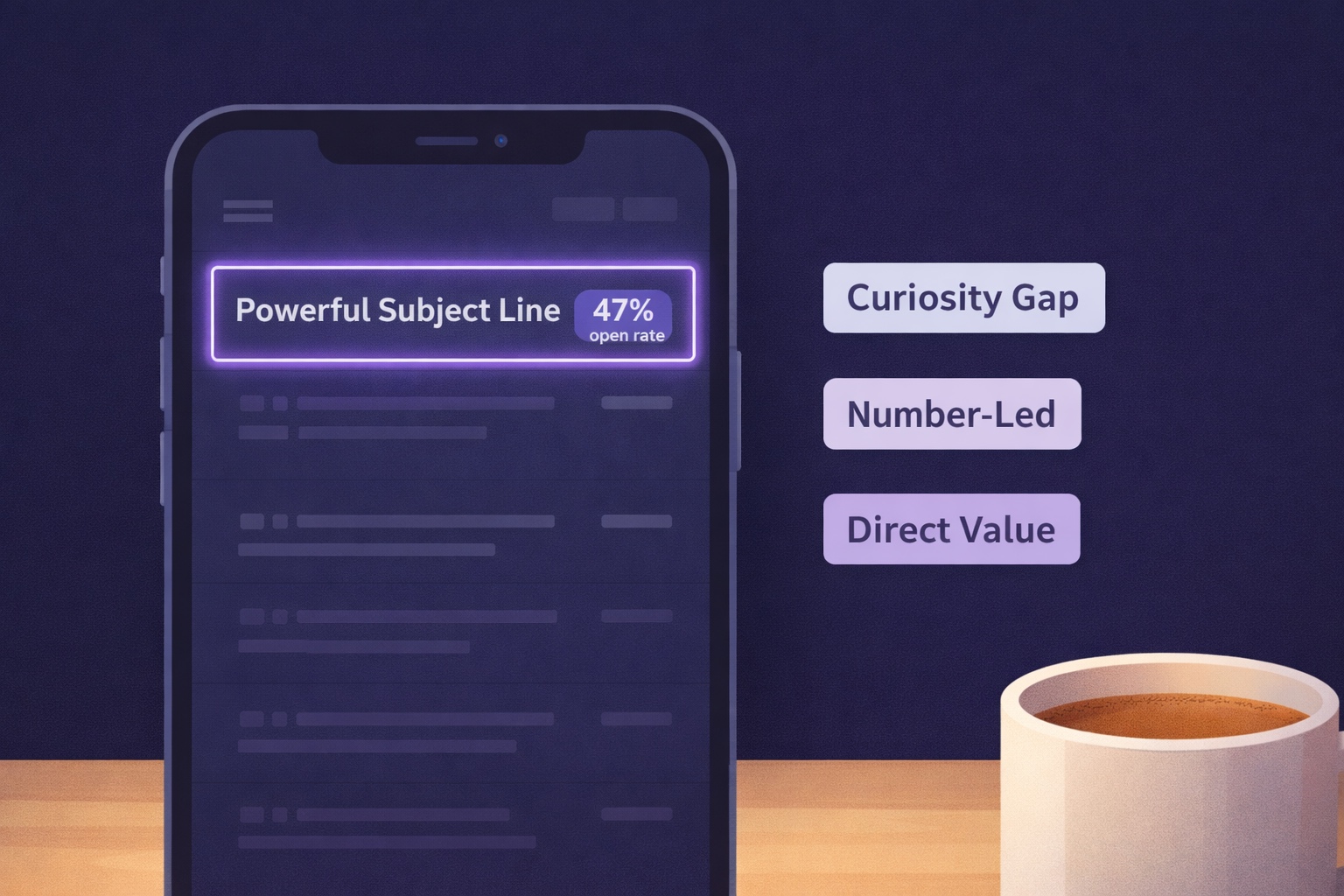
Newsletter Subject Lines: 85 Proven Templates That Get 40%+ Open Rates
Your subject line is the entire game in email. 85 tested templates across 7 categories — curiosity gaps, number-led, personal, contrarian, and more — with the psychology behind why each works and what to avoid.

Newsletter Reactivation: How to Win Back Inactive Subscribers (With Templates)
Every newsletter has inactive subscribers silently dragging down deliverability. A well-designed reactivation campaign recovers 8–20% of them while identifying the truly unrecoverable. The four-part reactivation sequence, subject lines that break through inbox habituation, the list hygiene logic that improves metrics after removal, and the onboarding system that prevents inactivity from accumulating in the first place.

Newsletter Strategy for Course Creators: Build Your List, Warm Your Audience, Fill Your Program
Course sales require the deepest trust of any creator product. Email is the only channel that builds that trust systematically. The complete system: lead magnets that pre-qualify students, a 10-email welcome sequence designed for enrollment, inter-launch content strategy, launch sequence framework, post-launch re-engagement, and evergreen enrollment system.
Email Marketing for Online Coaches: Build Your List, Nurture Prospects, Fill Your Program
Coaching has a long sales cycle — clients need weeks of trust-building before they commit. Email is the only marketing channel that matches this cycle structurally. The complete system: how to build a list that attracts your ideal client profile, the 7-email welcome sequence that pre-qualifies prospects, and how to run enrollment conversations through email without feeling salesy.