Newsletter Reactivation: How to Win Back Inactive Subscribers (With Templates)
Every newsletter has inactive subscribers silently dragging down deliverability. A well-designed reactivation campaign recovers 8–20% of them while identifying the truly unrecoverable. The four-part reactivation sequence, subject lines that break through inbox habituation, the list hygiene logic that improves metrics after removal, and the onboarding system that prevents inactivity from accumulating in the first place.

Every newsletter has a layer of subscribers who have silently stopped engaging — they are still on your list, still technically "subscribed," but they have not opened an email in 60, 90, or 120+ days. Most newsletter creators either ignore this cohort entirely or delete it wholesale at some point. Both approaches are suboptimal. Ignoring inactive subscribers damages your deliverability as the engagement signal from your list deteriorates. Deleting them without a reactivation attempt wastes potential — some meaningful percentage of those subscribers can be won back, and each reactivated subscriber is a subscriber you do not have to replace through acquisition.
A well-designed reactivation campaign typically recovers 8–20% of inactive subscribers while simultaneously improving your overall list health by identifying the truly unrecoverable subscribers who should be removed. The remaining 80–92% who do not reactivate get removed from your list — which sounds painful but actually improves every metric that matters: open rates increase, click rates increase, spam complaint rates decrease, and your deliverability infrastructure strengthens. The newsletter that purges its chronically inactive subscribers and has 4,000 engaged subscribers outperforms the one with 6,000 subscribers where 40% never open, on every metric that affects your bottom line.
This guide is the complete reactivation playbook: how to define and identify inactive subscribers, the four-part reactivation sequence that maximises recovery rates, the exact subject lines and email formats that work best, how to handle the subscribers you cannot reactivate, and how to prevent new subscribers from becoming inactive in the first place.
Defining Inactive: The Threshold That Matters for Your Newsletter
"Inactive subscriber" is not a universal definition — the right threshold depends on your newsletter's publishing frequency and your audience's engagement patterns. A weekly newsletter where a subscriber has not opened in 60 days has missed approximately 8–9 issues. A monthly newsletter where a subscriber has not opened in 60 days has missed just 2 issues. These represent fundamentally different levels of disengagement.
Recommended inactivity thresholds by publishing frequency:
- Daily newsletter: Inactive after 21 days of no opens (3 weeks, approximately 15 missed issues)
- 3x/week newsletter: Inactive after 45 days of no opens (approximately 18 missed issues)
- Weekly newsletter: Inactive after 60–90 days of no opens (8–13 missed issues)
- Biweekly newsletter: Inactive after 90–120 days of no opens (6–8 missed issues)
- Monthly newsletter: Inactive after 150–180 days of no opens (5–6 missed issues)
A subscriber who has missed 8–13 consecutive issues of your weekly newsletter is not temporarily busy — they are in a sustained disengagement state that will not self-correct without a deliberate intervention. Waiting longer before intervening allows the disengagement to deepen and reduces your reactivation probability.
There is also a segment that merits earlier attention: subscribers who are technically active (they open occasionally) but whose engagement has been declining systematically over the past 90 days. These "declining engagement" subscribers are the leading indicator of future inactivity — they are showing the pre-churn pattern before they become fully inactive. Your email analytics dashboard should surface this cohort through engagement trend tracking, and a light-touch re-engagement sequence run when engagement is declining — rather than only when inactivity is complete — produces better outcomes than waiting for the full disengagement to occur.
Why Subscribers Go Inactive: The Causes That Determine Your Strategy
Subscribers go inactive for reasons that fall into three broad categories, and understanding which category applies to your inactive cohort determines the right reactivation approach.
The first category is content-relevance drift: the subscriber's situation or interests have changed since they subscribed, and your newsletter no longer matches what they need. The person who subscribed to a career development newsletter when they were job hunting and found their role may feel the content is less immediately relevant now that they are settled. The fitness subscriber who went through a personal crisis and stopped exercising may feel the content is aspirational rather than actionable for their current state. Content-relevance drift is addressed by understanding where these subscribers currently are and whether your content can serve them there — or honestly acknowledging that the fit is no longer strong.
The second category is inbox overwhelm: the subscriber has accumulated too many newsletters and is not reading most of them, but has not taken the time to deliberately unsubscribe from those that are lower priority. These subscribers are not disinterested in your newsletter specifically — they are disengaged from most or all of their newsletter subscriptions because the inbox has become unmanageable. Reactivating this cohort requires standing out from the crowded inbox at the moment they happen to see your email, which is a subject line and framing challenge rather than a content quality challenge.
The third category is life circumstances: something significant changed in the subscriber's personal or professional life that disrupted their reading habits — a new job, a new baby, a health issue, a major project. These subscribers will often return on their own timeline once circumstances normalise, but a reactivation email that acknowledges life happens without pressure can accelerate their return. Reactivation messaging that is warm, non-judgmental, and low-pressure performs better with this cohort than urgency-driven or FOMO-based approaches.
The Four-Part Reactivation Sequence
A reactivation sequence is a dedicated, separate automation that runs for inactive subscribers and attempts to re-establish engagement before you make the removal decision. It is separate from your regular newsletter — inactive subscribers should not continue receiving regular issues while the reactivation sequence is running, because continuing to send regular issues to someone who is not opening them accelerates the deliverability damage. Pause regular sends to the inactive cohort, run the reactivation sequence, and then either move reactivated subscribers back to the regular list or remove the unresponsive ones.
The four-part reactivation sequence structure:
- Email 1 — The "We Miss You" (Day 1): The opening email should be warm, direct, and without pressure. The subject line should communicate that something is different about this email — it is not another regular issue. Subject line approaches that work: "Still interested?" / "Quick question before we go" / "[First name], have we lost you?" / "Be honest with me." The body of the email should be short (under 200 words), acknowledge that you have noticed the subscriber has not been engaging, express genuine interest in whether the newsletter is still useful to them, and include a simple CTA — a click, a reply, or a "yes, keep me subscribed" button. No new content, no promotion, no long explanation. The email's sole job is to prompt a deliberate re-engagement signal.
- Email 2 — Your Best Content (Day 5): If Email 1 was not opened, send your genuinely best-ever newsletter issue — the one that generated the most replies, the most forwards, or the most positive feedback from engaged subscribers. Frame it explicitly as "the most valuable thing I have ever sent." This email gives inactive subscribers a high-quality reminder of what they have been missing and a compelling reason to re-engage. If your newsletter has a standout issue, this is where it earns its keep a second time. If you have not identified your best content yet, this is the moment to do so — your email analytics can identify your highest-performing historical issues by open rate, click rate, and reply rate.
- Email 3 — The Special Offer (Day 10): If the subscriber has not engaged with the first two emails, escalate with a concrete incentive. This can be a free resource they have not received, early access to something you are working on, a discount on a paid product or tier, or exclusive content specifically for subscribers who have been with you for a long time. The offer should be framed as a reward for their past loyalty: "You have been a subscriber for [X months] — I want to make sure you are getting genuine value. Here is something I have not sent to everyone." The specificity of acknowledging their subscription history creates a personal connection that generic reactivation emails cannot replicate.
- Email 4 — The Last Chance Notice (Day 15): The final email in the sequence is the explicit "we are about to remove you" notice. This email performs one of the highest open rates of any reactivation email because the subject line directly communicates consequence: "We are removing you from [Newsletter Name] in 48 hours" / "Last chance — we are cleaning our list" / "[First name], this is our last email to you." The FOMO of impending loss — losing access to something they have had, even if they have not been using it — motivates a significant proportion of previously unresponsive subscribers to click or reply at the last moment. The email should be very brief, clearly state the removal date, provide a single prominent "keep me subscribed" CTA, and make no attempt to sell anything.
Subject Lines That Reactivate: The Psychology of Re-Engagement
Reactivation subject lines operate on different psychological principles than regular newsletter subject lines. Regular subject lines create curiosity or promise value that motivates an open. Reactivation subject lines need to interrupt a pattern of non-engagement that has been reinforced by days or weeks of ignoring your emails — they need to be distinctive enough to break through the habit of not opening.
The subject line approaches that most reliably break through inbox habituation patterns are: direct questions (which require a cognitive response that passive dismissal cannot provide), pattern interrupts (subject lines that are shorter, more conversational, or formatted differently from typical newsletter subject lines), explicit consequence signals (the "we are removing you" category that triggers loss aversion), and personalisation that signals individual awareness (using first names or referencing subscription duration creates a non-generic feeling that prompts a second look).
Reactivation subject lines by email in the sequence:
- Email 1 — Re-engagement prompt:
- "Still interested?" — Simple, direct, and different from any issue you have sent
- "[First name], quick question" — Personal and conversational
- "Have we lost you?" — Honest and non-pressuring
- "Be honest with me." — Signals a different kind of communication
- "We noticed you haven't been opening" — Transparent acknowledgment
- Email 2 — Best content delivery:
- "The most valuable thing I have ever sent you"
- "Before you go — you missed this"
- "Our most-read issue ever (in case you missed it)"
- "[First name], this one is worth it — I promise"
- Email 3 — Special offer:
- "A gift for staying subscribed this long"
- "Subscriber exclusive — only for people who have been here a while"
- "[First name], I want to make sure you're getting value"
- "Something I did not send to everyone"
- Email 4 — Last chance:
- "We are removing you in 48 hours" — Highest open rate of the sequence
- "Last email from us, [First name]"
- "[Newsletter Name] subscription ending — click to stay"
- "This is our last email to you"
The subject line framework for regular newsletters does not apply in the same way to reactivation sequences because the context and objectives are different. Regular subject lines build on an established open habit; reactivation subject lines must override a non-open habit. The approaches that break through are almost always simpler, more direct, and more personal than what works for regular newsletter subject lines.
List Hygiene After the Reactivation Sequence
When the four-email reactivation sequence completes, you have three cohorts to handle. Reactivated subscribers — those who opened an email, clicked a link, or explicitly opted back in — return to your active list. They should receive a brief "welcome back" communication that acknowledges their return, confirms what they will receive going forward, and perhaps offers a catch-up on what they missed. These subscribers are high-intent re-engagers who often become more actively engaged after reactivation than they were in the months before going inactive — because the reactivation process forced a deliberate decision to stay, which is a stronger commitment than passive non-cancellation.
The second cohort — subscribers who did not engage with any of the four reactivation emails — should be removed from your list. This is the decision most newsletter creators delay because removing subscribers feels like losing reach. But a subscriber who did not respond to four specifically-designed re-engagement emails over 15 days, including a last-chance removal notice, is not going to re-engage through regular newsletter sends. Their continued presence on your list damages your deliverability by lowering your average engagement rate, and that deliverability damage harms the inbox placement of your emails to your active subscribers. Removing them is not just correct — it is commercially necessary.
The third cohort requires specific handling: subscribers who received the removal notice and clicked the "keep me subscribed" CTA but have still not engaged with a regular newsletter issue in the four to six weeks after reactivation. These subscribers re-subscribed deliberately but have not established a reading habit. Send one more targeted issue — ideally your highest-quality recent content — specifically to this cohort 30 days after their reactivation opt-in. If they do not engage with this issue either, remove them from the active list. A subscriber who opted back in but never read anything is providing engagement signal noise rather than genuine engagement.
The Deliverability Impact: Why List Hygiene Is a Revenue Issue
Newsletter creators who have not run reactivation campaigns often underestimate how significantly an inactive-heavy list damages the deliverability of every email they send. Inbox providers — Gmail, Outlook, Apple Mail — use engagement signals from their users to determine inbox placement decisions. When a meaningful percentage of people who receive your newsletter are not opening it, that non-engagement signal aggregates into a lower sender reputation score, which results in more of your emails being routed to spam or promotions folders for your active subscribers too.
The mathematics are important here. A newsletter with 6,000 subscribers and 40% inactive subscribers has 2,400 active openers. The newsletter sends to 6,000 addresses and receives engagement signals from 2,400 — a 40% engagement rate that reads as strong. But if 3,000 of the 6,000 addresses are behind a Gmail inbox provider that has learned these specific addresses never interact with your sender, Gmail's algorithm begins routing a portion of your sends to less visible folders. The result is that your actual active subscriber engagement rate is lower than your analytics show, because some emails to active subscribers are landing in spam and going unseen.
After a reactivation campaign that removes the 2,400 non-responsive inactive subscribers, the newsletter now has 3,600 subscribers with a 67% engagement rate. Fewer emails, but the emails that are sent land in the inbox at a higher rate, reach a higher proportion of active subscribers, and generate better engagement signals that further improve deliverability over subsequent sends. The counterintuitive truth: the smaller, cleaner list produces more total opens than the larger, inactive-heavy list — and that superior deliverability compounds every future sending decision.
Preventing Inactivity: The Onboarding System That Shapes Long-Term Engagement
The most effective inactivity prevention is an exceptional onboarding experience. Subscribers are most engaged — and most likely to develop a reading habit — in the first 14–30 days after subscribing. A welcome sequence that delivers consistent high value in the first two weeks establishes a reading habit before the subscriber has had the chance to drift. A weak welcome sequence — a single "thanks for subscribing" email followed by weeks of regular newsletter issues — leaves the subscriber's habit formation entirely to chance.
The welcome sequence that prevents future inactivity has three specific characteristics. First, it delivers the highest-quality content in your newsletter's library during the first two weeks — this is when the subscriber is most receptive and most likely to form a reading habit, and it should not be the moment you send average content. Second, it sets clear expectations about what the newsletter contains, how often it arrives, and what the subscriber will get from reading consistently. Subscribers who understand what to expect are more likely to read consistently than those who receive an undescribed stream of content. Third, it ends with an explicit request for engagement — a reply prompt, a question, a survey — that establishes the expectation of two-way communication from the beginning. Subscribers who reply to early emails are dramatically more likely to remain engaged long-term than those who only passively open.
The segmentation setup that identifies declining engagement early — before a subscriber becomes fully inactive — allows you to send light-touch re-engagement content to the declining-engagement cohort before the full reactivation sequence is needed. An automated email sent to subscribers who have not opened in 30 days ("We noticed it has been a few weeks — here is something you might have missed") can interrupt the drift-toward-inactivity pattern at a point when re-engagement is much easier than when full inactivity has set in.
Reactivation Timing: When to Run Campaigns
Most newsletters should run a reactivation campaign 2–3 times per year rather than continuously. Running reactivation campaigns too frequently — quarterly or more — means you are addressing subscribers who have only been inactive for a few months, some of whom may still return naturally without intervention. Running them too infrequently allows the inactive cohort to grow so large that its deliverability impact becomes severe before you address it.
The best timing for reactivation campaigns aligns with natural fresh-start moments that create genuine re-engagement motivation: early January (new year, renewed interest in personal development and health topics), early September (back-to-routine mindset after summer), and Q4 for professional niches (budgeting and planning cycles that create renewed interest in career and business content). These natural motivation windows mean that the re-engagement prompt arrives when the subscriber's receptiveness to picking up dropped habits is genuinely elevated — which improves your reactivation rate beyond what a randomly-timed campaign would achieve.
Track the success of each reactivation campaign through three metrics: reactivation rate (percentage of inactive subscribers who re-engaged), removal rate (percentage removed as unrecoverable), and the 90-day retention rate of reactivated subscribers (did they stay engaged or drift inactive again?). The 90-day retention rate tells you whether your reactivation content and the subsequent regular newsletter are delivering enough sustained value to hold the reactivated subscribers, or whether reactivation is temporarily patching a more fundamental content-value problem. Use this data alongside your email analytics metrics and the automation setup that makes recurring reactivation campaigns low-effort after the initial sequence is built.
Content Quality as the Root Cause of Inactivity
Reactivation campaigns address the symptom — inactive subscribers — but not always the root cause. If a significant portion of your newly acquired subscribers go inactive within their first 90 days, the problem is almost certainly your onboarding and content quality rather than something that reactivation campaigns can fix. A newsletter where 30% of new subscribers become inactive within 3 months has a retention problem that compounds with every new subscriber you acquire; a reactivation campaign run twice a year is a maintenance operation on a leaking bucket, not a fix.
The diagnostic question is: at what point in the subscriber lifecycle does inactivity most commonly begin? If inactive subscribers cluster in the 0–30 day cohort (new subscribers who went immediately inactive), the welcome sequence is failing to establish a reading habit. If they cluster in the 60–120 day cohort, the newsletter content quality or relevance drops significantly after the initial welcome period. If they cluster in the 6–12 month cohort, your newsletter is successfully establishing early engagement but failing to sustain it through content evolution as subscribers mature past the beginner stage.
Each of these diagnoses has a different fix. Early inactivity (0–30 days) requires improving the welcome sequence — specifically the quality and relevance of the content delivered in the first two weeks. Mid-stage inactivity (60–120 days) requires reviewing your regular newsletter content for consistent value delivery and the writing quality principles that keep subscribers engaged beyond the initial novelty period. Late-stage inactivity (6–12 months) requires intentionally evolving your content to serve subscribers at different knowledge levels and recognising that long-tenure subscribers need different content than new subscribers just arriving.
The Segmentation Foundation That Makes Reactivation More Effective
Reactivation campaigns that treat all inactive subscribers identically — sending the same sequence to someone who subscribed 90 days ago and went inactive as to someone who subscribed 3 years ago and recently went inactive — underperform compared to those that acknowledge different subscriber profiles with different approaches. The segmentation framework that tags subscribers by lead magnet, subscription source, and engagement history gives you the data to personalise reactivation sequences.
A long-tenure inactive subscriber — someone who was engaged for 18 months and recently stopped opening — has a different reactivation profile than a short-tenure inactive subscriber who went quiet after two weeks. The long-tenure subscriber has a proven track record of value from your newsletter; their inactivity is likely circumstantial (life changes, inbox overwhelm) rather than evidence of fundamental content misalignment. The reactivation approach should acknowledge their history: "You have been a subscriber for 18 months and one of our most consistent readers. We noticed you have not been opening recently and wanted to check in." This personal, history-aware framing converts at higher rates than generic inactive-subscriber messaging.
The short-tenure inactive subscriber, by contrast, likely went inactive because the newsletter did not meet their expectations from the lead magnet or sign-up page. The reactivation approach should acknowledge this more directly and offer something different: "We noticed you have not been opening since you signed up — we want to make sure we are delivering what you were expecting when you subscribed." This framing opens the door for feedback about expectations versus delivery, which is useful information regardless of whether the subscriber reactivates. The landing page optimisation principles that set accurate subscriber expectations before sign-up directly reduce short-tenure inactivity by ensuring the subscribers who join already have a clear picture of what they will receive.
Building cross-promotion partnerships with quality newsletters also reduces your inactivity rate because cross-promoted subscribers have already demonstrated an interest in reading newsletter content — they are more likely to maintain an open habit than cold subscribers from paid acquisition or less targeted organic sources. The quality of subscriber acquisition channels directly correlates with long-term engagement rates, which is why investing in quality list-building through SEO-driven organic traffic, genuine lead magnets, and content-qualified referral sources reduces your long-term reactivation workload.
Reactivation Across Different Newsletter Types
The reactivation sequence structure described above applies universally, but the specific content and tone varies meaningfully across newsletter categories. A business and finance newsletter reactivation sequence should be more data-forward — citing specific valuable content the subscriber missed, with quantified value claims. A personal development or lifestyle newsletter should be more conversational and relationship-focused — less about what they missed and more about whether the newsletter is still the right fit for their current life. A creator-focused or professional newsletter can directly acknowledge the competitive inbox environment: "We know there are a lot of newsletters competing for your attention, and we want to make sure ours is genuinely earning its place."
The tone of your last-chance email also varies by newsletter personality. A newsletter with a direct, no-nonsense editorial voice can use a blunt subject line ("We are removing you from our list on Friday") without it feeling incongruent. A newsletter with a warmer, more personal voice should soften the same message: "We are about to clean up our subscriber list — and we do not want to lose you by accident." The underlying mechanism — loss aversion, the impending action, the single easy CTA — is the same, but the framing aligns with the newsletter's established relationship tone.
Regardless of newsletter type, the reactivation sequence should never be punitive or guilt-inducing. Subscribers who went inactive are not doing anything wrong — they are behaving in ways that reflect their current circumstances, not their character. Reactivation copy that implies disappointment or obligation creates negative associations that reduce reactivation rates and increase the probability that reactivated subscribers immediately churn again. The most effective reactivation framing is one of genuine interest in the subscriber's situation and genuine care about whether the newsletter serves them — because this framing, unlike manufactured urgency, is actually true.
Reactivation for Paid Subscriber Churners
Paid subscribers who cancel require a different reactivation approach than free subscribers who go inactive. A paid subscriber who cancels has made a deliberate, active decision — they did not drift into inactivity, they took a specific action to cancel their subscription. Reactivating them requires addressing the specific reason they cancelled, not simply re-establishing engagement through content.
The highest-converting approach for lapsed paid subscriber reactivation is a direct, personal email — from you, not automated-looking — 30 days after cancellation that asks simply: "I noticed you cancelled [Newsletter Name] last month. I would genuinely like to understand why, so I can improve. Was it the content, the price, or something else entirely?" This kind of direct, non-defensive request for feedback generates meaningful reply rates, often reveals actionable insights about content gaps or pricing friction, and — in perhaps 10–20% of cases — results in the subscriber resubscribing, often prompted by the personal acknowledgment of their departure.
For lapsed paid subscribers who do not respond to the direct feedback email, a win-back offer 90 days after cancellation — a limited-time return offer at a discounted annual rate or with an added incentive — captures the subset who cancelled for temporary rather than permanent reasons (budget constraint, life circumstances, content fatigue that has since resolved). Segmenting these win-back offers by the subscriber's cancellation reason (if you collect cancellation survey data) improves their effectiveness significantly.
Automated Reactivation Sequences Without the Manual Overhead
InfluencersKit's subscriber management tools include engagement-based cohort filtering, automated reactivation sequence setup, and list hygiene workflows — so your reactivation campaigns run on schedule without manual intervention. The analytics dashboard surfaces your inactive cohort automatically alongside the engagement trend data that identifies at-risk subscribers before they go fully dark. See the growth features and the full pricing before starting a trial.
Start your free trial — set up your first reactivation sequence this week and reclaim 8–20% of your inactive subscribers before removing the rest.
Stay Updated
Get the latest insights, strategies, and tips delivered directly to your inbox. Join thousands of creators who are building their email communities with our weekly newsletter.
No spam, unsubscribe at any time. We respect your privacy.
Related Articles

Newsletter Viral Loops: How to Make Your Subscribers Your Growth Engine
Most newsletter growth requires proportional effort. A viral loop changes this: each new subscriber creates a mechanism that brings in additional subscribers. The viral coefficient math, four loop architectures (referral, forward, access gate, social proof), stacking strategy, re-promotion system, and the content quality foundation that makes viral growth compound rather than spike.
Newsletter Cross-Promotion: How to Add 300-700 Subscribers Per Month at Zero Cost
A well-executed newsletter swap can generate 200–500 new subscribers in 48 hours at zero acquisition cost. The complete system: the 4-factor partner qualification criteria, five cross-promotion formats ranked by conversion rate, outreach pitch templates that get replies, and a monthly programme that produces subscriber growth reliably.
Email Marketing for Online Coaches: Build Your List, Nurture Prospects, Fill Your Program
Coaching has a long sales cycle — clients need weeks of trust-building before they commit. Email is the only marketing channel that matches this cycle structurally. The complete system: how to build a list that attracts your ideal client profile, the 7-email welcome sequence that pre-qualifies prospects, and how to run enrollment conversations through email without feeling salesy.
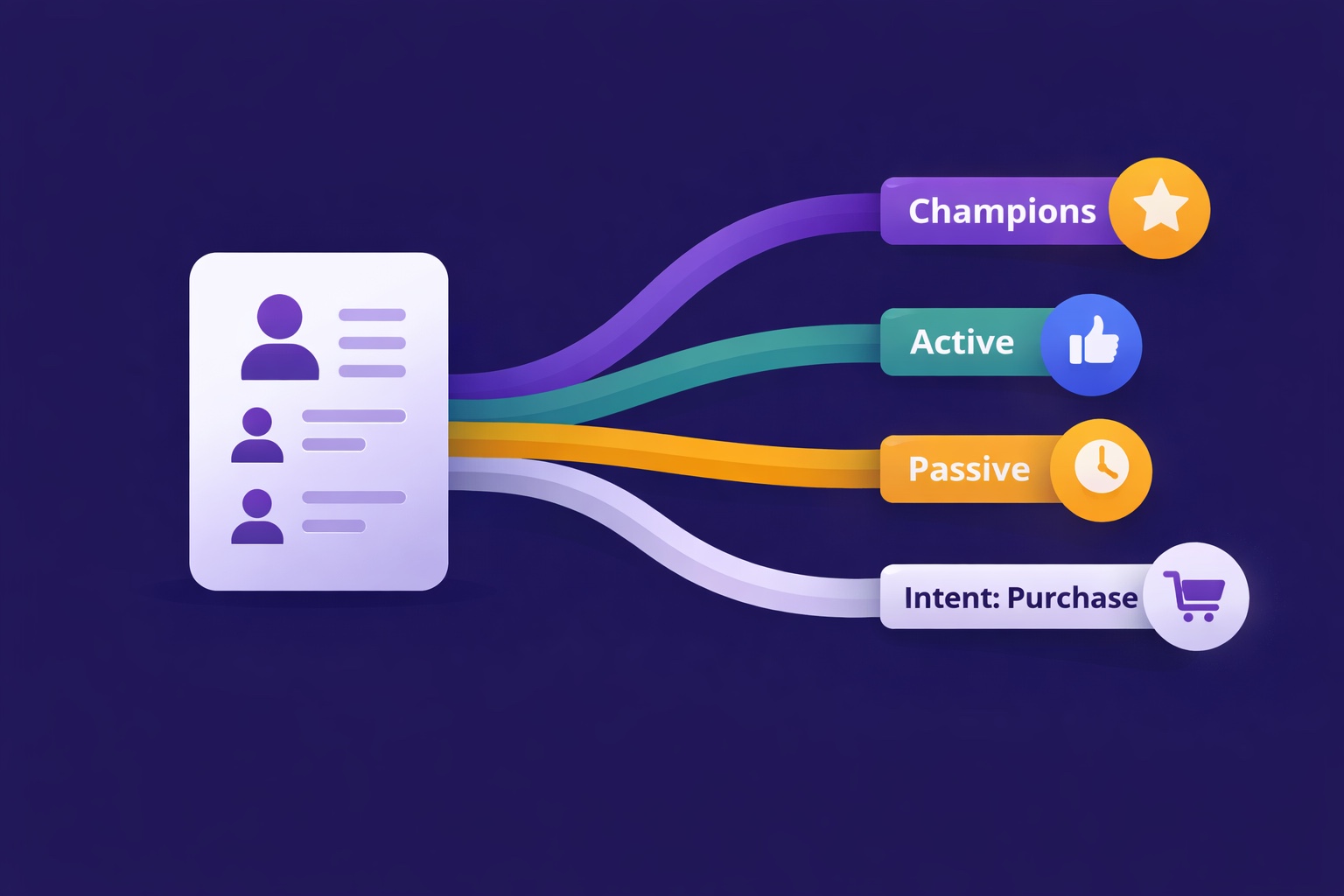
Newsletter Segmentation for Creators: Send the Right Email to the Right Subscriber
Segmentation is the gap between 25% open rates and 45% open rates — and between 3% paid conversion and 9%. The 5 segmentation types that move the needle, the exact tags to set up from day one, and how to build a behavioral targeting system that runs automatically in InfluencersKit.