Email Marketing for Online Coaches: Build Your List, Nurture Prospects, Fill Your Program
Coaching has a long sales cycle — clients need weeks of trust-building before they commit. Email is the only marketing channel that matches this cycle structurally. The complete system: how to build a list that attracts your ideal client profile, the 7-email welcome sequence that pre-qualifies prospects, and how to run enrollment conversations through email without feeling salesy.

Coaching businesses have a client acquisition problem that most marketing advice fails to address honestly. The sales cycle is long — typically 2–8 weeks from initial awareness to paid enrollment. The purchase is high-consideration — clients are committing to a significant financial and personal investment. And the trust threshold is higher than almost any other service category — people hire coaches for outcomes that matter deeply to them, which means the relationship must be established before money changes hands, not during a sales call.
Email is the only marketing channel that matches this sales cycle structurally. It is persistent (a subscriber stays subscribed across months), it is intimate (email arrives in the same inbox as messages from friends and colleagues), it is consent-based (subscribers actively chose to hear from you), and it allows for the kind of sustained, substance-rich communication that builds genuine trust over time. Social media reach is too variable and impermanent. Paid ads accelerate initial visibility but cannot replicate the relationship-building function. A well-built email list, by contrast, is a reservoir of warm prospects that grows over time and produces client enrollments with increasing predictability.
This guide is the complete email marketing system for coaches: how to build a list that attracts your ideal client profile, how to structure nurture sequences that convert prospects over weeks and months, how to use your newsletter to create the pre-qualified enrollment conversations that every coaching business depends on, and how to measure whether your email system is actually working at each stage of the funnel.
The Coaching Client Acquisition Funnel: Where Email Fits
Before building any email marketing system, the funnel it operates within needs to be understood clearly. Coaching businesses typically have four acquisition stages: Awareness (the prospect encounters you for the first time through content, referral, or discovery), Interest (the prospect signals enough interest to opt into your email list), Consideration (the prospect receives your emails over days or weeks and evaluates whether your approach, philosophy, and results match their needs), and Decision (the prospect reaches out for a discovery call or applies for your program). Email marketing is almost entirely a Consideration-stage tool — its job is to move prospects from initial list signup to a decision-ready state.
This framing has a practical implication: you cannot build an email list and immediately send promotional emails for your coaching program and expect meaningful enrollment. Prospects who sign up for your list are almost never ready to buy in that first week. They need to see your thinking, understand your methodology, develop trust in your results, and reach the conclusion on their own timeline that you are the right fit. Email marketing for coaches is patience-based — the system you build takes weeks to work, but once it's running it produces qualified enrollments continuously without requiring your active attention for every prospect.
Building the Right Email List: Quality Over Quantity
For coaching businesses, list quality matters more than list size by a wider margin than almost any other creator category. A 500-subscriber list of people who match your ideal client profile — the right professional context, the right problem, the right aspiration, the right budget range — will produce more client enrollments than a 5,000-subscriber list of loosely interested but unqualified prospects. This is because coaching email marketing depends on conversion rates at the consideration and decision stages: if 80% of your list doesn't match your client profile, your email content can't be calibrated for anyone specifically, your lead magnet self-selects the wrong people, and your enrollment rates will be low regardless of your email quality.
The first implication is that your lead magnet — the free resource you offer in exchange for an email address — needs to be designed as a qualification mechanism, not just a conversion mechanism. A lead magnet that attracts maximum signups from a broad audience is wrong for a coaching business. A lead magnet that attracts the exact profile of person who is already close to the problem your coaching addresses is correct. "Free guide to becoming a better leader" attracts everyone. "The 5 conversations mid-level managers avoid that stall their path to VP" attracts the specific professional profile that a leadership coach targeting that transition actually serves.
Lead magnet formats that qualify well for coaching businesses:
- Self-assessment or diagnostic: "Score your [skill/area] in 10 questions — and discover your biggest growth gap." People who complete a self-assessment have high self-awareness and are in active evaluation mode — both markers of coaching readiness. The results also give you segmentation data (you know what score they got, which tells you where they are in the journey your coaching addresses).
- Specific strategy or framework document: Not a general overview but a specific, named framework you use in your coaching. "The 3-layer positioning framework I use with every executive coaching client." Anyone who subscribes to get this has just demonstrated interest in your specific methodology, which makes them substantially more qualified than someone attracted to generic advice.
- Case study or outcome showcase: A detailed breakdown of a result you helped a client achieve, with enough specificity that readers can see themselves in the situation. Prospects who read a case study and think "this describes my situation exactly" are further along the consideration journey than anyone who downloaded a general resource.
- Mini email course (5-7 emails over 5-7 days): A focused educational sequence on the core problem your coaching addresses. The act of completing a multi-day course filters for engaged, motivated prospects. Those who complete it have demonstrated the level of commitment that coaching clients need to have. Completion data also tells you who your most engaged prospects are before you've had a single conversation with them.
The lead magnet strategy for coaches differs from that for content creators in one important way: conversion rate is a secondary goal. The primary goal is qualification accuracy. A lead magnet that converts 3% of visitors but attracts 90% ideal-fit prospects is more valuable than one that converts 12% but attracts 30% ideal-fit prospects. When building your list on a limited marketing budget, this precision matters enormously because every subsequent email, call, and enrollment conversation is a time investment — and that time is wasted on unqualified prospects.
Your newsletter sign-up landing page should reinforce this qualification explicitly. The headline should describe the specific transformation your coaching produces, for the specific person you serve. The benefit bullets should describe what subscribers will learn in language that resonates with your ideal client and sounds foreign to everyone else. "Join my newsletter for business tips" fails this test. "Weekly frameworks for B2B founders navigating their first $1M to $5M growth phase" passes it — it excludes consumer founders, it excludes very early stage, it excludes the post-scaling phase, and it immediately signals to the right person that this newsletter was built for them specifically.
The Welcome Sequence: Your Most Important Email Asset
New subscribers open their first email at 50–80% rates — dramatically higher than any broadcast you'll send later. This window of peak engagement is the most important editorial moment in your entire email system, and most coaches waste it with a generic "thanks for subscribing, here's your download" message that communicates nothing about who you are, what transformation you produce, or why your approach is different from the dozens of other coaches in your space.
A well-designed welcome sequence for a coaching business runs 5–7 emails over 7–10 days. Each email has a specific job in the prospect journey, and the sequence as a whole moves a new subscriber from "someone who downloaded a free resource" to "someone who understands my specific methodology, has seen results I've produced, and knows how to work with me." The full mechanics are covered in the welcome email sequence guide — the coaching-specific additions are these:
Welcome sequence structure for coaches (7 emails, 10 days):
- Email 1 (Day 0, immediate): Deliver the lead magnet. Brief personal introduction — not a credentials list, but a human framing of why you do this work and who it's for. Set expectations for what comes next. Subject: deliver on the promise they signed up for.
- Email 2 (Day 2): The problem you solve, stated with specificity. Not the surface-level problem ("stress", "revenue plateaus", "imposter syndrome") but the second and third-level problem — the real reason the surface problem persists and why generic advice hasn't worked. Demonstrating this level of diagnostic precision is itself a proof of competence.
- Email 3 (Day 4): Your methodology or philosophy. What is your specific approach to solving the problem you described in Email 2? This should be differentiated — not "I use a holistic approach" but the specific named framework, model, or sequence of interventions that makes your coaching distinctive. Prospects who resonate with your methodology are more likely to enroll and complete coaching successfully.
- Email 4 (Day 6): A client result story. Not a generic testimonial quote but a narrative: who the client was, what their specific situation was, what you worked on together, and what changed. Include a direct quote. Specificity is the proof — vague success stories are indistinguishable from fiction. Specific, detailed results are credible.
- Email 5 (Day 8): A piece of your best free thinking. Not a teaser — your actual best insight on the core problem. This is counterintuitive to many coaches who fear "giving away" their methodology. The reality is that a genuinely valuable email increases rather than decreases purchase intent — it demonstrates what the paid experience will be like, at a quality level that makes prospects want more.
- Email 6 (Day 10): A soft introduction to working with you. Not a hard sell — a description of what the coaching relationship looks like, who it's appropriate for (including who it's NOT for — self-selection is valuable), and how to express interest if they're curious. Include your discovery call link or application link with zero pressure framing.
- Email 7 (Day 12, optional): FAQ or objection-handling. What questions do prospects consistently ask before enrolling? Answer them directly. What hesitations do people have? Address them honestly. This email functions as a pre-call conversation that qualifies intent and prepares the prospect for a productive discovery call.
The welcome sequence runs automatically for every new subscriber, which means every person who discovers you and signs up — whether through a podcast appearance, a social media post, a guest article, or organic search — goes through the same structured introduction to your coaching practice. This automation is the highest-leverage email investment you will make: one-time setup work that onboards and qualifies every future prospect indefinitely. Build it once, then focus on driving traffic to your list.
The Ongoing Newsletter: Nurturing Prospects Who Aren't Ready Yet
Your welcome sequence handles the first 10–12 days. The ongoing newsletter handles the weeks and months that follow — the consideration period for prospects who found your welcome sequence valuable but aren't yet ready to commit to coaching. Most coaching clients need 4–12 weeks of consistent exposure before they reach out, and some need considerably longer. The ongoing newsletter is the mechanism that keeps you present, credible, and relevant during this consideration period without requiring any active effort on your part per prospect.
Newsletter Content Strategy for Coaches
The content your newsletter delivers needs to accomplish two simultaneous goals: it must deliver genuine value (insights, frameworks, perspectives) that make subscribers feel the newsletter is worth reading on its own merits, and it must demonstrate your coaching competence in a way that moves prospects closer to enrollment. The coaches whose newsletters do both — not promotional content disguised as value, not purely editorial content with no business relevance — produce the highest-converting email lists.
The formats that work best for coaching newsletters are:
- The client insight issue: A specific insight, realization, or breakthrough that came out of your client work recently (anonymized or with permission). "I worked with a client this week who was stuck on X. Here's what we discovered together, and how I think about this problem." This format is unique to coaches — no other creator category has this content source. It demonstrates active practice, not just theoretical knowledge. It shows your coaching in action without requiring the prospect to commit to anything. And it positions you as someone who produces measurable thinking, not just shares content from other sources.
- The framework deep-dive: Take one concept, model, or framework that you use in your coaching and explain it fully — the underlying principle, how to apply it, what it looks like when it works and when it fails. Coaches often worry about "giving away" their IP; the evidence suggests the opposite effect. Subscribers who see a framework they find genuinely useful immediately wonder what it would be like to work with someone who uses it — they want access to you applying it to their specific situation, which a newsletter issue cannot provide.
- The contrarian perspective: What does everyone in your coaching niche say that you disagree with? Where does conventional wisdom produce bad outcomes? What do most coaches teach that you think is wrong or incomplete? Contrarian positions establish distinctive authority — they signal independent thinking rather than regurgitated wisdom. Prospects who agree with your contrarian view have self-selected as philosophically aligned, which predicts a better coaching fit.
- The mindset or belief shift issue: Identify a limiting belief that your clients commonly hold that prevents them from making progress, and write an issue specifically designed to dislodge it. This content is high-conversion precisely because it addresses the psychological precursor to the purchase decision — a reader who finishes this issue with a shifted belief is a materially better prospect than before reading it.
Publishing frequency for coaching newsletters should be weekly for most coaches. Less frequent publishing (biweekly or monthly) allows prospects to disengage between issues, which means the consideration period extends without the consistent presence your list needs to maintain. Weekly publishing is sustainable when you're drawing content from your active coaching practice — the insights from client sessions, the frameworks you refine through repeated application, the questions clients ask that reveal where prospects get stuck. Your clients are, in this sense, the most valuable content source available to you: every coaching session is potential newsletter material.
Segmentation: Managing Prospects at Different Stages
As your list grows, you'll have subscribers at very different stages of the consideration journey — someone who joined last week and someone who has been on your list for eight months have completely different information needs and proximity to a purchase decision. Segmentation allows you to acknowledge and respond to these differences without managing each subscriber individually.
For most coaching email lists, three segments are sufficient to start:
- New subscribers (weeks 1–4): In the welcome sequence. Receiving automated onboarding emails. Not yet receiving the broadcast newsletter (or receiving both simultaneously, depending on your preference). These subscribers are in the highest-engagement window — open rates are elevated, they're actively evaluating you, and content quality in this window has outsized impact on their long-term engagement.
- Active subscribers (weeks 5+, opens regularly): Past the welcome sequence, receiving the regular newsletter, demonstrating engagement by opening. This is your core nurture audience — the people building a relationship with your work over time. Occasional enrollment invitations are appropriate here (1 out of every 6–8 issues), phrased as updates rather than pitches: "A few spots just opened in [program] — here's who it's for."
- Inactive subscribers (not opened in 60+ days): Receiving your regular newsletter but not engaging with it. These subscribers are not in active consideration mode and should not receive enrollment invitations — the conversion rate is effectively zero, and the invitation feels tone-deaf to someone who hasn't been reading your content. Instead, run a re-engagement campaign: a direct question ("Are we still sending you useful content?"), a specific high-value issue designed to recapture attention, or a simple "stay or leave" email that prompts a deliberate action. Subscribers who don't re-engage should be removed to preserve your deliverability and the accuracy of your engagement metrics.
The Enrollment Invitation: How to Sell Coaching Through Email Without Being Pushy
The most common fear coaching business owners have about email marketing is the fear of seeming "salesy" — of damaging the trust they've built by appearing to prioritize their commercial interests over the subscriber's experience. This fear is legitimate and worth taking seriously, because an enrollment invitation that feels extractive will damage the relationship. But the solution is not to avoid enrollment conversations in email — it's to make them feel earned and appropriately contextual.
An enrollment invitation earns its place in a newsletter when three conditions are met: the subscriber has received genuine value (not just promotional content) through previous issues, the invitation is clearly optional and low-pressure, and the invitation is specific and honest about who the program is for. The coaches whose email enrollment conversations work best treat the invitation as information sharing, not persuasion: "Here's what I'm working on with clients right now, here's who it's for, and here's how to find out more if any of this resonates."
Effective enrollment invitation structure in a newsletter:
- Context (2–3 sentences): What's happened in your coaching practice recently that makes this relevant now? A new cohort opening, a waiting list clearing, a new program format you've developed. The "why now" should be real, not manufactured.
- Program description (3–4 sentences): What specifically happens in this coaching engagement? What problems does it address? What does the client commit to (time, frequency, duration)? What outcomes are clients pursuing?
- Who it's for AND who it's NOT for: Include both. "This is for [specific profile]. It's not the right fit if [exclusion criteria]." Exclusion criteria build trust by demonstrating that you're interested in the right fit rather than maximizing enrollments. They also significantly improve conversion quality — the people who apply after reading a clear exclusion list are more qualified than those who applied without it.
- The next step (1 sentence): "If any of this resonates, reply to this email and tell me briefly where you are with [core problem]." Or a link to your application or discovery call booking page. Make the action clear and singular — one thing to do next, not multiple options.
- Return to value (optional): After the enrollment section, some coaches include a brief final thought or insight that returns to pure value delivery. This signals that the newsletter is primarily a value vehicle and the enrollment invitation is secondary — which it should be.
Frequency matters. Enrollment invitations in every issue train subscribers to skim past your coaching-related content, eventually skipping your newsletter altogether. Enrollment invitations once every 6–8 issues — clearly marked and easy to skip — feel like natural business updates from someone they're genuinely following, not relentless promotion from someone who sees them as a revenue source.
Launch Sequences: Filling a Program Cohort
For coaches who run group programs on a cohort model — enrolling a fixed number of clients at specific intervals — the launch email sequence is a distinct high-stakes communication that requires its own strategy separate from ongoing newsletter content.
A program launch sequence typically runs 7–14 days before the enrollment window closes and includes 5–8 emails specifically dedicated to enrollment. This is a departure from the 1-in-8 frequency of typical enrollment invitations — during a launch window, the entire newsletter pivots to enrollment mode because the timing is genuinely limited. Subscribers who are not interested can mentally file the emails as "launch period" and return to normal programming after; subscribers who are interested need enough information and urgency to make a decision.
Launch sequence structure for coaching programs: Day 1 (announcement + program description + waitlist invite), Day 3 (methodology deep-dive — the specific approach this program uses and why), Day 5 (client result narrative — detailed case study from a past cohort), Day 7 (FAQ and objection-handling), Day 9 (scarcity update — genuinely report how many spots remain), Day 11 (final invitation with clear deadline). Each email should stand alone — some subscribers will miss individual emails, and each one needs to make the case independently rather than assuming the reader has seen every prior email.
After a launch, the list needs a "return to value" period. Send one purely editorial newsletter — no enrollment content — immediately after the launch closes. This signals to subscribers who didn't enroll that the relationship isn't transactional, that you value their attention regardless of whether they purchased, and that your newsletter is worth staying subscribed to outside launch periods. This is the detail most coaches miss and the reason many coaching email lists see significant churn after launches.
Building Your List: The Channels That Work for Coaches
List building for coaches operates through channels that build authority and demonstrate expertise — the same attributes that make coaching relationships credible. The channels with the highest conversion quality for coaching email lists are:
Content marketing (blog posts, podcast appearances, YouTube content) generates subscribers who have already demonstrated extended engagement with your thinking. Someone who watched a 20-minute video, read a 2,000-word article, or listened to a 45-minute podcast interview and then subscribed to your list has self-selected as highly interested in your perspective. These subscribers convert to coaching clients at significantly higher rates than those from paid social media ads. The newsletter SEO approach compounds this by generating organic search traffic from people actively searching for the problem your coaching addresses.
Podcast guesting is particularly effective for coaches because the format — extended, conversational, expertise-demonstrating — is structurally similar to what coaching itself offers. A guest who spends 40 minutes demonstrating their thinking has already run a mini coaching demonstration. Show notes links reliably convert 2–8% of engaged listeners, and podcast-sourced subscribers are often the highest-intent prospects in a coaching email list. The podcast-to-email list strategy applies directly to coaches using podcast guesting as an awareness channel.
Referrals from existing clients are the highest-trust, highest-conversion subscriber source available to coaches. A subscriber who joins your list because a current or past client recommended it has already received social proof from someone whose judgment they trust. These subscribers often convert faster than any other source because the trust transfer from the referral is significant. Encourage existing clients to share your newsletter directly — a brief mention in your coaching sessions ("if you know anyone who would benefit from what we work on together, my newsletter is a good place to start") is often sufficient. A formal referral program adds systematic infrastructure to this organic process.
LinkedIn is the most productive social platform for most professional coaches because the professional context, the content format (long-form posts that demonstrate thinking), and the audience demographics align with typical coaching client profiles. LinkedIn content that generates strong engagement regularly drives meaningful sign-ups to the email list. Link your newsletter sign-up in your LinkedIn profile, in relevant LinkedIn post comments, and as a CTA on your highest-performing LinkedIn content.
Measuring Email Marketing Performance for Coaches
Most email marketing metrics are too shallow to tell a coaching business whether its email system is actually working. Open rates and click rates measure engagement; they don't measure whether that engagement is moving prospects toward enrollment. The metrics that actually indicate email marketing effectiveness for coaches are:
Meaningful metrics for coaching email lists:
- Discovery call booking rate: What percentage of your list has booked (or applied for) a discovery call? This is the primary conversion event. Track it over time, and identify which emails or sequences precede bookings at the highest rates — those are your best content assets.
- Enrollment rate from email-sourced calls: Of discovery calls with subscribers, what percentage enroll? Compare this to calls from non-subscriber sources (referrals, cold outreach, social media). Email-sourced prospects should close at higher rates if your nurture sequence is working.
- Subscriber-to-enrollment time: How many weeks, on average, between initial subscription and enrollment? If this is very short (<2 weeks), your welcome sequence is doing exceptional qualification work. If it's very long (>6 months), your ongoing newsletter may not be maintaining urgency or moving prospects through the decision process.
- Engagement rate by cohort: Compare open rates of subscribers in their first month vs. months 2–6 vs. months 7+. If long-term subscribers have dramatically lower engagement, your ongoing content isn't delivering sustained value. If long-term subscribers are your most engaged cohort, you're building a loyalty asset that will compound.
- Reply rate: Replies to your newsletter — actual responses from subscribers — are the highest signal of genuine engagement. A coaching newsletter with even a 1–3% reply rate is generating real conversations, and many of those conversations become enrollment discussions.
Track these metrics monthly using your email analytics dashboard alongside standard engagement metrics. The combination of engagement data and conversion data tells you whether your email system is building toward client acquisition or just generating opens that go nowhere.
The Platform Question: What Coaching Email Lists Need
The email platform requirements for coaching businesses are specific: you need automation that runs multi-email sequences reliably, segmentation that tracks where subscribers are in the consideration journey, and ideally the ability to tag subscribers based on the actions they take (opened specific emails, clicked specific links, replied). You do not need e-commerce integrations, complex CRM functionality, or advertising tools. You need a platform built around the relationship-nurture use case, not the campaign-blast use case.
Most coaches start with platforms like Mailchimp because of name recognition, then discover that the interface is designed for marketing campaigns rather than editorial relationship-building. Platforms designed for creator newsletters — with strong automation, clean writing interfaces, and subscriber engagement tracking — are generally more appropriate for coaching email lists than general-purpose marketing platforms. The creator platform comparison and the foundational email marketing guide both cover the platform selection question in detail. The key requirement for coaching businesses specifically is that the automation system handles multi-email conditional sequences reliably — the welcome sequence is too important to trust to a platform whose automation is an afterthought.
Automation setup for coaching email lists is a one-time investment with ongoing returns. The welcome sequence, the re-engagement sequence, and the launch sequences require careful initial configuration, but once built they run without intervention. A coaching business with 300 subscribers and a properly built automation system will convert prospects more reliably than a coaching business with 3,000 subscribers and no automation — because the system handles the consistent, calibrated communication that prospect nurturing requires, without depending on the coach's available time and attention.
Email Infrastructure Built for High-Touch Businesses
InfluencersKit gives coaches the automation depth to run multi-sequence nurture programs, the segmentation to manage prospects at different stages simultaneously, and the list-building tools to grow the right audience from the beginning. No e-commerce complexity you don't need; full relationship-nurture capability you do. See how the subscriber management features work for coaching businesses before starting a trial.
Start your free trial — set up your welcome sequence this week and automate your prospect nurture from day one.
Stay Updated
Get the latest insights, strategies, and tips delivered directly to your inbox. Join thousands of creators who are building their email communities with our weekly newsletter.
No spam, unsubscribe at any time. We respect your privacy.
Related Articles
Your Readers Can Leave Without Ever Seeing Your Page.
Since 2024, Gmail and Yahoo require one-click unsubscribe. A mail-app button removes the reader instantly, with no page, no options and no reason. Your preference centre now reaches only footer-link leavers, so the 'less, not none' options belong inside the email.

They Unsubscribed, Then Signed Up Again. Now What?
Only the reader can reverse an unsubscribe. A fresh signup is a request, not proof. Why imports, forms and bulk edits quietly resubscribe people, and how to build a confirmation step that a link scanner or a stranger cannot trigger.

Moving Your Newsletter? The List Is the Easy Part.
The CSV moves in five minutes. Sender reputation, unsubscribes, paid subscriptions, automations and old signup forms do not. The order that gets a newsletter to a new platform without losing inbox placement or emailing people who opted out.
Apple Broke Your Open Rate. And Your Subject Line Tests.
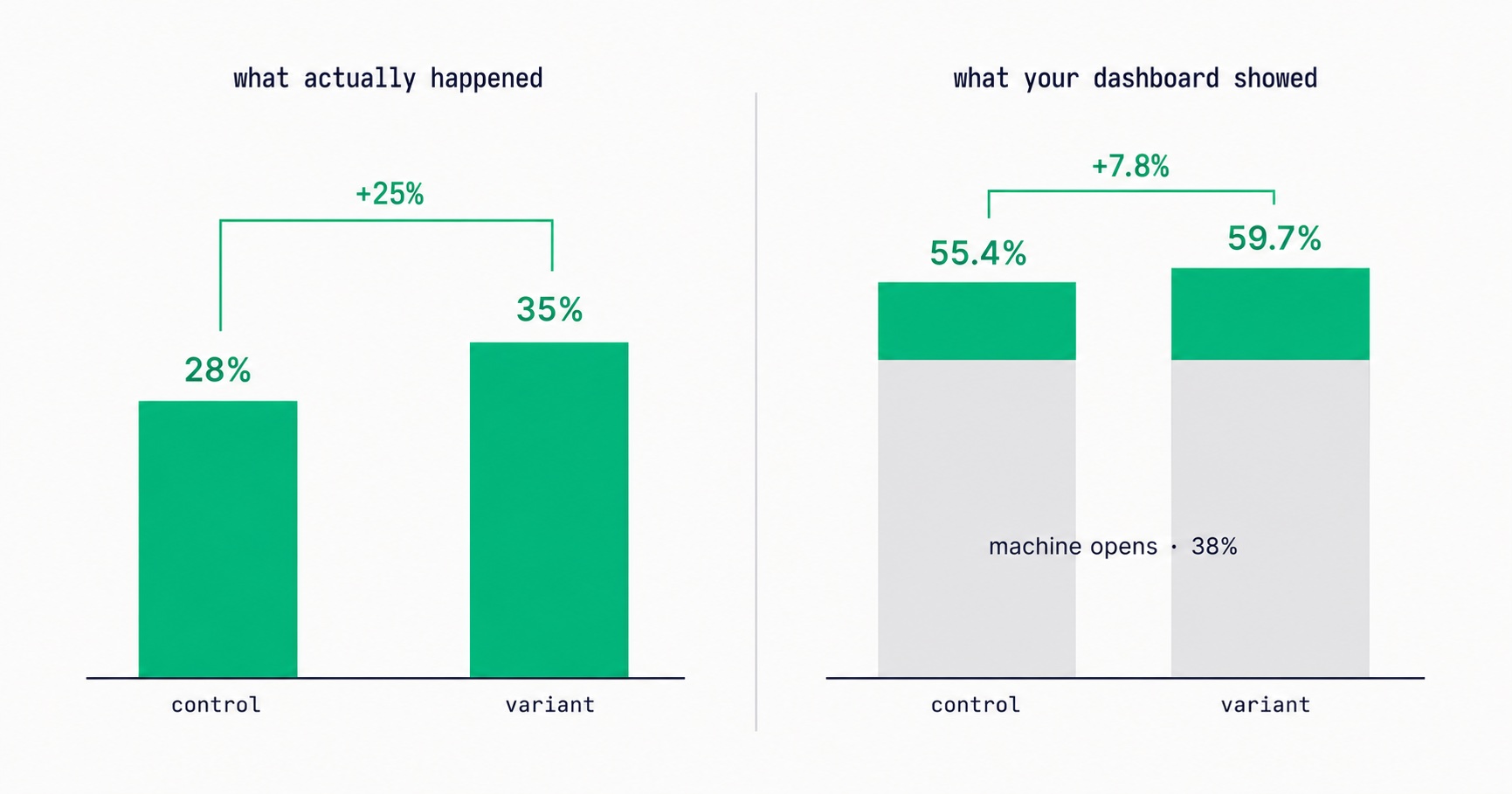
Every article about Apple Mail Privacy Protection says open rates are unreliable. None of them explain the part that actually changes your decisions: MPP doesn't add random noise, it systematically compresses the measured gap between two subject lines by roughly 3x — which is why so many creators ran good tests, saw flat results, and concluded subject lines don't matter.

Newsletter Reactivation: How to Win Back Inactive Subscribers (With Templates)
Every newsletter has inactive subscribers silently dragging down deliverability. A well-designed reactivation campaign recovers 8–20% of them while identifying the truly unrecoverable. The four-part reactivation sequence, subject lines that break through inbox habituation, the list hygiene logic that improves metrics after removal, and the onboarding system that prevents inactivity from accumulating in the first place.
Newsletter Segmentation for Creators: Send the Right Email to the Right Subscriber
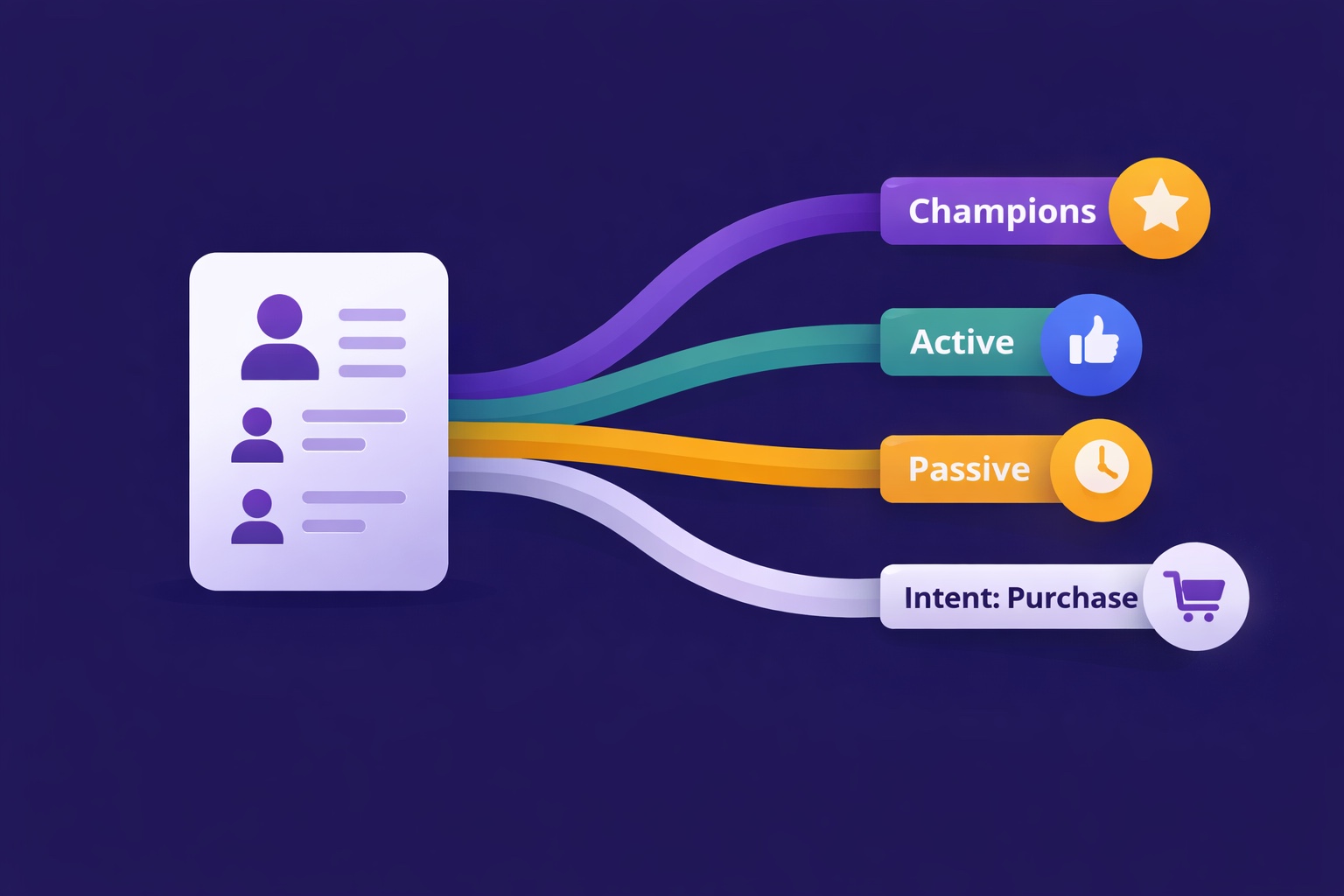
Segmentation is the gap between 25% open rates and 45% open rates — and between 3% paid conversion and 9%. The 5 segmentation types that move the needle, the exact tags to set up from day one, and how to build a behavioral targeting system that runs automatically in InfluencersKit.
Email Deliverability for Newsletter Creators: Why Your Emails Land in Spam (And How to Fix It)
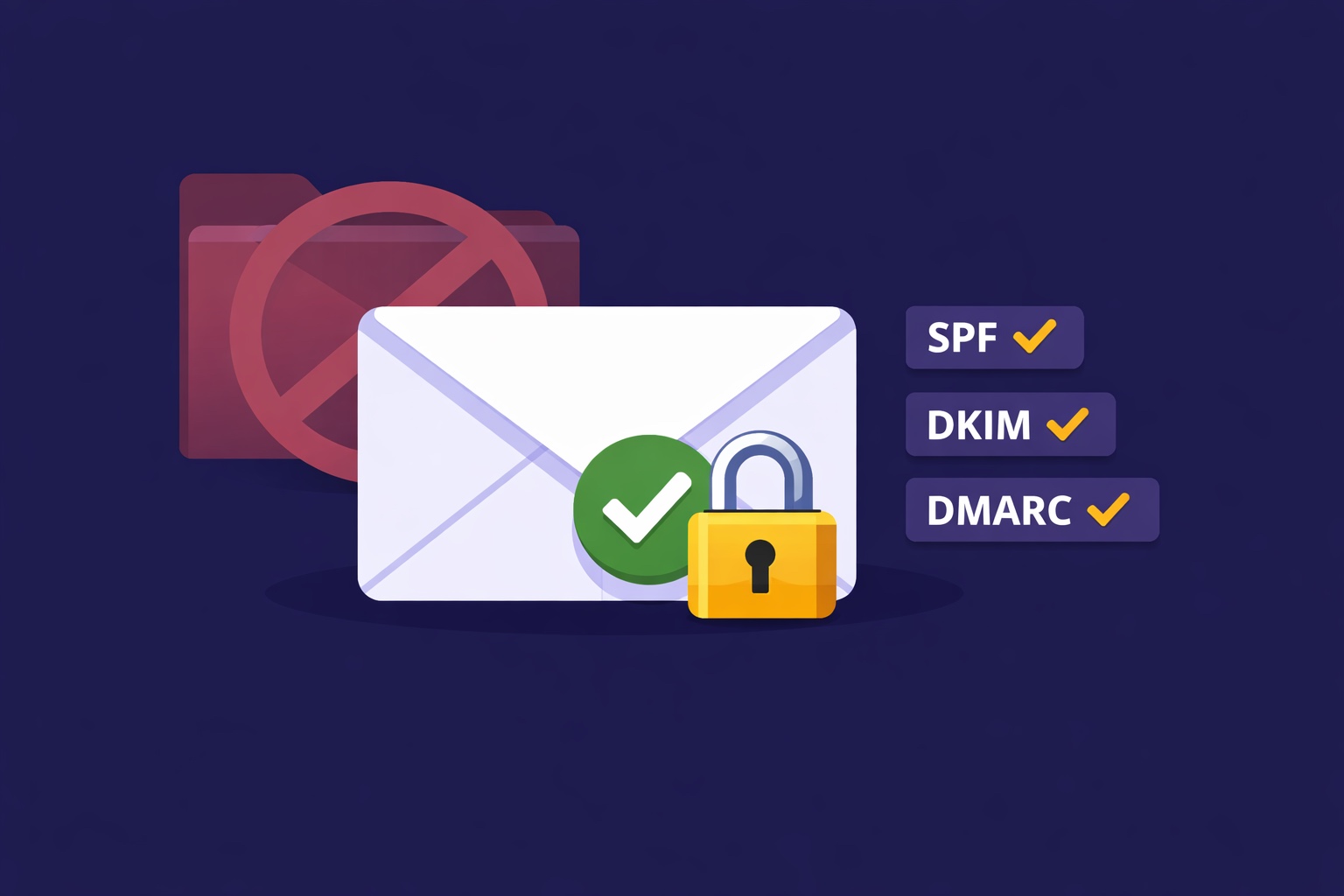
Deliverability is the silent newsletter killer — a 30% spam rate cuts your revenue potential by 30% while your dashboard shows 98% delivered. SPF, DKIM, DMARC in plain English, list hygiene that protects your sender reputation, the tools to diagnose the problem, and a 7-day recovery plan.
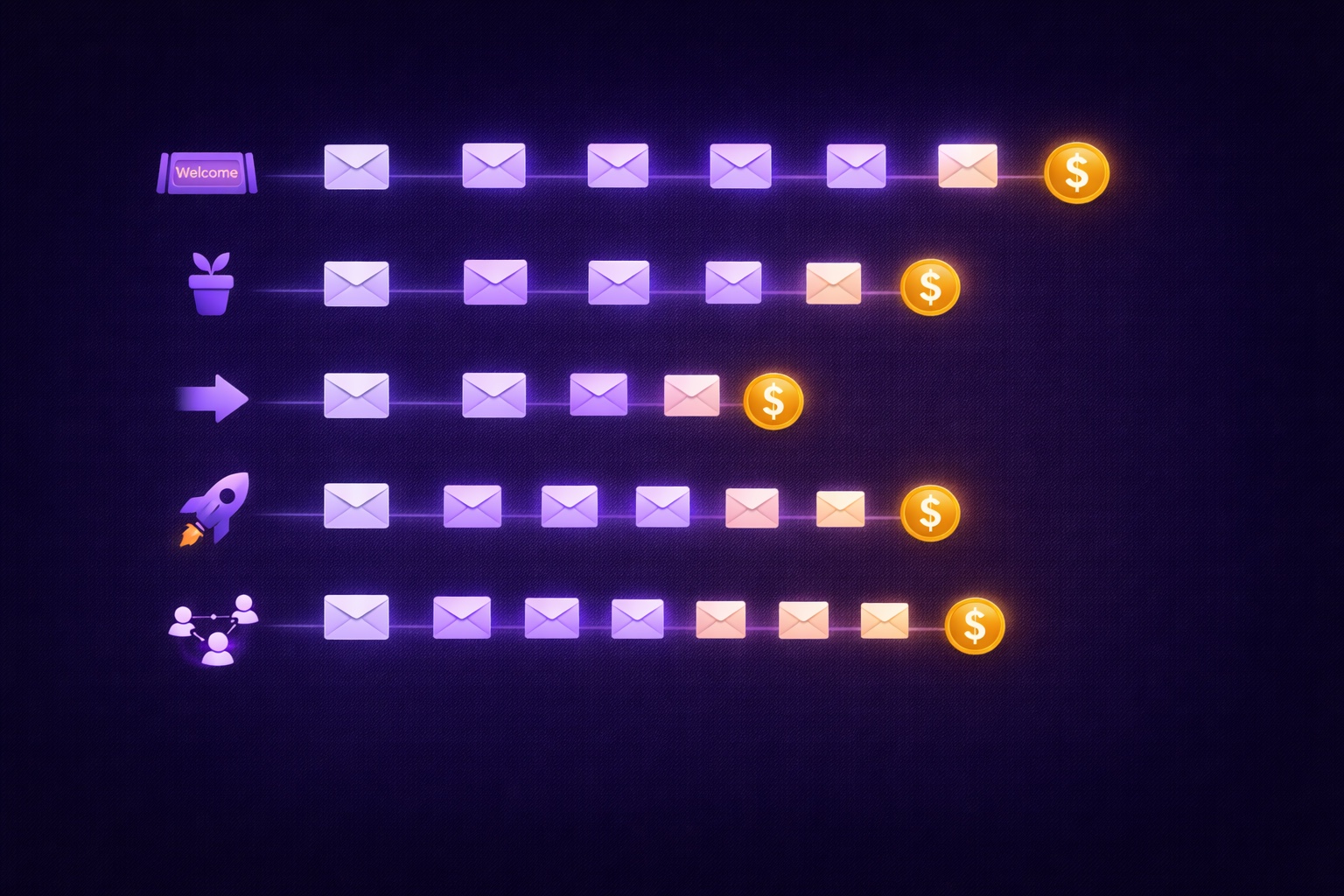
Email Automation for Creators: Set Up These 5 Sequences Once and Earn Forever
Most creators think automation means a welcome email. The reality: 5 automated sequences running simultaneously can generate $2,000–8,000/month passively. The complete guide with exact email timing, subject lines, content frameworks, and setup walkthrough for every sequence.
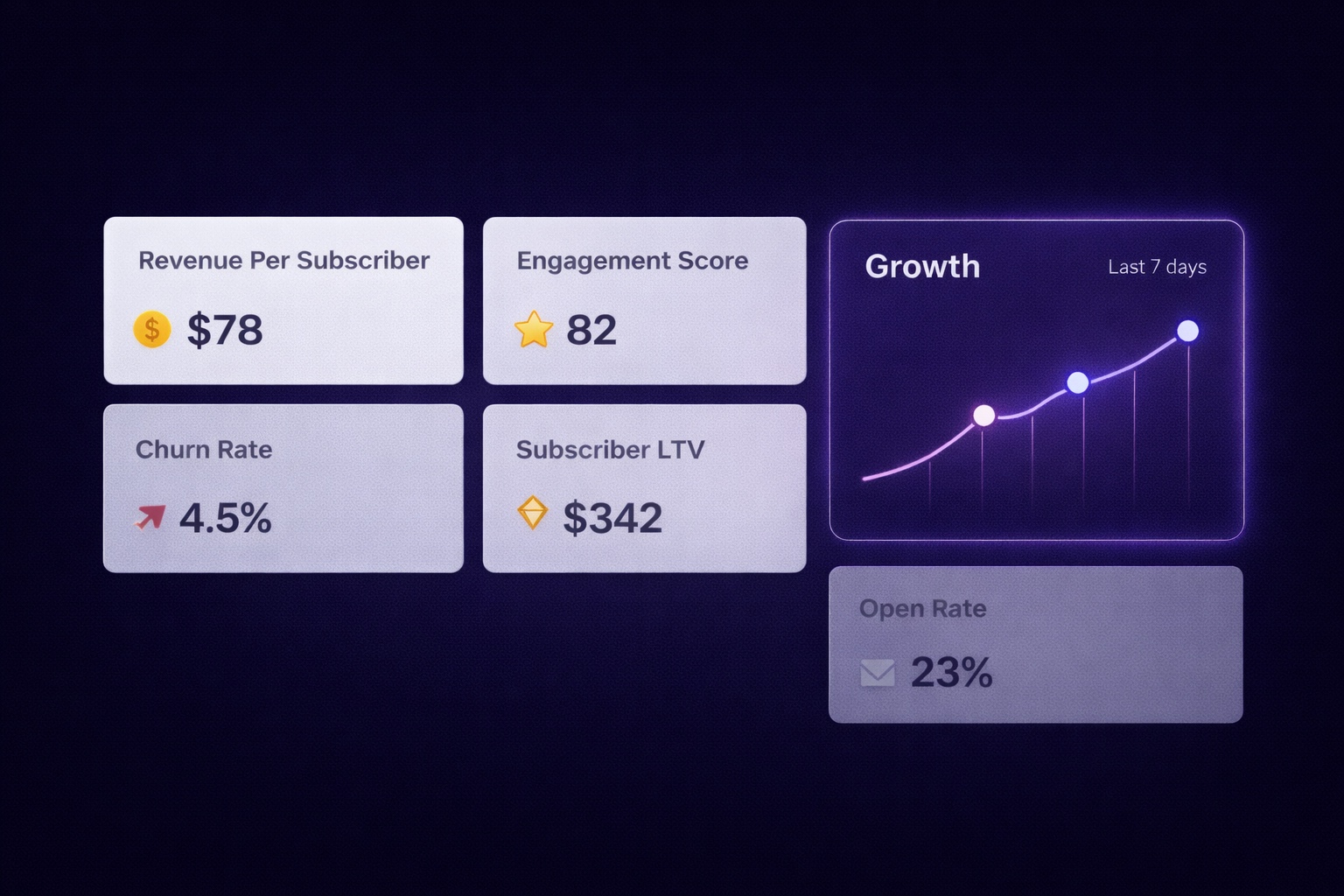
Newsletter Analytics for Creators: The 8 Metrics That Actually Matter (And 5 to Ignore)
A 60% open rate sounds great until you realize it's from 800 people and you're earning $0.08/subscriber. The metrics that actually predict newsletter success — revenue per subscriber, engagement score, churn rate, CPM efficiency, subscriber LTV — and what good looks like at every stage.
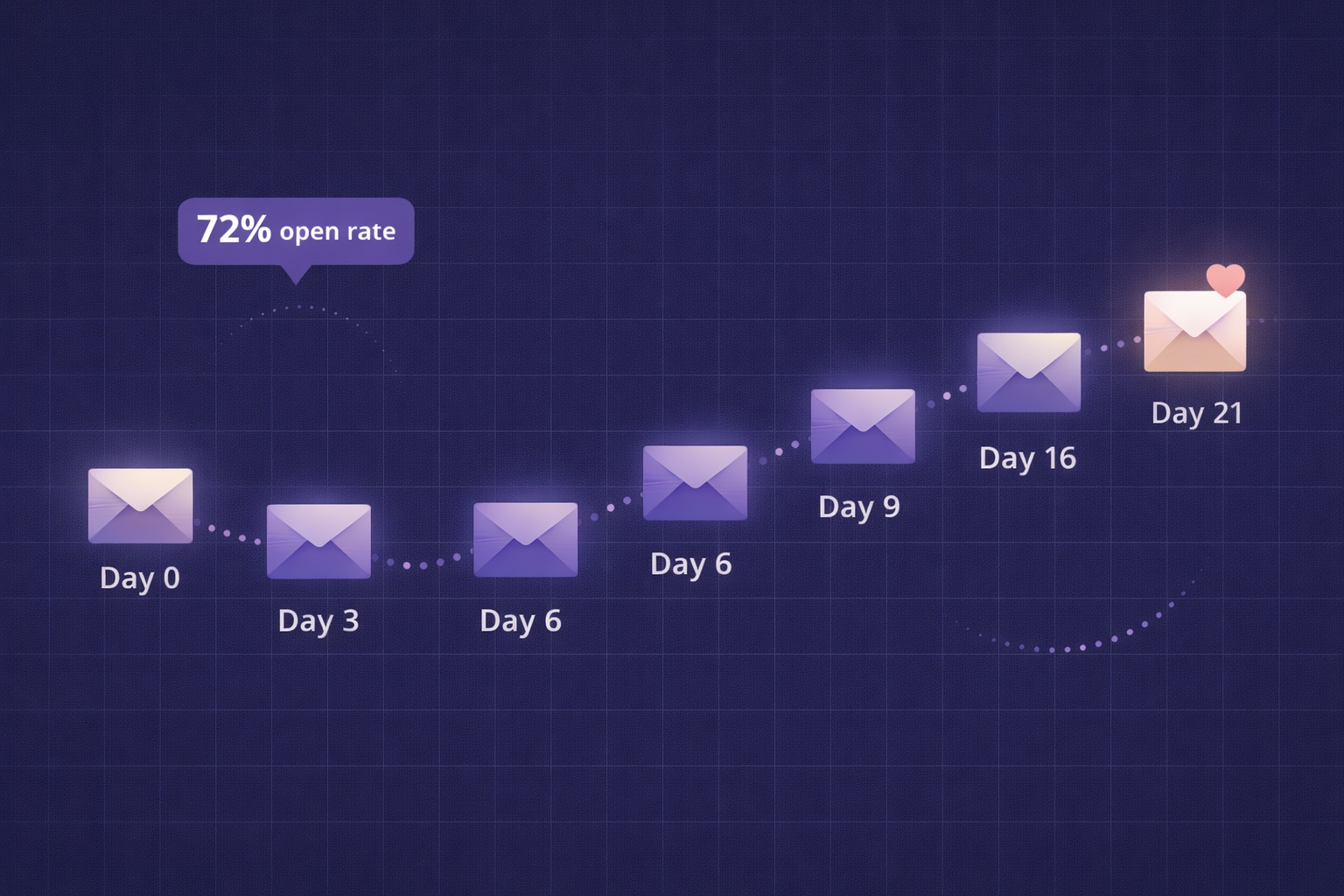
Newsletter Welcome Email Sequence: The 7-Email Series That Turns Subscribers into Superfans
Your welcome email gets a 50-80% open rate — the highest of any email you'll ever send. Most creators waste it with a single 'thanks for subscribing.' This is the exact 7-email sequence with day-by-day timing, subject lines, full content frameworks, and automation setup in InfluencersKit.

Your List Grew 1,500 Overnight. None of Them Are Real.
A signup spike with no launch behind it is usually list bombing. Fifteen hundred fake signups can push a welcome stream to six times Gmail's complaint limit and overstate your list by 30% to sponsors. How to spot them, why Apple Mail hides some, and how to clean up without making it worse.

A Subscriber Is Worth $1.25 a Year. Now Price Your Ads.
Two sponsored slots at a $30 CPM with a 40% open rate earn about $1.25 per subscriber per year. Against a defensible CAC near $2 and cost-per-signup commonly $2-5, most paid acquisition is at or past break-even before you account for paid cohorts converting worse than organic ones.