Newsletter Content Calendar: How to Plan 52 Weeks of Content in One Afternoon
Inconsistency kills newsletters — not bad writing. The complete content calendar system: the 4-category matrix that means you never run out of ideas, month-by-month seasonal hooks for the full year, the repurposing system that turns one idea into six newsletter topics, and the batch-writing workflow to write 4 issues in 3 hours.
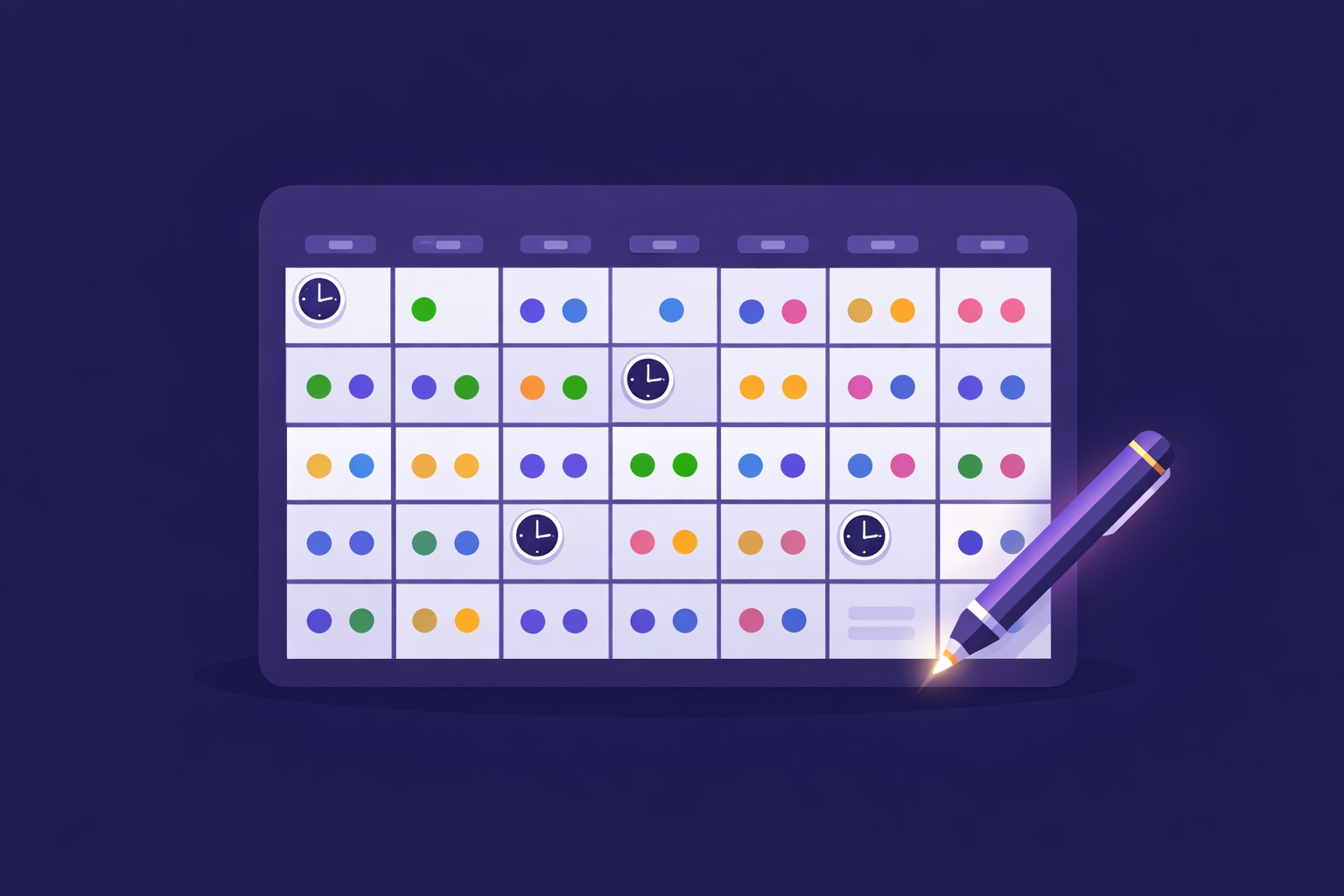
The newsletters that fail don't usually fail because the writing was bad. They fail because the creator ran out of ideas in month three, missed two weeks, missed three, and then quietly stopped — telling themselves they'd restart when inspiration returned. It didn't.
Inconsistency is the single biggest killer of newsletter businesses, and it's almost entirely preventable. The creators publishing reliably for years aren't more creative, more disciplined, or more inspired than the ones who quit. They have a system. They know what they're publishing weeks in advance. They never open a blank document on Tuesday morning with no idea what to write. They've separated the planning work from the writing work — and they do each in its own dedicated time.
This guide is the complete content calendar system for newsletter creators: the four-category matrix that means you never run out of ideas, the full-year seasonal framework, the repurposing system that turns one idea into six, the batch-writing workflow that lets you produce four issues in three hours, and the minimum viable approach for when life gets busy and perfect becomes the enemy of published.
By the end, you'll have the structure to plan 52 weeks of newsletter content in a single afternoon — and actually follow through on it.
Why Consistency Beats Quality Every Time
This is counterintuitive for writers. Craft matters. Quality matters. But for newsletters specifically, the relationship between creator and subscriber is built on reliability more than any single brilliant issue.
Think about it from a subscriber's perspective. They signed up for something they expected to receive regularly. Every time it arrives — even if that particular issue is merely good rather than exceptional — it reinforces the expectation and the relationship. Every time it's late or missing, it introduces doubt: Is this still active? Did I miss something? Should I stay subscribed?
The compounding math of consistency vs. quality:
Creator A: Inconsistent, high quality
Publishes when inspired — sometimes twice a week, sometimes once a month. Average quality per issue: excellent. Monthly churn rate: 4.5% (subscribers lose confidence in reliability). After 12 months at 100 new subscribers/month: 847 subscribers.
Creator B: Consistent, good quality
Publishes every Tuesday without exception. Average quality per issue: solid and reliable. Monthly churn rate: 1.8% (subscribers know what to expect and trust it will continue). After 12 months at 100 new subscribers/month: 1,241 subscribers.
Same acquisition rate. Same total issues published on average. The consistent creator has 46% more subscribers after one year — simply from lower churn driven by reliable publishing.
The deliverability angle:
Consistent sending also protects your email deliverability. Inbox providers use sending pattern regularity as one signal in reputation scoring. Erratic sending — burst of emails followed by weeks of silence — looks more like spam behavior than an established sender. Weekly or bi-weekly sends on a predictable schedule build sending reputation over time.
The 4-Category Content Matrix (Never Run Out of Ideas Again)
Running out of ideas is almost always a framing problem, not an inspiration problem. When creators say they don't know what to write, what they mean is they're trying to invent something from scratch every week instead of choosing from a structured set of content types they've already decided on.
The four-category matrix solves this by dividing your content into four types — each serving a different reader need, each drawing from a different source. With this matrix, you're never deciding "what should I write about?" You're deciding "which category is this week?" — a much easier question.
Category 1: Original Insight (25% of issues)
Your unique perspective, analysis, or opinion on something happening in your niche. This is the hardest category to produce but the highest value — the content that makes your newsletter irreplaceable and shareable. Requires genuine thinking and a clear point of view. Examples: a counterintuitive take on a trend, a data analysis of something you've observed, a framework you've developed from experience.
Frequency: once a month for weekly senders. This is your flagship content — don't force it more often than it comes naturally.
Category 2: Curation + Commentary (25% of issues)
The best things you found and read this week/month — with your specific commentary on each. Not a link dump. Curated selection (5-8 items maximum) with a 2-3 sentence opinion on why each one matters. Source: your actual reading, podcast listening, and content consumption. This category is the fastest to produce and among the most valued by subscribers who trust your editorial judgment.
Frequency: once a month for weekly senders. Works especially well as an end-of-month issue.
Category 3: Educational How-To (35% of issues)
Practical, actionable instruction on something specific in your niche. Step-by-step guides, frameworks with examples, before-and-after comparisons, checklists. Source: your existing expertise — the knowledge you have that your subscribers don't. This category is the highest click-rate category and the best for SEO if you publish these publicly. It's also the easiest to plan in advance because you can brainstorm 50 topics in one sitting.
Frequency: twice a month for weekly senders. The workhorse category.
Category 4: Story / Case Study (15% of issues)
A narrative-driven issue built around a specific example: a creator who did something interesting, a behind-the-scenes look at your own process, a breakdown of something that failed and why. Stories outperform pure information on reply rates and emotional engagement. They're also among the most shareable formats. Source: real people, real situations, real outcomes.
Frequency: once every 6-8 weeks for weekly senders. Less frequent because good stories take finding.
The 4-week rotation:
Week 1: How-To (Category 3)
Week 2: Original Insight (Category 1)
Week 3: How-To (Category 3)
Week 4: Curation + Commentary (Category 2)
Alternate Month 4 with a Story/Case Study every other cycle.
Building Your Annual Content Calendar in One Afternoon
The planning session works because you're making decisions in bulk, not one at a time. Deciding what to write 52 weeks in advance sounds harder than deciding week-by-week — but it's dramatically easier, because you only have to get into "planning mode" once. Here's the exact process.
The one-afternoon content planning session (3-4 hours):
Hour 1 — Category mapping (60 min):
- Open a spreadsheet with 52 rows (one per week) and four columns: Date, Category, Working Title, Source/Notes.
- Fill in the Category column for all 52 weeks using the rotation: How-To → Insight → How-To → Curation, with Story weeks scattered every 6-8 issues. This takes 10 minutes.
- Mark all major dates first: your personal commitments (vacations, events), major industry dates, seasonal peaks in your niche. Color-code these weeks — they'll inform the topic selection.
Hour 2 — How-To topic bank (60 min):
- Open a blank document and set a 20-minute timer. Write every How-To topic in your niche you can think of — don't edit, don't evaluate, just list. Target: 40-60 topics.
- Check your existing content (blog, social, podcast) for topics you've covered elsewhere that deserve newsletter treatment.
- Check your subscriber replies and FAQ patterns — the questions subscribers ask most are your highest-value How-To topics.
- Assign the best 26 topics (you need one every two weeks) to your How-To weeks in the calendar. Seasonally relevant topics go near relevant months.
Hour 3 — Insight and Story planning (60 min):
- For Insight weeks: write 12-15 opinions, takes, or emerging trends you find genuinely interesting in your niche. These don't need to be fully formed — a working title and one sentence on the angle is enough. Assign them to Insight weeks.
- For Story weeks: identify 6-8 potential case studies, people to feature, or personal experiences to share. These are your Story week slots.
- For Curation weeks: these are the easiest — you only need a theme for each month's curation issue. "Best things I've read on [topic] this month" writes itself as you do your regular reading. Just mark the theme.
Hour 4 — Review and buffer (60 min):
- Review the full 52-week calendar. Flag any weeks where the topic feels weak or forced — these are candidates for swapping.
- Add a "buffer bank" of 5-8 evergreen topics that can substitute for any week where the planned topic becomes obsolete or you want to swap for something timely.
- Save the calendar somewhere you'll actually look at it weekly — a pinned Notion document, a Google Sheet, or your InfluencersKit editorial notes.
Month-by-Month Seasonal Newsletter Ideas (Full Year)
Seasonal hooks give your content natural relevance and urgency — and they're available to every creator regardless of niche. Here's a full-year framework with ideas that work across most creator categories.
January — New Year, New Systems
Year in review analysis, annual planning frameworks, goal-setting alternatives that actually work, predictions for your niche this year, the one thing you're doing differently. High-engagement month — new subscribers from resolutions are actively seeking content.
February — Depth Over Breadth
Valentine's adjacent themes (love what you do, relationships in your niche), the one topic you know better than almost anyone, reader survey results and what you learned. Lower acquisition month — focus on depth for existing subscribers.
March — Spring Reset
Audits, cleanups, and reset frameworks, re-evaluation of tools and processes, a creator who pivoted successfully, spring cleaning your approach to [niche topic]. Good month for a list hygiene campaign internally.
April — Contrarian Takes
The conventional wisdom in your niche that's wrong, the thing everyone does that doesn't work, the underrated approach, the overhyped trend. Contrarian content performs well for shares and replies in spring when audiences are engaged.
May — Tools and Tactics
Your actual tech stack, tools you've tried and abandoned, the underrated tool in your niche, a hands-on comparison of competing approaches. High click-rate month — practical content performs especially well.
June — Mid-Year Check-In
H1 lessons and adjustments, mid-year goal review, what you predicted in January vs. what actually happened, a creator who is six months into something interesting. Personal transparency issues generate strong reply rates.
July — Summer Reads
Books that changed your thinking, the long-form piece you keep recommending, a deeper explainer on one foundational concept in your niche. Open rates dip slightly in July — shorter issues or especially high-value content performs better.
August — Behind the Scenes
Your process, your workflow, a day in your life as a creator, what your content creation actually looks like vs. what it looks like from outside. Personal content performs well during lower-engagement summer weeks.
September — Back to Business
Fall reset, Q4 planning, the annual trends that shift in September, a how-to guide on something subscribers have been asking about all year. Strong re-engagement month — open rates climb back from summer dip.
October — Case Studies and Data
A deep breakdown of something that worked (with actual numbers), industry data that caught your attention, the creator who hit a milestone and what drove it. Data-rich content earns backlinks and shares at higher rates.
November — Gratitude and Community
A genuine thank-you to your readers (not hollow — specific about what they've given you), a subscriber spotlight, the community resource or person deserving recognition. Reader-centric content in November builds loyalty heading into year-end.
December — Year in Review and Predictions
The year's most important developments in your niche, your personal highlights and lessons, predictions for next year, the content you're most proud of from this year. Reflection content performs well and sets up January's planning content.
The Repurposing System: One Piece of Content, Six Newsletter Topics
If you have an existing content archive — blog posts, podcast episodes, YouTube videos, social threads — you have a newsletter content library you're not using. Every substantial piece of content you've created can be repurposed into multiple newsletter angles without feeling repetitive, because the format, depth, and framing change each time.
The 6-angle repurposing framework (applied to one source piece):
Example source: a blog post you wrote on "how to grow an email list from zero."
Angle 1 — The Expanded How-To
Take one section of the blog post and expand it into a full newsletter issue with examples and worked illustrations that didn't fit in the original. The blog post covered list building broadly; the newsletter issue covers "the landing page section" in depth.
Angle 2 — The Contrarian Update
"I wrote [X] two years ago. Here's what I got wrong and what I'd say differently now." The original content becomes the reference point for a more evolved perspective. Generates strong replies from readers who remember or find the original.
Angle 3 — The Reader Application
Apply the framework from the original piece to a current example or case study. "I wrote the list-building framework two years ago — here's how one creator used it to go from 0 to 8,000 subscribers in 11 months."
Angle 4 — The Common Mistakes Version
Flip the original how-to into the opposite: "The 7 list-building mistakes I see every week (and the framework to avoid them)." Negative framing typically outperforms positive framing on open rates by 15-25%.
Angle 5 — The Resource Companion
The tools, templates, and resources that support the original topic — a curation issue focused on implementation. "The 9 tools I use for every part of the list-building process I described in [original post]."
Angle 6 — The Q&A Version
Take the most common questions you've received about the original topic and answer them in an issue. "You asked 40+ questions about list building after my post — here are the answers to the most interesting ones."
The arithmetic of repurposing:
10 substantial past pieces of content × 6 angles each = 60 newsletter topics drawn from work you've already done. That's more than a full year of weekly issues. Most creators have 20-50+ pieces of substantial past content. The content library is already there — the system is what was missing.
Batch Writing: Create 4 Newsletters in 3 Hours
Context switching is the productivity enemy of newsletter creators. Opening a blank document, remembering where you left off, re-entering the mindset, writing for an hour, stopping — and then doing it all again next week — is dramatically less efficient than batching. Writers who batch produce 3-4x as much content in the same calendar time because they eliminate the startup cost on every session.
The 3-hour batch writing session:
Before the session (15 min, day before):
- Pull your 4 planned topics from your content calendar
- Gather all source material: notes, links, data points, examples for each issue
- Write one-sentence summaries of what each issue will cover — the thesis, not the full outline
- The next morning: your brain's subconscious has been processing these overnight
Hour 1 (0:00 — 1:00) — First drafts on all 4:
- 15 minutes per issue: write the opening paragraph and full outline only. Don't polish. Don't get stuck. The goal is to establish the structure for all four before going deep on any one.
- This means spending your most creative, highest-energy hour on the hardest part — starting — for all four issues simultaneously.
Hour 2 (1:00 — 2:00) — Complete issues 1 and 2:
- 30 minutes each: you have the structure already, fill it in. Draft without editing — the edit pass comes later.
- Use a timer. When 30 minutes ends, move on whether the issue feels finished or not. You can return in the edit pass.
Hour 3 (2:00 — 3:00) — Complete issues 3 and 4, then edit all four:
- 30 minutes for issues 3 and 4 combined (shorter since you're in the groove)
- 30 minutes edit pass: tighten the opening, cut any paragraph that doesn't carry its weight, check that every issue has one clear CTA
- Schedule all four in InfluencersKit — they're ready
What makes this work:
The batch session works because all four issues share the same mental context — you're in newsletter-writing mode for three uninterrupted hours, not an hour here and an hour there spread across four weeks. The first issue is always the hardest; by the fourth you're at full speed. Total elapsed time: 3 hours + 15 min prep = enough content for a full month of weekly sends.
Managing Your Calendar in InfluencersKit
Setting up your editorial workflow:
- Draft queue: Keep 2-3 issues in draft status in InfluencersKit at all times — your buffer against a week where life intervenes. Drafts written during batch sessions go straight into the queue.
- Scheduled sends: Schedule your next 4 issues in advance every time you complete a batch session. Seeing scheduled sends on the calendar is a psychological reinforcement of consistency — you can see the system working.
- Editorial notes per issue: Use InfluencersKit's issue management to store your working title, category, and key links before you write — so when you sit down to write, you're completing a pre-prepared brief, not starting cold.
- Performance tagging: After each issue sends and you see the open rate and click rate, tag the topic and category in your calendar. Over 6 months, patterns emerge — you'll know which categories drive the highest engagement with your specific audience.
Connecting content to your automation sequences:
Your content calendar and your automation sequences work together. When a How-To issue performs exceptionally well (high opens, high clicks, strong replies), that issue is a candidate for inclusion in your nurture sequence — sending it automatically to subscribers who join months later. Flag your best-performing issues in your calendar for this purpose. Over time, your automation sequences become curated from your best calendar content.
Staying Consistent When Life Gets Busy: The Minimum Viable Newsletter
Every creator eventually hits a week — or a month — where the full-length, well-researched, polished newsletter is simply not happening. The system you build for busy weeks is what separates creators who maintain momentum from those who break the streak and struggle to restart.
The Minimum Viable Newsletter (MVN) — 4 formats for constrained weeks:
MVN Format 1: The Quick Take (20-minute write)
One strong opinion on one thing happening in your niche. Two to four paragraphs. No research, no data, no links except one. Subject line: "A quick thought on [topic]." Shorter than your usual issue — frame it as intentional: "Short one this week — one idea worth considering." Subscribers respect brevity with substance over length without it.
MVN Format 2: The Curated 5 (30-minute write)
Five interesting things from your week: one article, one tool, one quote, one question you're thinking about, one recommendation. Two sentences per item. Takes 30 minutes to assemble if you've been keeping notes as you consume content during the week (which becomes a habit once you know you have a Curation issue every month). This format is often subscribers' favorites despite being the lowest-effort for you.
MVN Format 3: The Honest Update (15-minute write)
Brief, transparent acknowledgment that this is a lighter week, plus what's keeping you busy, plus one useful thing for the reader. Subscribers are humans — they appreciate transparency, and a genuine "busy week" email often generates more replies than a polished how-to. Don't use this more than once every 2-3 months or it loses authenticity.
MVN Format 4: The Evergreen Pull (5-minute write)
When you're truly in emergency mode: pull one of your best past issues from your archive, write a 3-sentence intro noting why it's still relevant today, and republish it. "I wrote this 14 months ago and it's the piece I still recommend most often — worth a second read if you weren't with me then." Most subscribers won't have seen it (subscriber turnover is real), and those who did appreciate the re-emphasis. The total writing time: 5 minutes.
The streak matters more than the issue:
A minimum viable newsletter published on schedule is worth more than a brilliant issue published three weeks late. The streak is the business. Protect it with these formats whenever you need to.
The content calendar system described here pairs directly with the newsletter writing guide — which covers the format and voice decisions that keep readers opening and clicking once you know what you're writing about. And for writers who feel the blank-page problem comes from lack of confidence as much as lack of ideas, the blogger and writer newsletter guide covers how existing content archives become the foundation of a content system that never runs dry.
Plan Once. Publish All Year.
InfluencersKit's content management tools let you keep your calendar, drafts, and scheduled sends in one place — so the system you build in one afternoon runs all year without extra overhead. Draft queue, editorial notes, scheduled sends, and performance tracking are all in the same dashboard as your subscriber list and revenue analytics.
Start your free trial — build your 52-week content calendar this weekend and never face a blank Tuesday morning again.
Stay Updated
Get the latest insights, strategies, and tips delivered directly to your inbox. Join thousands of creators who are building their email communities with our weekly newsletter.
No spam, unsubscribe at any time. We respect your privacy.
Related Articles
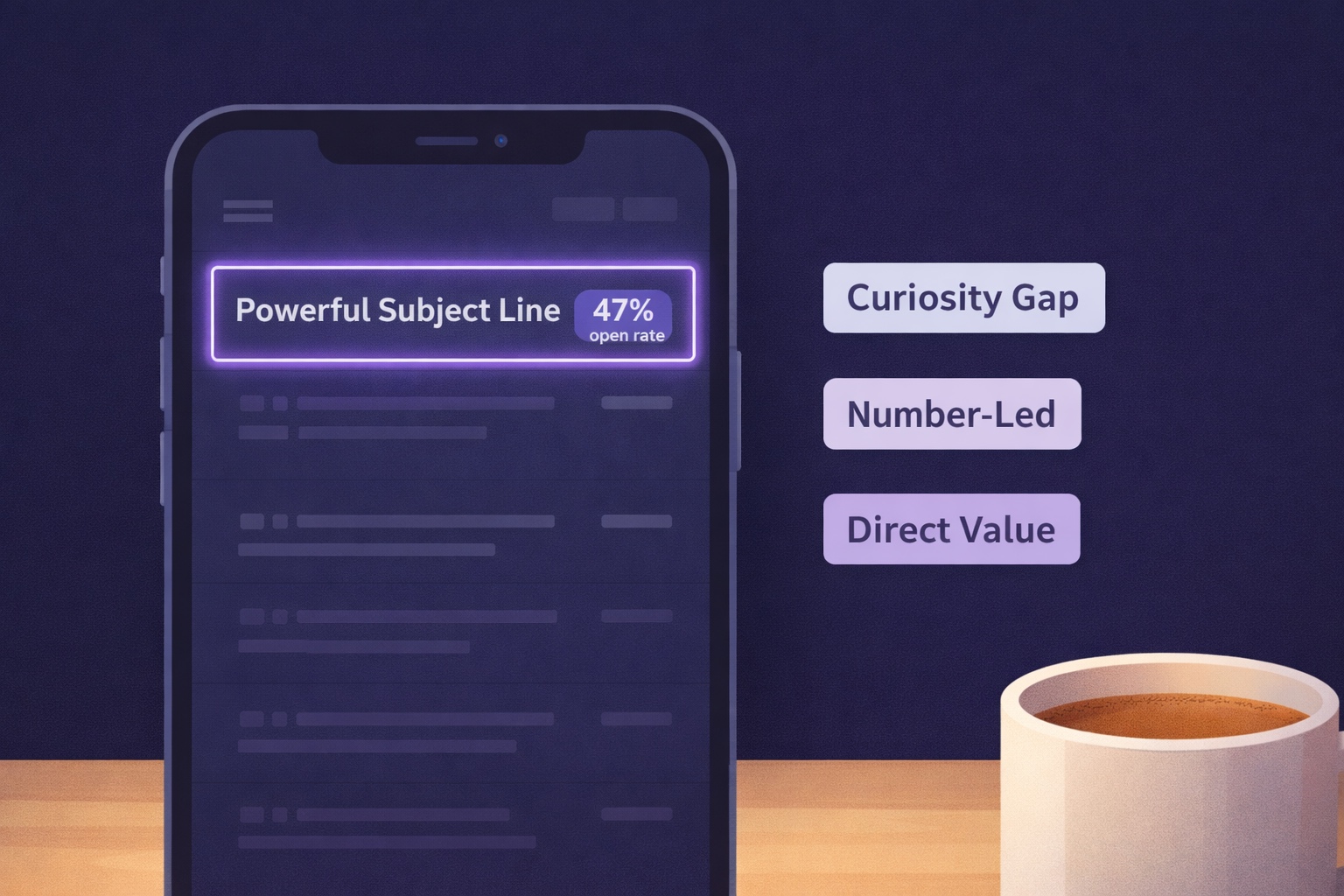
Newsletter Subject Lines: 85 Proven Templates That Get 40%+ Open Rates
Your subject line is the entire game in email. 85 tested templates across 7 categories — curiosity gaps, number-led, personal, contrarian, and more — with the psychology behind why each works and what to avoid.
How to Write a Newsletter People Actually Read: The Format That Gets 45%+ Open Rates
Two newsletters, same niche, same frequency — one gets 48% open rates, one bleeds subscribers. The gap is the writing. This covers the 4 formats that build loyal audiences, subject line formulas, the structure that holds attention, and the 4-hour workflow that keeps you consistent.

Beehiiv vs ConvertKit vs InfluencersKit: Best Email Platform for Creators 2026
Comprehensive comparison of the top 3 email platforms for creators. Real pricing at every tier, feature breakdowns, monetization capabilities, and honest recommendations for different creator types.

Email Marketing for Etsy Sellers: Build a List That Outlasts the Algorithm
Etsy changed its algorithm in 2022, raised fees in 2023, and updated seller standards in 2024 — each time without warning. The only structural protection against marketplace dependency is building a direct customer relationship through email. How to legally collect subscribers as an Etsy seller, the lead magnets that attract buyers, the welcome sequence that drives repeat purchases, and the seasonal campaign structure that makes revenue predictable.