How to Price Newsletter Sponsorships: The Complete Rate Card Guide for 2026
Most newsletter creators undercharge because they don't understand how newsletter advertising is actually priced. CPM benchmarks by niche, the variables that justify rates above the benchmark, how to price small-list sponsorships without CPM, placement tiers, package structures, and how to build a media kit that gets the conversation to yes.

Most newsletter creators who pursue sponsorship revenue undercharge, underdeliver their pitch, and leave significant money on the table — not because their audience isn't valuable, but because they don't understand how newsletter advertising is priced, what variables drive rate premiums, and how to structure deals that reflect the actual value they deliver to sponsors. The newsletter advertising market has real pricing logic behind it, and understanding that logic is the difference between charging $50 per placement because that's what someone offered you and charging $800 per placement because you know what your audience is worth and can make that case confidently.
This guide is the complete rate card and pricing framework for newsletter sponsorships in 2026: how CPM-based pricing works and when to use it, how to price sponsorships when your list is too small for CPM to work in your favor, what variables command rate premiums and by how much, how to structure placement packages, and how to build a media kit that gets the conversation to "yes" rather than ending at "send me your rates."
How Newsletter Advertising Is Priced: The CPM Foundation
CPM — cost per mille, or cost per 1,000 impressions — is the pricing metric that newsletter advertising inherited from digital display advertising, and it remains the primary benchmark for large newsletter sponsorship deals. In newsletter advertising, "impressions" typically means opens (not sends), making effective open count the base unit. A newsletter with 20,000 subscribers and 40% open rates has 8,000 effective opens per issue — 8 CPM units.
CPM rates for newsletters vary enormously by niche, audience quality, engagement rate, and placement type. The current newsletter advertising rate benchmarks show a wide range, but the general structure by niche is:
CPM benchmarks by niche (per 1,000 opens, primary placement, 2026):
- Finance, investing, and wealth management: $40–$80 CPM. High-income audiences with direct financial service spending make finance newsletters consistently among the highest-CPM inventory in the newsletter market. Sponsors include wealth managers, fintech products, trading platforms, tax services, and premium subscription products.
- B2B SaaS and technology: $35–$70 CPM. Decision-maker audiences — founders, executives, product managers, developers — command premium rates because B2B purchase values are high and the newsletters that reach them credibly are limited. Sponsors include software products, business services, HR tools, productivity platforms.
- Marketing and growth: $25–$50 CPM. Marketing practitioners are a valuable audience because they control advertising budgets and recommend tools to their organizations. Sponsors include marketing software, analytics platforms, agency services, courses.
- Entrepreneurship and business: $20–$45 CPM. Broad but commercially active audience. Rate depends heavily on the specific audience profile — a newsletter reaching funded founders commands more than one reaching aspiring entrepreneurs.
- Health, wellness, and fitness: $15–$35 CPM. Consumer health audience with strong spending on supplements, equipment, programs, and services. Premium rates for newsletters with strong niche specificity (e.g., sports performance, longevity, women's health).
- Food, lifestyle, and home: $10–$25 CPM. Broad consumer audience. Higher rates for newsletters with demographically specific audiences (high-income households, specific geographic markets) or editorial authority in a premium segment.
- General interest and news: $8–$18 CPM. Least targeted category and correspondingly lowest rates. High volume can compensate, but general interest newsletters compete with premium inventory at a pricing disadvantage.
These are market benchmarks, not fixed rates. Individual newsletter rates depend heavily on engagement quality, audience specificity, and your negotiating position. Treat these as reference points, not ceilings.
CPM Pricing in Practice: Calculating Your Rates
To convert CPM benchmarks into a specific dollar rate for your newsletter, you need three numbers: your subscriber count, your average open rate, and the CPM rate appropriate for your niche and placement type.
The calculation: (Subscribers × Open Rate) ÷ 1,000 × CPM Rate = Placement Price. A business newsletter with 8,000 subscribers, 42% open rate, and a $40 CPM benchmark: (8,000 × 0.42) ÷ 1,000 × 40 = 3,360 ÷ 1,000 × 40 = 3.36 × 40 = $134.40 per primary placement. A finance newsletter with 15,000 subscribers, 38% open rate, and a $60 CPM benchmark: (15,000 × 0.38) ÷ 1,000 × 60 = 5,700 ÷ 1,000 × 60 = $342 per primary placement.
This is the mechanical starting point. The actual rate you charge should be above the mechanical CPM calculation for two reasons: the CPM benchmark reflects the minimum market rate, not the value a well-positioned newsletter can command; and CPM alone doesn't capture the value of engagement quality, audience specificity, and editorial credibility that premium newsletters deliver beyond raw impression counts. The variables that justify pricing above the benchmark CPM are covered in detail below.
When CPM Pricing Doesn't Work: Small List Sponsorships
CPM pricing produces sponsorship rates that feel insultingly low at small subscriber counts. A lifestyle newsletter with 1,200 subscribers, 35% open rate, and a $15 CPM: (1,200 × 0.35) ÷ 1,000 × 15 = 0.42 × 15 = $6.30 per placement. No sponsor and no self-respecting creator will take this seriously.
This is why CPM-based pricing is inappropriate for newsletters under 5,000 subscribers in most niches, and why small newsletter sponsorships require a fundamentally different pricing logic — value-based pricing instead of impression-based pricing. The argument for value-based pricing is straightforward: what you're selling a sponsor is not a number of impressions but access to a specific, trusted, engaged audience with specific demographic and psychographic characteristics. If your 1,200 subscribers are all practicing physicians, you are worth more per subscriber to a medical software company than a 50,000-subscriber general health newsletter is, because your audience has immediate relevance that the larger audience lacks.
Value-based pricing logic for small newsletter sponsorships:
- B2B professional niches (under 2,500 subscribers): $100–$400 per placement. The pitch is not "I have X subscribers" but "I reach [specific professional profile] weekly with a newsletter they read at [open rate]%." The sponsor's cost-per-relevant-impression is the metric, not the absolute impression count.
- High-income consumer niches (under 2,500 subscribers): $75–$200 per placement. Newsletters reaching verifiably high-income households — through survey data, subscriber demographics, or audience profile — can charge premium rates even at small subscriber counts because the audience's spending power makes each impression more commercially valuable.
- Local market newsletters (under 2,500 subscribers): $50–$250 per placement. Local business sponsors value geographic specificity above everything else. A newsletter reaching 800 subscribers in a specific city is worth significant money to a local business whose advertising options are otherwise limited and expensive.
- General consumer niches (under 2,500 subscribers): $30–$100 per placement. Without a clear audience differentiation argument, small general newsletters have limited sponsorship leverage. Affiliate arrangements are often more appropriate than sponsorships below 2,000 subscribers in these niches.
The small newsletter monetization guide covers the full context of when sponsorships make sense versus when other revenue models are more appropriate. The core principle is that sponsorships at small scale require a specific, defensible audience value argument — without it, the conversation about rates is always going to feel difficult because you're asking someone to pay for impression volume you don't have.
Placement Types and Pricing: Primary, Secondary, and Classified
Newsletter sponsorships are not all priced equally because placement position affects both visibility and click-through rates significantly. Understanding the standard placement types and their relative pricing allows you to build a tiered sponsorship inventory that serves sponsors at different budget levels and creates multiple revenue opportunities per issue.
Standard newsletter placement types and relative pricing:
- Primary/Solo placement (top of newsletter, 150–300 words, full section): 100% of your base rate. The primary placement appears after your opening hook or directly below the header — the highest-visibility position in the newsletter. A full-section sponsor gets their message in front of every reader who opens the issue before any editorial content. Click-through rates for well-written primary placements in engaged newsletters run 2–6%. This is the premium inventory and should be priced as such.
- Mid-newsletter placement (50–150 words, mid-section): 60–75% of your primary rate. Mid-newsletter placement reaches readers who have committed enough to read past the opening — a self-selected, more engaged subset of your total opens. Lower absolute visibility than the primary position but often higher intent because the reader is deeply engaged. Some sponsors prefer mid-placement for this reason.
- Classified/Footer placement (25–50 words, brief mention): 25–40% of your primary rate. Brief, lower-commitment placements suitable for sponsors testing newsletter advertising before committing to premium inventory. Useful for filling remaining inventory and for sponsors at lower budget levels.
- Dedicated/Solo send (entire email dedicated to sponsor): 200–400% of your primary rate. A full issue dedicated to one sponsor — typically structured as native content, a sponsored story, or an editorial feature. Rare, high-value, appropriate for major brand partnerships. Reserved for sponsors whose product is genuinely interesting to your audience and who can fund the significant premium appropriately.
Most newsletter sponsorship inventory is sold as weekly primary placements. Building a tiered offering — primary, mid, and classified — allows you to generate more sponsorship revenue per issue (multiple sponsors at different price points) and to convert prospects who aren't ready for your primary rate into the classified tier while you demonstrate value. Read the full newsletter sponsorship guide for the complete prospecting, pitching, and deal structure process.
The Variables That Justify Premium Pricing Above Benchmark CPM
The CPM benchmark is a floor, not a ceiling. Multiple factors justify charging above-benchmark rates, and understanding these variables is how you build a pricing position rather than just accepting whatever rate a sponsor proposes.
Engagement Rate Premium
Open rate is the most significant engagement variable affecting sponsorship value. Industry average newsletter open rates are approximately 25–35% across categories. A newsletter with 50%+ open rates is delivering nearly double the impressions per subscriber compared to an average newsletter. This is not a marginal difference — a newsletter with 10,000 subscribers at 50% open rates generates 5,000 impressions per issue, while a newsletter with 10,000 subscribers at 25% open rates generates 2,500 impressions. The higher-engagement newsletter should charge approximately 2x the rate for the same subscriber count because it delivers 2x the actual impressions.
Click-through rate adds further pricing justification. A newsletter where 8% of openers click sponsored links delivers demonstrably more sponsor value than one where 1% click through. If you have historical CTR data from previous sponsorships or affiliate link placements, include this in your media kit — it's the most direct evidence of the commercial effectiveness of your audience.
Audience Specificity Premium
Audience specificity is the factor most consistently undervalued by creators pricing their own sponsorships. A newsletter reaching specifically defined professionals — by role, industry, company size, income level, or decision-making authority — is worth more per subscriber than a newsletter reaching a broad, undefined audience, because advertisers don't pay for impressions in the abstract; they pay for impressions on relevant prospects.
The specificity premium is largest in B2B contexts. A newsletter read by 3,000 engineering managers at software companies is worth considerably more per subscriber to a DevOps tool company than a general technology newsletter with 30,000 readers, because the smaller newsletter delivers a higher proportion of immediately relevant prospects. Quantify your audience specificity in your media kit: "74% of our subscribers hold director-level or above titles at technology companies," or "82% of our subscribers have personal investment portfolios above $100,000." Survey your audience annually and use the data actively in your sponsorship conversations.
Editorial Authority Premium
Sponsors pay premiums for placement in newsletters where the editorial voice is trusted — where the creator's recommendation or endorsement carries weight with readers beyond the content of the ad itself. This is the "host read" premium in podcast advertising, applied to email: a creator who regularly recommends products and whose subscribers respond to those recommendations is worth more per impression than an ad network placement in the same niche.
Building editorial authority for sponsorship purposes requires consistent, genuine product recommendations over time — not just sponsored placements, but affiliate recommendations, personal tools sections, and direct mentions of products you actually use. When subscribers have repeatedly seen you recommend products that turned out to be good, they give more weight to your sponsored recommendations. This is why the most commercially successful newsletter sponsors consistently find better performance from high-trust editorial newsletters than from high-subscriber-count newsletters with weaker reader relationships.
Content Category and Timing Premium
Certain newsletter issues command higher sponsorship rates because of their specific content — a roundup issue, an annual report, a special feature, or a major breaking news issue that generates higher-than-average open rates. Building "premium issue" sponsorship packages at 150–200% of your standard rate is appropriate when you can demonstrate that specific issue types consistently outperform your standard metrics.
Timing also affects pricing: Q4 (October through December) is the highest-demand period for newsletter advertising across most categories because of holiday marketing budgets and year-end spending. Q1 typically sees reduced demand as marketing budgets reset. Pricing your Q4 inventory at a 20–40% premium to standard rates reflects genuine market dynamics and is a standard practice that sophisticated sponsors expect.
Package Structures: Monthly and Quarterly Deals
Individual issue sponsorships are the simplest deal structure but not the most profitable for either party. Sponsors prefer committed placements over an extended period because they can plan campaigns; you prefer committed revenue over an extended period because it removes the monthly burden of finding new sponsors. Monthly and quarterly packages serve both interests.
Recommended package structures and pricing logic:
- Single issue (test package): Full rate, no discount. This is the sponsor's opportunity to evaluate performance before committing to more. You're providing a service with no guarantee of return business, so no discount is appropriate.
- Monthly package (4 issues): 5–10% discount from single-issue rate. Enough to incentivize commitment without significantly reducing your revenue. A monthly package also gives the sponsor enough impressions to evaluate campaign performance meaningfully — single issues are often too limited for reliable data.
- Quarterly package (12 issues): 10–20% discount from single-issue rate. Three months of consistent placement builds brand familiarity with your audience — the most effective frequency for brand awareness sponsors. The discount reflects your reduced operational overhead (one deal instead of twelve) and the value of predictable revenue. Quarterly packages are the most common deal structure for sponsors who become repeat buyers.
- Annual package (52 issues): 20–30% discount. Reserved for sponsors with large content marketing budgets who want consistent presence in your newsletter. These deals are rare but high-value — an annual primary placement at even a 25% discount represents $30,000+ for a newsletter with $1,000/issue primary rates, delivered as a single committed contract.
- Exclusive category sponsorship: 50–100% premium over standard rate. In exchange for a higher rate, you agree not to feature competing products for the contract period. Valuable to sponsors in competitive categories (fintech, SaaS, supplement companies) who don't want their ad adjacent to competitor promotions. Only offer this for categories where you actually have multiple sponsor options — otherwise it's a premium on something you'd provide anyway.
Building Your Media Kit: What to Include and How to Present It
Your media kit is the document that converts a sponsor's initial interest into a pricing conversation. A poorly structured media kit — one that leads with subscriber count and stops there — loses sponsors who would have been willing to pay premium rates if they'd understood the full picture of your audience. A well-structured media kit presents your audience as an asset worth paying for, answers the questions sponsors always ask before they ask them, and makes the pricing seem like a logical outcome of the value evidence rather than an arbitrary number you've chosen.
Media kit structure (in order of presentation):
- Newsletter overview (one paragraph): What the newsletter covers, who it's for, how often it publishes, and why readers subscribe. This frames everything that follows — a sponsor needs to understand the editorial context before they evaluate the audience data.
- Audience size and growth: Current subscriber count, 3-month and 12-month growth rates. Growth trajectory matters because it signals momentum and an improving return on a long-term partnership.
- Engagement metrics: Average open rate (compare explicitly to industry average to contextualize the number), average click rate, and any historical CTR data from previous sponsored placements. Use 90-day averages rather than single-issue numbers to present a stable picture.
- Audience demographics: Every data point you have about who your subscribers are. Job titles, industries, company sizes, income levels, geographic distribution, education level — whatever is relevant to your niche. Survey your audience twice yearly and update this section with each survey. "Our audience is engaged professionals" is worthless; "68% of our subscribers hold manager-level or above titles at companies with 50+ employees" is something a B2B sponsor can act on.
- Placement options with specs: Clear description of each placement type, including word count, image requirements, link allowance, and placement position in the newsletter. Sponsors need this to brief their creative team.
- Rate card: Your rates clearly stated for each placement type and package duration. Do not bury this or make the sponsor ask for it — transparency accelerates the deal process and filters out sponsors whose budget doesn't match your rates before either party invests more time.
- Past sponsors and results (if available): The brand names of previous sponsors signal that your newsletter has been evaluated and found worthy by others. If you have performance data from previous campaigns (CTR, conversion events, sponsor testimonials), include it — this is the most persuasive content in the entire document.
- Editorial guidelines: What types of products you will and won't feature, any niche restrictions, your review process, and how you handle sponsored content (clearly disclosed, written in your voice vs. provided by sponsor). Sponsors appreciate clarity here — it removes a potential point of friction in the deal process and signals editorial professionalism.
The media kit should be a PDF (professional, shareable, printable for internal budget approvals) and a one-pager for initial conversations (the full PDF arrives after a sponsor expresses interest — sending a 10-page document to a cold prospect is a conversion mistake). Keep it visually clean and professionally designed — the aesthetic quality of your media kit communicates the production quality of your newsletter.
Finding and Approaching Sponsors
The most productive sponsor development strategy starts with the products your audience already uses. Your subscribers talk about tools, services, and products that solve problems in your niche — in replies to your newsletters, in communities you're part of, in conversations you have. These are your warmest sponsorship prospects because the product-audience fit is already validated. Email the marketing team or affiliate/partnership team of these companies with a brief, specific pitch: who you reach, what your engagement looks like, and why their product is a natural fit for your audience. A well-optimized sign-up page with clearly stated audience demographics and engagement metrics doubles as a lightweight media kit for initial sponsor conversations — link to it in your outreach as supporting context without requiring the sponsor to ask for more information.
Affiliate relationships are a valuable precursor to sponsorship conversations. If a company already has you as an affiliate and your link is generating conversions, they have performance data proving your audience responds to their product. Taking this to a sponsorship conversation is natural: "I've been referring your product as an affiliate and my subscribers have been converting at [rate]. I'd like to discuss a more formal sponsored placement arrangement." The performance data eliminates the sponsor's primary risk concern — whether your audience responds — before the conversation begins. The full monetization strategy guide covers the affiliate-to-sponsorship escalation path in detail.
Sponsor research tools — Paved, Who Sponsors Stuff, and manual analysis of sponsorship disclosures in competitor newsletters — reveal which companies are actively buying newsletter advertising in your niche. A company that has already bought newsletter advertising in your category has already made the budget allocation decision; you're asking them to add a new placement, not to justify a new category of spend. These prospects convert faster than companies who have never bought newsletter advertising and need to be educated on the channel before they can say yes.
Negotiation: Protecting Your Rates Without Losing the Deal
Sponsors routinely propose rates below your published rate card, particularly on first engagements. How you handle this negotiation determines both whether this deal closes and the baseline that future deals are negotiated from.
The most productive negotiation response is not to lower your rate but to adjust the package. If a sponsor pushes back on your monthly package price, offer a shorter commitment (two issues instead of four) at the full per-issue rate. This maintains your rate integrity while reducing the sponsor's initial commitment size — often the objection is risk-related, not budget-related. A sponsor who tests two issues at full rate and sees results will willingly commit to a quarterly package at a modest volume discount.
If a sponsor genuinely cannot meet your rate, the classified tier is the appropriate alternative — not a discounted primary placement. Discounting primary placements sets a precedent that your published rates are negotiable, which every subsequent negotiation with that sponsor (and through word of mouth, with sponsors they refer) will use as a leverage point. Protecting primary placement rates while offering an accessible entry point at the classified tier is the correct commercial posture.
Know your no-deal point before entering negotiations. The rate below which accepting sponsorship is not worth the operational overhead (writing the ad, coordinating with the sponsor, following up on performance) is roughly equivalent to 20–30% of your standard rate. Below this point, the time cost of managing the sponsor relationship typically exceeds the revenue, and the placement would be better left unsold or used for a product of your own — promoting your paid subscription tier, a digital product, or your referral program. Self-promotional placements in unsold inventory serve your business without requiring the coordination overhead of a third-party sponsor.
Tracking Performance and Delivering Sponsor Results
Sponsors who receive post-campaign performance reports become repeat buyers at meaningfully higher rates than those who don't. A performance report doesn't need to be elaborate — open count at time of send, click count on sponsored link, any conversion events the sponsor tracks through their own analytics, and a brief editorial note on subscriber response (replies mentioning the sponsor, etc.) is sufficient. This communication demonstrates professionalism, builds trust, and gives you the data to make a specific case for renewal: "Your last placement generated 342 clicks at a 4.2% CTR, above my typical 3% benchmark — based on that performance, I'm recommending [renewal package]."
Use UTM parameters (tracking codes appended to URLs) on every sponsored link so that both you and the sponsor can track clicks through their analytics. This is standard practice in newsletter advertising and sponsors who buy regularly will expect it. Your email analytics setup should include the ability to track link-level click data per issue, which enables you to pull the click numbers for sponsor reports without manual counting. Sponsors in specific niches — particularly B2B software and finance — increasingly ask for audience segment data alongside raw click counts, since they want to understand not just how many people clicked but whether those clickers match their target customer profile. Having segmentation data available from your email platform makes these conversations significantly more productive.
Integrating Sponsorships With Your Broader Monetization Strategy
Sponsorships work best as one component of a multi-stream newsletter revenue model, not as the sole revenue mechanism. The risks of sponsorship-only revenue include: seasonal demand variation (Q1 is consistently weaker than Q4), category concentration (if your main sponsor category cuts budgets, your revenue drops), and rate pressure as more newsletters compete for the same sponsor budgets.
Diversifying with programmatic newsletter ads provides base-level monetization that runs automatically regardless of sponsorship activity. Adding a paid subscription tier creates subscriber-sourced recurring revenue that is entirely independent of advertiser demand. Affiliate commissions from products you recommend organically create a third revenue stream that runs even in issues with no direct sponsorship. The combination of all three produces a newsletter revenue model that is resilient to any single revenue source declining. The income breakdowns from real newsletter creators show that the highest-earning newsletters consistently use this multi-stream approach rather than depending on any single monetization model.
The sponsorship management tools in your email platform should allow you to track booked placements, manage sponsor schedules across issues, and pull performance data for reporting. Managing this manually across a spreadsheet and your email interface becomes error-prone once you're running more than two or three sponsors per month — purpose-built tooling saves significant operational overhead at that point and reduces the risk of double-booking placements or missing committed delivery dates.
Built-In Sponsorship Management From Day One
InfluencersKit includes sponsorship workflow tools alongside programmatic ad support, paid subscription management, and the full analytics suite for post-campaign reporting — everything a newsletter running a serious sponsorship program needs in one platform. Explore the monetization features, check the pricing, and compare against dedicated ad network platforms before committing.
Start your free trial — set up your sponsorship infrastructure and send your first media kit this week.
Stay Updated
Get the latest insights, strategies, and tips delivered directly to your inbox. Join thousands of creators who are building their email communities with our weekly newsletter.
No spam, unsubscribe at any time. We respect your privacy.
Related Articles

Newsletter Upsell Strategies: How to Sell Digital Products to Your Email Subscribers
Email converts digital product sales at 40x the rate of social media — yet most newsletter creators undermonetize because they upsell incorrectly. The complete architecture: the 7-email post-subscribe sequence that warms subscribers before the pitch, the four mid-issue CTA formats ranked by conversion rate, dedicated launch issue structure, product-type positioning for courses/templates/ebooks/coaching, segmentation-based upselling, and the non-buyer re-engagement approach that reaches subscribers on their own timeline.

How to Create a Paid Membership Newsletter: Tiers, Pricing, and Content Strategy
Paid newsletters generate revenue that compounds with every subscriber and is immune to algorithm changes. The complete framework: pricing that reflects actual content value, the free-to-paid content split that converts without giving everything away, founding member launch mechanics, retention systems that reduce churn, and the platform fee math that decides how much you actually keep.

Affiliate Marketing for Newsletter Creators: Building a Recurring Commission Base in 2026
The gap between $200/month and $4,000/month in affiliate income usually isn't audience size — it's programme selection (recurring vs. one-time commissions), recommendation quality, and placement architecture. The complete system: which programmes compound, how to integrate recommendations without damaging editorial trust, and the month-by-month build to a passive recurring base.
How to Launch a Paid Newsletter: Complete Step-by-Step Guide for 2026
The paid newsletter market is $2B+ and growing. But most creators launch wrong — wrong pricing, wrong timing, wrong content split. This is the definitive playbook: when you're actually ready, how to price it, the 14-day pre-launch sequence, and why 0% platform fees matter enormously at scale.

Creator Email Marketing: Complete Strategy Guide from 0 to $10K/Month
Step-by-step roadmap to build a profitable newsletter from zero subscribers to $10,000 monthly revenue. Tactical strategies, growth timelines, and monetization milestones for content creators.

Newsletter Sponsorship Guide: How to Make $5,000+/Month from Your Email List
Learn the exact process successful newsletter creators use to land high-paying sponsors, from pricing your placements to building recurring revenue. A complete guide to newsletter sponsorship monetization.
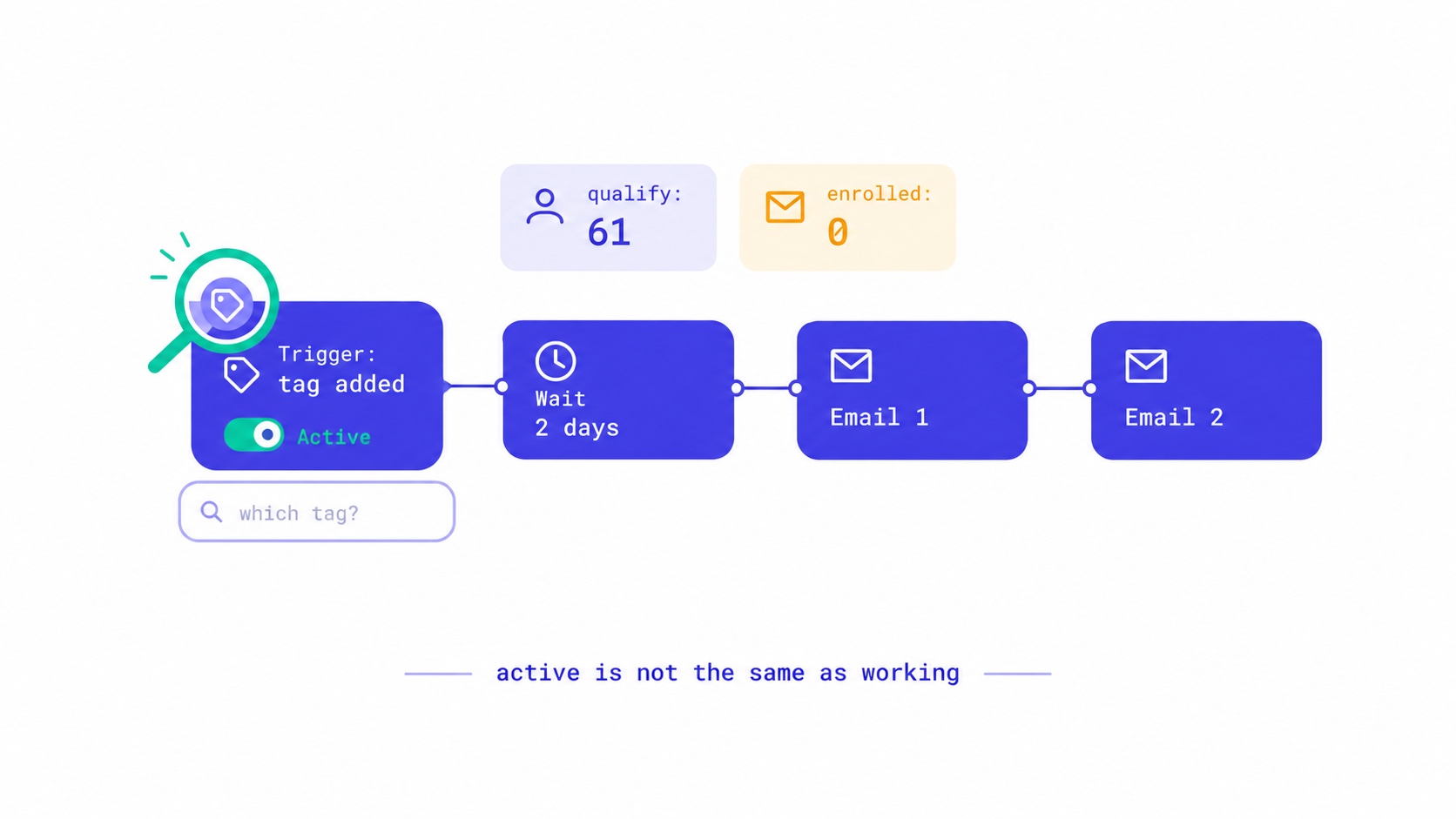
Your Automation Says Active. Nobody Has Received It.
Seven reasons an email automation is switched on but sends nothing, from triggers that ignore existing subscribers to tag triggers with no tag. The qualify-versus-enrolled check that found 28 of our own sequences silent, and a fifteen-minute monthly audit.
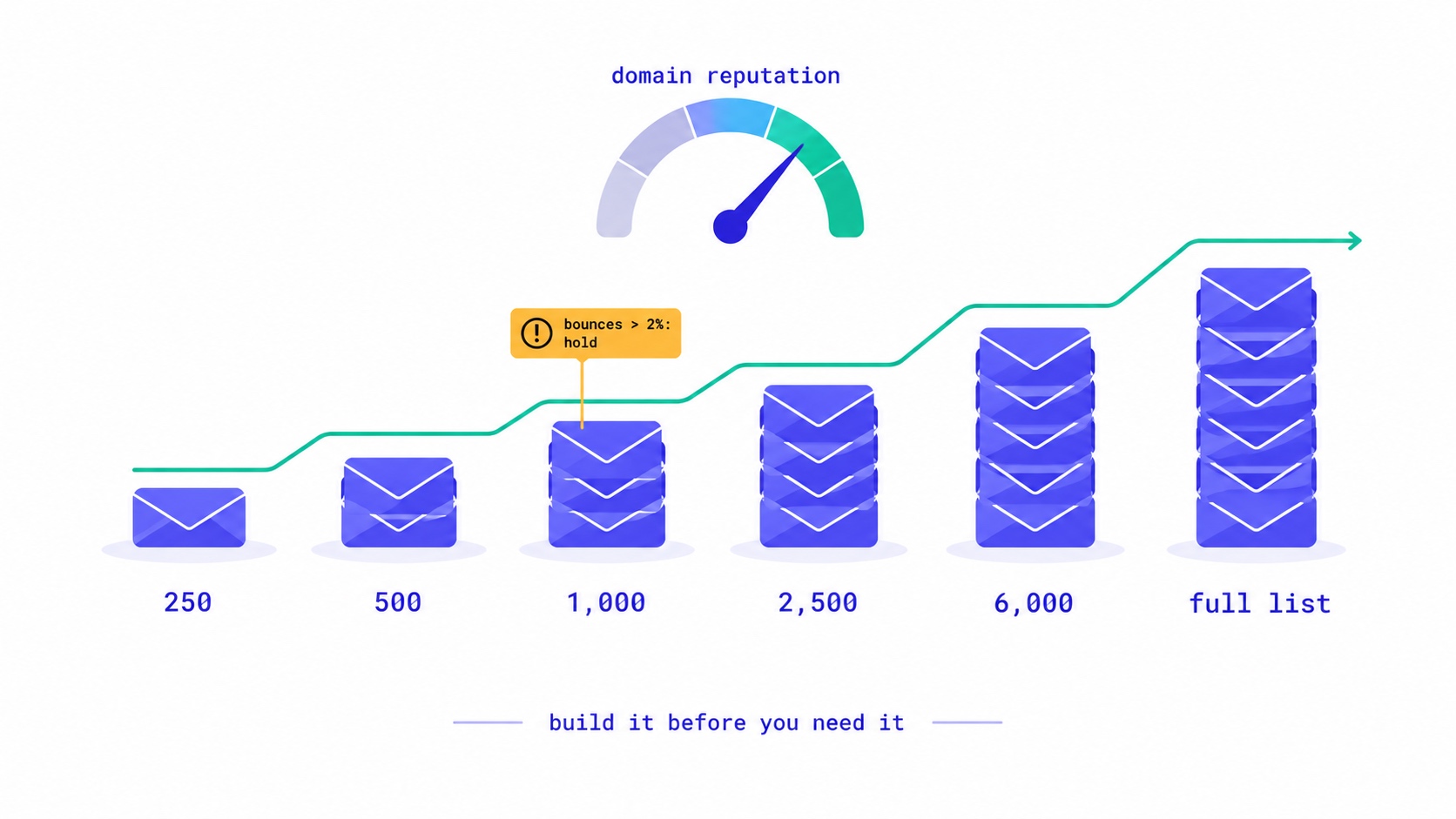
A New Domain Has No Reputation. Here Is How to Build One.
How to warm up a new email domain for a newsletter: authenticate first, send to recent clickers in small batches, and grow only while bounces stay under 2% and complaints under 0.1%. A 20,000-subscriber schedule, the numbers to watch, and what happened when an account skipped it.

Your Readers Can Leave Without Ever Seeing Your Page.
Since 2024, Gmail and Yahoo require one-click unsubscribe. A mail-app button removes the reader instantly, with no page, no options and no reason. Your preference centre now reaches only footer-link leavers, so the 'less, not none' options belong inside the email.

They Unsubscribed, Then Signed Up Again. Now What?
Only the reader can reverse an unsubscribe. A fresh signup is a request, not proof. Why imports, forms and bulk edits quietly resubscribe people, and how to build a confirmation step that a link scanner or a stranger cannot trigger.

Moving Your Newsletter? The List Is the Easy Part.
The CSV moves in five minutes. Sender reputation, unsubscribes, paid subscriptions, automations and old signup forms do not. The order that gets a newsletter to a new platform without losing inbox placement or emailing people who opted out.

A Subscriber Is Worth $1.25 a Year. Now Price Your Ads.
Two sponsored slots at a $30 CPM with a 40% open rate earn about $1.25 per subscriber per year. Against a defensible CAC near $2 and cost-per-signup commonly $2-5, most paid acquisition is at or past break-even before you account for paid cohorts converting worse than organic ones.