How to Create a Paid Membership Newsletter: Tiers, Pricing, and Content Strategy
Paid newsletters generate revenue that compounds with every subscriber and is immune to algorithm changes. The complete framework: pricing that reflects actual content value, the free-to-paid content split that converts without giving everything away, founding member launch mechanics, retention systems that reduce churn, and the platform fee math that decides how much you actually keep.

Paid newsletter subscriptions have produced some of the most resilient creator businesses in the modern media landscape — publications generating $50,000 to $500,000+ per year from reader subscriptions alone, with no dependence on brand deals, ad rates, or platform algorithm changes. The revenue model is structurally compelling: each paid subscriber adds a predictable monthly or annual amount to your income, and that income compounds as your subscriber base grows. When you lose a paid subscriber through churn, the loss is quantified and manageable. When you retain one for three years, their cumulative value far exceeds what any single sponsored placement could generate.
But the majority of newsletter creators who attempt a paid tier launch it wrong — wrong pricing that undervalues the content, wrong tier structure that creates confusion rather than clear decisions, wrong content split that either gives away too much free or charges for too little premium, and wrong launch timing that means they never reach the critical mass of paid subscribers that makes the model self-sustaining. This guide is the complete framework for building a paid membership newsletter that grows: how to price it, how to structure the free-to-paid content split, how to design the tier architecture, how to launch it to your existing list, and how to retain paid subscribers long enough for the model to truly compound.
The Economics of Paid Newsletter Subscriptions
Before designing your paid tier, understand the economic reality of what different pricing levels produce. Newsletter subscription pricing has three conventional bands: low ($5–$8/month), standard ($10–$20/month), and premium ($25–$100+/month for highly specialised professional content). The band you choose determines your required paid subscriber count to reach any given monthly revenue target — and therefore determines how many free subscribers you need to convert.
Monthly revenue by pricing tier and paid subscriber count:
- $5/month (low tier): 100 paid = $500/month | 500 paid = $2,500/month | 1,000 paid = $5,000/month. Requires very high conversion rates to generate meaningful income. The annual equivalent ($60/year) is similarly limiting.
- $10/month (entry standard): 100 paid = $1,000/month | 500 paid = $5,000/month | 1,000 paid = $10,000/month. The most common pricing for general-interest creator newsletters. Achievable meaningful income at 300–500 paid subscribers.
- $15/month (standard): 100 paid = $1,500/month | 300 paid = $4,500/month | 500 paid = $7,500/month. Strong income at 200–300 paid subscribers if conversion rates support it.
- $25/month (premium standard): 100 paid = $2,500/month | 200 paid = $5,000/month | 400 paid = $10,000/month. Appropriate for professional, B2B, or high-value intelligence niches. Requires strong, differentiated paid content that delivers direct financial or professional value.
- $50–$100/month (professional premium): 50 paid = $2,500–$5,000/month | 100 paid = $5,000–$10,000/month. Viable only with genuinely specialised, high-value content for professional audiences who can justify the cost as a business expense.
The practical implication: Pricing at $5/month requires 10x more paid subscribers than pricing at $50/month to achieve the same revenue. For most newsletter creators, the right pricing question is not "what is the minimum someone will pay?" but "what is the maximum my content genuinely justifies?"
Conversion rates from free to paid subscribers typically run 1–5% for general consumer content and 3–10% for professional or high-value-information niches. A newsletter with 5,000 engaged free subscribers at a 3% paid conversion rate has 150 paid subscribers. At $10/month, that is $1,500/month. At $20/month, it is $3,000/month — from the same conversion rate. The revenue impact of pricing discipline compounds at every conversion. Consistently under-pricing paid newsletters is one of the most expensive mistakes newsletter creators make, and it is almost always driven by the fear of rejection rather than by any evidence that the audience will not pay more. The revenue data from creators running paid tiers consistently shows that creators who price at $15–$20 rarely lose meaningful conversion rate compared to those pricing at $5–$8, while generating 2–3x the revenue per paid subscriber.
Pricing Architecture: Monthly, Annual, and Founding Member Models
Most paid newsletters offer both monthly and annual pricing. Annual pricing serves two functions: it generates a large upfront cash payment (valuable for cash flow and for building a buffer against future churn), and it dramatically reduces the effective churn rate because annual subscribers are locked in for twelve months rather than making a monthly cancellation decision. An annual subscriber who might have cancelled in month four after a mediocre month of content does not cancel — they are already paid through the year, and most will renew unless their dissatisfaction is sustained and significant.
The standard annual discount in newsletter subscriptions is 15–20% off the monthly price. At $15/month, a 17% annual discount prices the annual plan at $12.50/month equivalent, or $150/year. The $30 you are giving up per annual subscriber relative to twelve months of monthly billing is more than compensated by the churn reduction and cash flow advantages. Offering annual billing as the default — positioning it as the primary option with monthly as the alternative for those who prefer flexibility — consistently increases the percentage of subscribers who choose annual.
Founding member pricing: a launch accelerator worth using once
A founding member tier — offered exclusively during the paid tier launch window at a permanently discounted price — creates compelling urgency that standard launch sequences cannot match. A newsletter launching at $15/month standard pricing might offer founding member annual access at $99/year ($8.25/month equivalent) for the first 100 or 200 subscribers. The founding member price is permanent for those subscribers — they keep the discounted rate as long as they remain subscribed.
- Why it works: The permanently discounted price creates genuine urgency — once the founding member slots fill, the lower price is gone forever. It rewards your earliest, most loyal subscribers with recognition and tangible financial benefit, which creates positive sentiment around the launch. It also generates meaningful upfront cash that validates the concept before you have committed to a full content schedule.
- Positioning: Frame founding members as early partners in building the paid tier, not just early buyers. Give them access to a founding member channel or a periodic roundtable where they can shape what the paid content covers. This investment in their sense of ownership dramatically improves founding member retention rates.
- Limits: Cap the founding member tier at a specific number (100–200 is standard) so the urgency is genuine and so you are not locked into a permanently discounted price for your entire subscriber base.
The Content Split: What Goes Free vs. What Goes Paid
The content split is the most consequential structural decision in paid newsletter design, and it is the one most creators get wrong. The wrong free/paid split produces one of two failure modes: give away too much free content and there is insufficient reason to upgrade; give away too little or too low-quality free content and there is insufficient reason to subscribe in the first place. The right split creates a clear, compelling value gradient — the free content is genuinely excellent and generates ongoing subscriber growth, while the paid content is clearly, specifically, demonstrably more valuable.
The highest-performing paid newsletter content splits are not just "more of the same" for paid subscribers — they offer a genuinely different type of access or depth. The distinction that converts best is access to the creator's direct thinking, raw analysis, or unfiltered perspective versus the polished, broadly applicable free content. This can take several forms depending on your newsletter's subject area.
High-converting paid content types by category:
- Finance and investing newsletters: Free = analysis of publicly available data, general frameworks, educational context. Paid = your specific current positions, trade rationale in real time, specific security or asset recommendations, direct Q&A access. The paid tier is valued because it provides specific actionable intelligence, not because it delivers "more analysis."
- Business and strategy newsletters: Free = case studies, frameworks, perspectives on industry trends. Paid = original data, proprietary research, access to subscriber community where practitioners share specific problems and solutions, direct Q&A threads with detailed responses.
- Marketing and creative newsletters: Free = tactical breakdowns, curated examples, trend analysis. Paid = teardowns of specific campaigns with original data, access to your templates and frameworks, subscriber-only critique sessions, deep dives on your own results.
- Writing and creative process newsletters: Free = finished essays, published pieces, narrative content. Paid = the working draft, the editing decisions, the rejected angles, the creative process behind the finished pieces, plus direct access to ask questions about the work.
- News and intelligence newsletters: Free = the weekly roundup and surface-level synthesis. Paid = the daily brief, real-time updates, source attribution, access to the full archive, and the editor's speculative commentary that is too edgy for the free audience.
The content split also determines your editorial workflow and production overhead. A paid tier that requires creating entirely new content from scratch doubles your production burden. The most sustainable paid tiers extend what you are already creating — adding depth, specificity, or direct access — rather than creating a parallel publication. If your free newsletter takes four hours per week to produce, your paid tier should add two to three hours of incremental production, not four additional hours. The content calendar system that keeps your free newsletter consistent is the same system that needs to accommodate your paid content without creating burnout.
Tier Architecture: One Tier vs. Multiple Tiers
The simplest paid newsletter structure is one free tier and one paid tier. This is the right starting point for most newsletter creators because it eliminates the decision paralysis that multiple tiers create for both the creator (what goes in each tier?) and the subscriber (which tier is right for me?). A clear binary choice — free or paid — removes friction from the conversion decision and makes your value proposition easy to articulate.
Multiple paid tiers make sense in specific circumstances: when you have genuinely distinct content types appropriate for different audience segments at meaningfully different price points, when you want to serve both individual and institutional buyers at different price levels, or when you want to offer a premium community or access tier alongside a standard content tier. Adding a second paid tier before the first is working well typically adds complexity without proportional revenue benefit.
Three-tier structure that works well for established newsletters:
- Free tier: Weekly newsletter, general content, no paywall. Primary purpose is subscriber acquisition and nurture, not revenue generation.
- Standard paid tier ($10–$20/month or $100–$180/year): Everything free plus: additional weekly or biweekly paid-only issue, access to the full archive, community channel (Slack, Discord, or platform-native community), and subscriber Q&A participation. This tier should convert 80%+ of your paid subscribers.
- Premium paid tier ($50–$150/month): Everything in standard plus: monthly group call with you, direct question submission with guaranteed personal response, early access to any courses or products you produce, potentially a small-group mastermind format. This tier serves 5–15% of your paid subscriber base but generates disproportionate revenue per subscriber.
The premium tier should not be launched simultaneously with your initial paid tier. Establish the standard tier first, identify your most engaged paid subscribers over 3–6 months, and launch the premium tier as an invite-first upgrade for that segment.
Launching Your Paid Tier: The Pre-Launch System
The two most common paid tier launch failures are launching too early (before enough free subscribers trust your content deeply enough to pay for more) and launching with insufficient promotional effort (sending one email, getting disappointing results, and concluding that the audience will not pay). Both failures are avoidable with a structured pre-launch system.
The readiness threshold for a paid tier launch is not a specific subscriber count — it is a specific engagement signal. When your newsletter consistently generates 2+ reply emails per issue from subscribers who express genuine value from the content, when your open rates have stabilised at 35%+ for at least three months, and when you have 1,000+ subscribers who have been on your list for 60+ days — you have the engagement foundation for a paid tier launch. These signals indicate that a meaningful portion of your list has a trust relationship deep enough to potentially convert to paid. Launching before these conditions are met produces discouraging results that are not representative of your newsletter's true paid potential. The complete timing framework is covered in the paid newsletter launch guide.
Pre-launch sequence (14 days before paid tier goes live):
- Day -14 (Teaser issue): Publish an unusually substantive free issue and close it with a one-paragraph mention that you are working on something new for the newsletter. No details, no CTA, just awareness that something is coming. This generates curiosity and begins priming subscribers for a future announcement.
- Day -7 (Interest survey): Send a brief survey (2–3 questions) asking what topics subscribers most want to go deeper on, what would be most valuable to them in a paid tier, and what they would expect to pay. Do not mention the specific price you have already decided on — use the survey to collect interest signals and segment your list based on stated interest in a paid option.
- Day -3 (Founding member announcement): Email your list announcing the paid tier launch in three days. Introduce the founding member pricing and cap, describe exactly what paid subscribers will receive, and include a "notify me" link for subscribers who want to be first in line when the tier opens.
- Day 0 (Launch day): Send the launch email. Lead with the founding member offer and urgency, describe the paid content specifically, include testimonials from beta access subscribers if available, and include a clear, prominent upgrade link.
- Day +3 (Proof email): Send an update reporting how many founding members have joined, what they are already saying about the paid content, and how many founding member slots remain. Social proof from early adopters is the most persuasive conversion content available at this stage.
- Day +7 (Final founding member notice): Send a closing email for the founding member period. Specifically name how many slots remain, restate what founding members receive and what changes when they close, and include a final conversion CTA. Schedule this to go out at a specific time and close the founding member tier at that time.
Paid Subscriber Retention: The Factor That Determines Long-Term Revenue
Paid newsletter businesses live and die by retention. A paid newsletter with a 5% monthly churn rate loses 46% of its paid subscriber base annually — meaning you must replace nearly half your paid subscribers every year just to maintain flat revenue. A paid newsletter with 2% monthly churn loses 21% annually. The difference between 2% and 5% monthly churn determines whether your paid tier builds compounding revenue or perpetually rebuilds from a churning base.
Churn happens primarily for two reasons: subscribers who found the paid content did not justify the cost, and subscribers who encountered a life change (budget constraint, changed circumstances, lost interest) that made cancellation the path of least resistance. You cannot fully prevent the second category, but you can reduce its impact by making annual subscriptions the default and by making cancellation a deliberate action that requires a clear decision rather than a passive drift.
The first category — subscribers who found the paid content insufficient — is entirely within your control, and addressing it requires understanding specifically which paid content is delivering value and which is not. Track your paid subscriber open rates separately from your free subscriber open rates. Compare the open rate of paid-only issues against your free issues: if paid-only content has lower open rates than free content, the value gradient is not working — subscribers are not engaging with the premium content more deeply than the free content. This is the earliest warning signal of a retention problem before it shows up in cancellation rates. Your email analytics dashboard should separate these cohorts automatically if you have segmented your list correctly.
Retention tactics that reduce churn at each stage:
- Onboarding sequence for new paid subscribers: The first 30 days are when paid subscribers are most likely to either become deeply engaged or quietly disengage. A 3-email onboarding sequence specifically for new paid subscribers — introducing the paid-only content, explaining what to expect, and giving them a high-value piece of paid content immediately — establishes the paid relationship on the right footing before the subscription decision fades from memory.
- Monthly value summary: Once per month, send paid subscribers a brief digest of what they received in the past 30 days — specifically the paid content — with a reminder of the upcoming month. This re-anchors their awareness of what they are paying for and why, which is most important for subscribers who have missed issues or who pay on annual plans and stop thinking about the cost.
- Win-back for at-risk subscribers: Identify paid subscribers who have not opened the past 4+ paid issues and send them a specific re-engagement email: "We noticed you have not been opening recently — is there something we could do better?" A personal reply from you to this email is worth sending. The response rate from this kind of direct outreach from creators to their most disengaged paid subscribers is surprisingly high, and the conversations often reveal content improvement opportunities that benefit your entire paid tier.
- Pre-renewal communication for annual subscribers: 30 days before an annual subscription renews, send a "year in review" email to that subscriber summarising what they received across the year and previewing what is coming in the next year. Annual subscribers who receive a renewal reminder with a compelling summary of value received renew at 15–25% higher rates than those who receive no pre-renewal communication.
The Free-to-Paid Conversion Engine: Ongoing Upgrades Between Launches
Your initial paid tier launch converts the subscribers who were ready to pay immediately. A large proportion of your free subscriber base — often 60–80% of those who will eventually become paid subscribers — will not convert in the launch window. They need more time, more proof, or a specific trigger that aligns with their personal decision-making timeline. The ongoing conversion system captures these delayed conversions rather than waiting for the next formal launch event.
The most effective ongoing conversion mechanism is the welcome sequence for new free subscribers — introducing your paid tier in Email 8 or 9 of the sequence after establishing the newsletter's free value but before the welcome sequence ends. This captures a portion of every new free subscriber cohort at the moment of peak engagement, producing a steady stream of paid conversions between formal launch windows.
The second ongoing conversion mechanism is the periodic "upgrade nudge" — a brief mention of the paid tier in 1 of every 6–8 free newsletter issues, typically positioned as an update rather than a pitch: "A quick note — paid subscribers received [specific valuable content] this week that I could not share here. If you want to receive that level of detail going forward, upgrading takes 30 seconds." This maintains awareness of the paid tier without making every issue feel like a sales pitch, and it converts a portion of the free subscriber base continuously over time rather than in single launch spikes.
Platform Considerations: What Paid Newsletters Need From Infrastructure
Running a paid newsletter tier requires platform capabilities that not all email platforms provide natively. The essential requirements are: subscriber segmentation by paid status (so paid-only content can be delivered only to paying subscribers), integrated payment processing (so the upgrade flow is frictionless), access control for paid content (including the web archive, if you publish one), and subscription management tools (allowing subscribers to manage their own billing, upgrade, downgrade, or cancel without contacting you). The absence of any of these creates operational overhead that scales badly as your paid subscriber base grows.
Platform fees on paid subscriptions are also a significant variable. Substack charges 10% of all subscription revenue. On $5,000/month in subscription revenue, that is $500/month — $6,000/year — that goes to the platform rather than to you. Beehiiv charges 2.9% on paid subscriptions plus standard Stripe processing fees. Platforms with 0% platform fees on paid subscriptions, like InfluencersKit, keep your entire paid subscription revenue working for your business rather than a percentage flowing to the platform. At $5,000/month, the difference between a 10% platform fee and 0% is $500/month — $6,000/year that compounds directly into your newsletter's revenue rather than being paid to infrastructure. The Substack vs. InfluencersKit fee comparison and the Beehiiv vs. Substack comparison cover the full fee structure arithmetic in detail.
The paid membership newsletter also benefits from the adjacent monetization streams that subscription-only platforms do not support: programmatic newsletter ads in your free tier, direct sponsorships in free issues, and affiliate commissions that run regardless of subscriber tier. A paid newsletter on a platform that supports multiple monetization streams generates meaningfully more total revenue per subscriber than one on a platform where subscriptions are the only available model.
The paid membership newsletter also benefits from the adjacent monetization streams that subscription-only platforms do not support: programmatic newsletter ads in your free tier, direct sponsorships in free issues, and affiliate commissions that run regardless of subscriber tier. A paid newsletter on a platform that supports multiple monetization streams generates meaningfully more total revenue per subscriber than one on a platform where subscriptions are the only available model.
Growing Your Paid Subscriber Base: Beyond the Launch Window
Your initial paid tier launch converts the subscribers who were ready to pay immediately. A large portion of your free subscriber base will not convert in the launch window — they need more time, more proof, or a specific trigger. The growth strategies that compound your paid subscriber base between formal launch events are therefore as important as the launch itself.
The newsletter cross-promotion strategy that grows your free list also feeds your paid conversion funnel — every new free subscriber who goes through your welcome sequence has the opportunity to encounter your paid tier before they are fully established in the free relationship. Prioritise cross-promotion partners whose audiences are likely to have both the interest in your topic and the willingness to pay for premium content. A fitness newsletter cross-promoting with a nutrition newsletter reaches an audience that has demonstrated willingness to invest in health-related content — a stronger paid conversion profile than a general lifestyle audience.
The complete list-building framework applies to paid newsletter growth with one additional dimension: every new free subscriber represents a potential paid subscriber, which means your free subscriber acquisition cost has a paid conversion multiplier attached to it. A free subscriber acquired at an effective cost of $2 (through content marketing, SEO, or cross-promotion) who converts to a $15/month paid tier generates $180/year. That acquisition cost is 1.1% of the first-year value — an exceptional return on any marketing investment. Building the free subscriber base aggressively, therefore, is not separate from building paid revenue — it is the primary lever for paid revenue growth.
Track your paid conversion funnel metrics monthly: the rate at which new free subscribers convert to paid within their first 90 days, the rate at which long-tenure free subscribers (6+ months) eventually convert, and the average time-to-conversion for paid subscribers. These metrics reveal where your conversion funnel is strong and where it leaks. If new subscriber 90-day conversion is low, your welcome sequence is not introducing the paid tier effectively. If long-tenure conversion is low, your ongoing newsletter is not maintaining sufficient value perception to motivate upgrades. If time-to-conversion is very long (12+ months on average), your free content may be too comprehensive, reducing the marginal value of the paid tier.
Segmentation: Managing Free and Paid Subscribers Correctly
Once you have a paid tier, your subscriber list has two fundamentally different cohorts: free subscribers (who receive your regular newsletter and are potential paid upgrade candidates) and paid subscribers (who receive everything free subscribers receive plus the paid-only content, and who have a commercial relationship with your newsletter that requires different communication). Managing these cohorts incorrectly — accidentally sending paid content to free subscribers, sending free-subscriber content upgrade pitches to people already paying, or failing to distinguish the cohorts in your analytics — creates both operational errors and missed revenue opportunities.
The segmentation framework for a paid newsletter should tag every subscriber at the point of action: new free subscriber (just joined), active free subscriber (been on list for 30+ days, engaged), free subscriber interested in paid (clicked upgrade link but did not convert), paid subscriber (active subscription), and lapsed paid subscriber (cancelled, eligible for win-back campaign). These tags allow you to send the right communication to each cohort automatically through your automation sequences — welcome sequences for new free subscribers, upgrade nudges for engaged free subscribers, onboarding sequences for new paid subscribers, and win-back sequences for lapsed paid subscribers — without manual management of each individual subscriber relationship.
Built to Run a Paid Membership Newsletter Without Platform Fees
InfluencersKit handles paid subscription management with 0% platform fees, integrated Stripe payment processing, automatic subscriber segmentation by paid status, paid-only content delivery, and subscription analytics — alongside the full newsletter monetization suite including programmatic ads and sponsorship tools. Explore the monetization features, check the pricing, and see the subscriber management tools before deciding.
Start your free trial — set up your paid tier this week and keep 100% of your subscription revenue.
Stay Updated
Get the latest insights, strategies, and tips delivered directly to your inbox. Join thousands of creators who are building their email communities with our weekly newsletter.
No spam, unsubscribe at any time. We respect your privacy.
Related Articles
How to Launch a Paid Newsletter: Complete Step-by-Step Guide for 2026
The paid newsletter market is $2B+ and growing. But most creators launch wrong — wrong pricing, wrong timing, wrong content split. This is the definitive playbook: when you're actually ready, how to price it, the 14-day pre-launch sequence, and why 0% platform fees matter enormously at scale.

Two Newsletters Earn $10k a Month. One Is Worth $100k More.
Same monthly income, very different sale price. Published multiples put paid subscription revenue around 24-42x MRR and sponsorship-supported newsletters closer to 20-32x, which means shifting your revenue mix beats a hard 30% growth year. The four discounts buyers apply, and why they are all decided 12-18 months before anyone makes an offer.
Your Free-to-Paid Rate Is Two Numbers Pretending to Be One
Long-tenured subscribers convert three to five times better than new ones, and later cohorts are acquired more broadly than early ones. Both effects correlate with join date, so they cancel inside your blended conversion rate — and the two situations they describe call for completely opposite responses. The same-tenure comparison that separates them.

Newsletter Upsell Strategies: How to Sell Digital Products to Your Email Subscribers
Email converts digital product sales at 40x the rate of social media — yet most newsletter creators undermonetize because they upsell incorrectly. The complete architecture: the 7-email post-subscribe sequence that warms subscribers before the pitch, the four mid-issue CTA formats ranked by conversion rate, dedicated launch issue structure, product-type positioning for courses/templates/ebooks/coaching, segmentation-based upselling, and the non-buyer re-engagement approach that reaches subscribers on their own timeline.
Affiliate Marketing for Newsletter Creators: Building a Recurring Commission Base in 2026
The gap between $200/month and $4,000/month in affiliate income usually isn't audience size — it's programme selection (recurring vs. one-time commissions), recommendation quality, and placement architecture. The complete system: which programmes compound, how to integrate recommendations without damaging editorial trust, and the month-by-month build to a passive recurring base.

How to Price Newsletter Sponsorships: The Complete Rate Card Guide for 2026
Most newsletter creators undercharge because they don't understand how newsletter advertising is actually priced. CPM benchmarks by niche, the variables that justify rates above the benchmark, how to price small-list sponsorships without CPM, placement tiers, package structures, and how to build a media kit that gets the conversation to yes.

Creator Email Marketing: Complete Strategy Guide from 0 to $10K/Month
Step-by-step roadmap to build a profitable newsletter from zero subscribers to $10,000 monthly revenue. Tactical strategies, growth timelines, and monetization milestones for content creators.
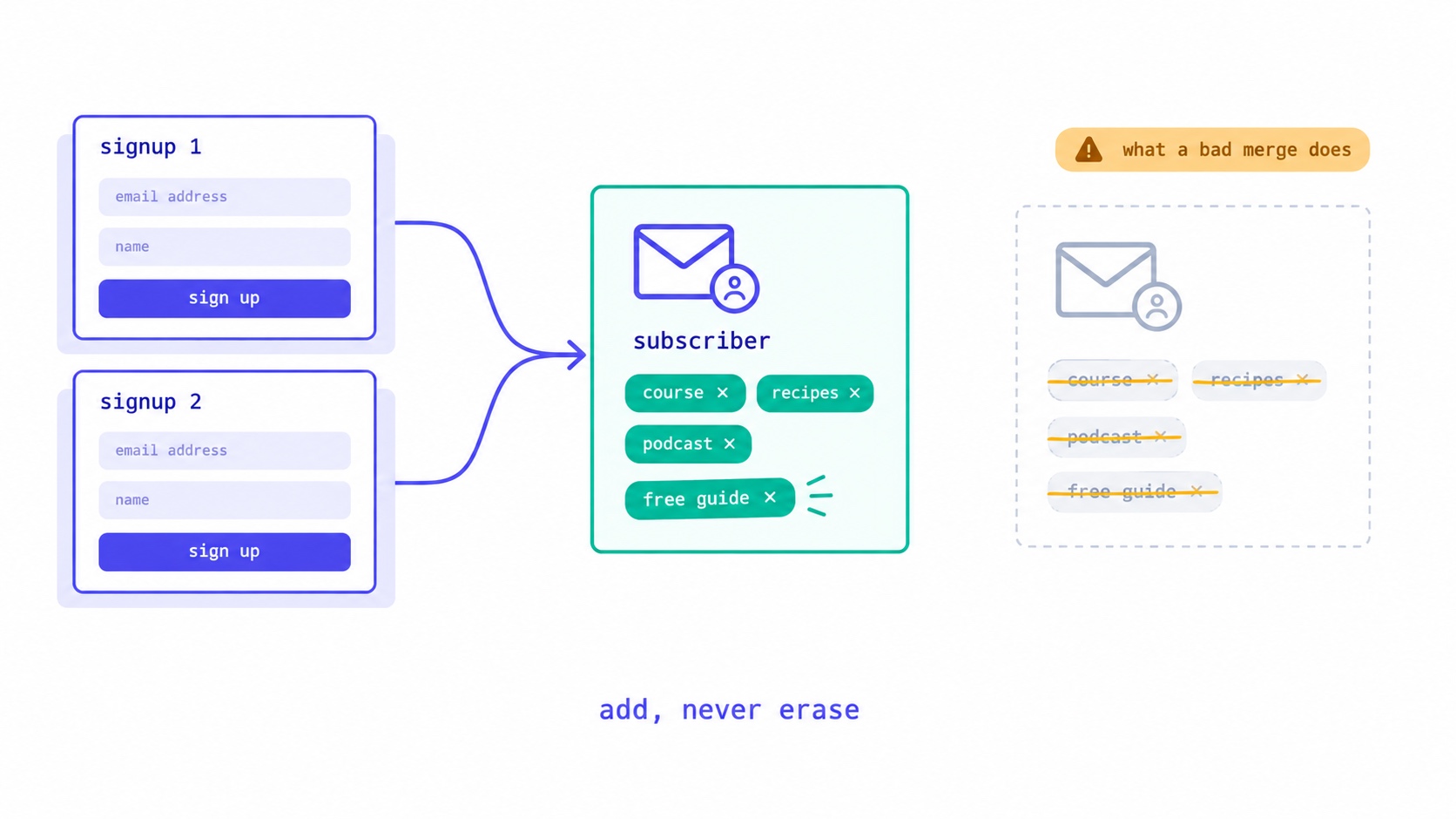
They Signed Up Again. Did Your Platform Just Delete Their Tags?
What should happen when a subscriber signs up twice: one record, add but never erase, unsubscribed readers confirm before returning. The form bug that wiped our subscribers' tags, and five tests for your own platform.
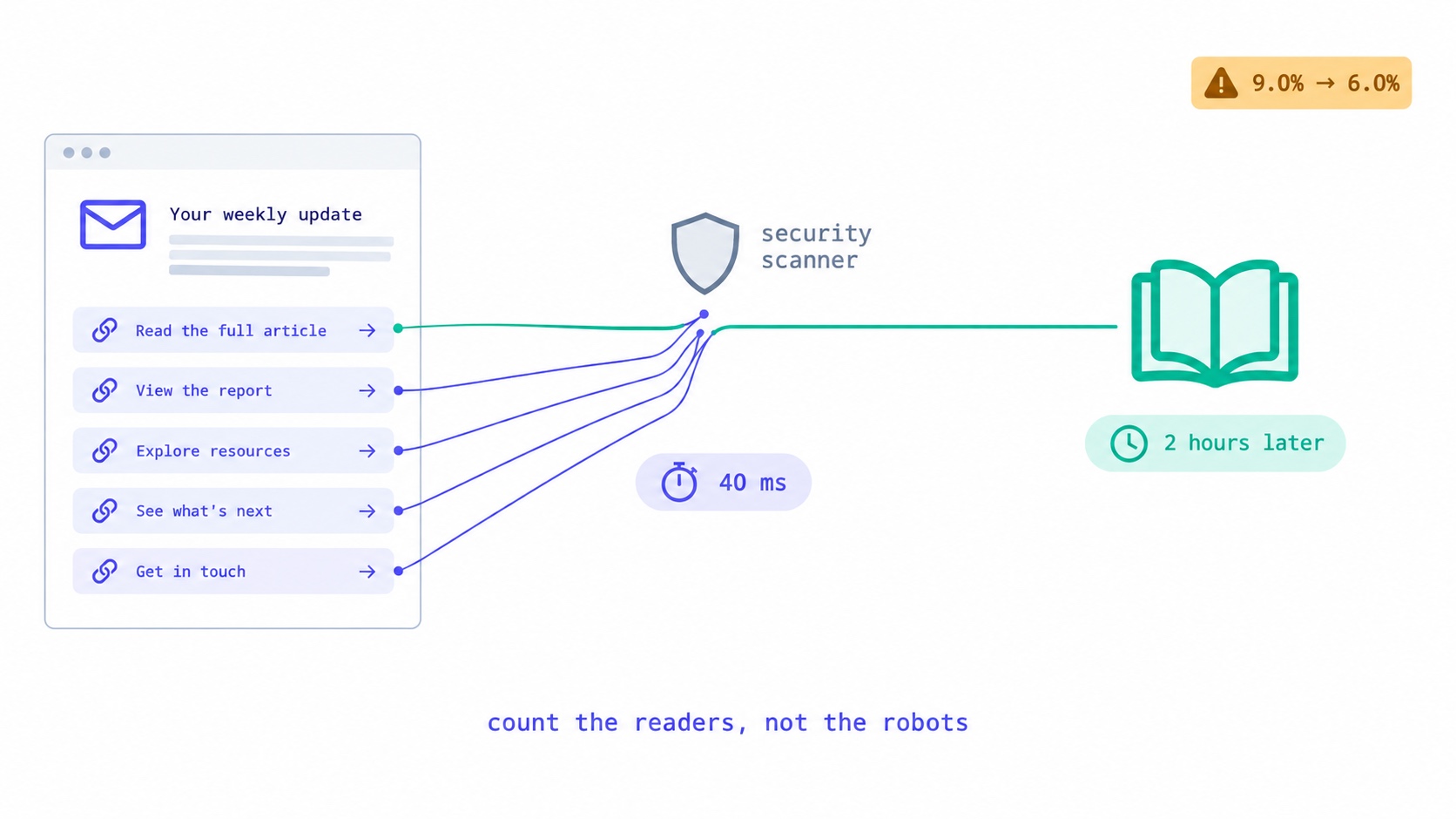
Something Clicked Every Link in Your Newsletter in 40 Milliseconds.
Corporate email security scanners click every link at delivery, inflating newsletter click rates. How to recognise them, the two counting bugs we fixed, the problem we have not solved, and what to tell sponsors.
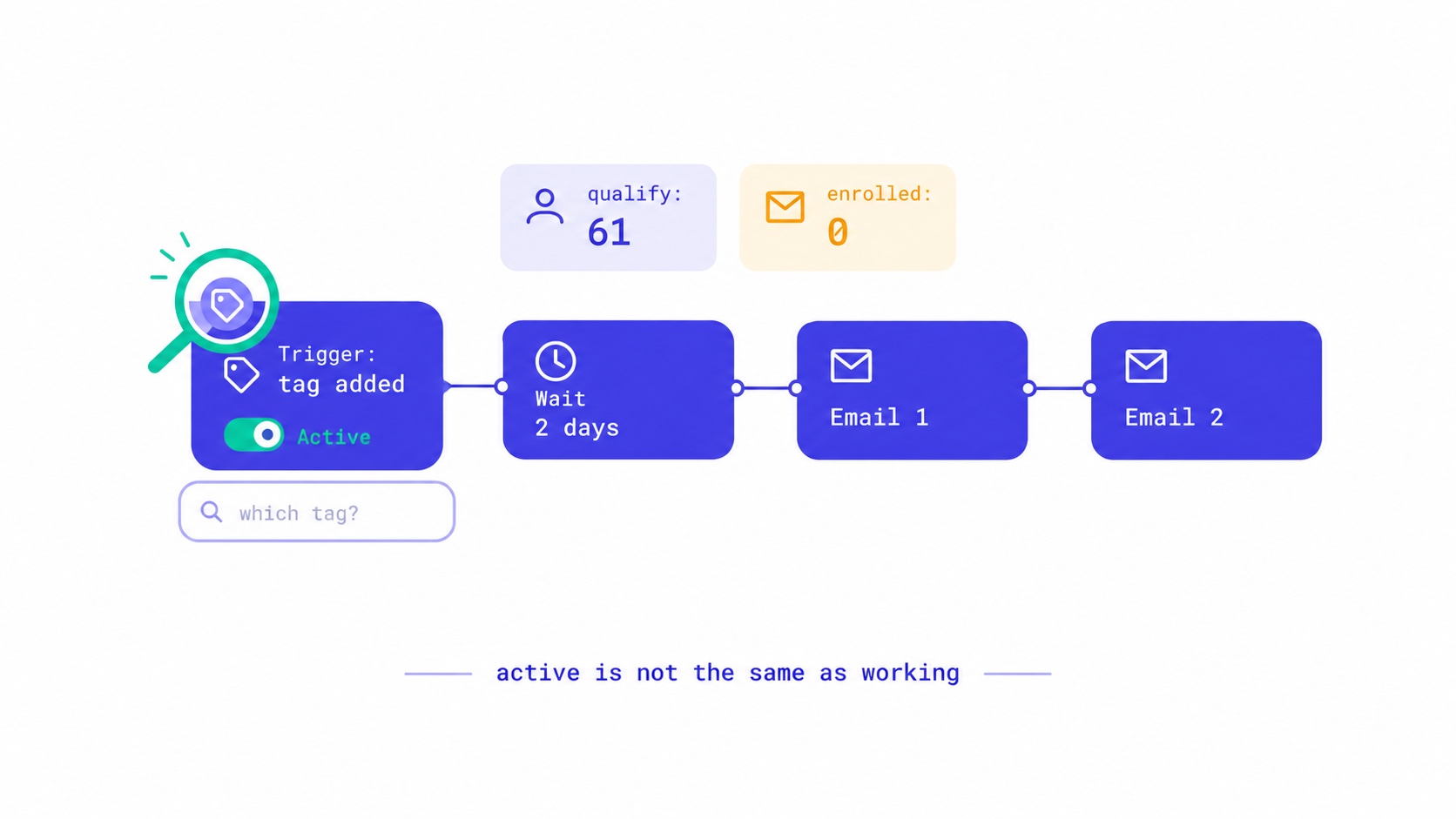
Your Automation Says Active. Nobody Has Received It.
Seven reasons an email automation is switched on but sends nothing, from triggers that ignore existing subscribers to tag triggers with no tag. The qualify-versus-enrolled check that found 28 of our own sequences silent, and a fifteen-minute monthly audit.
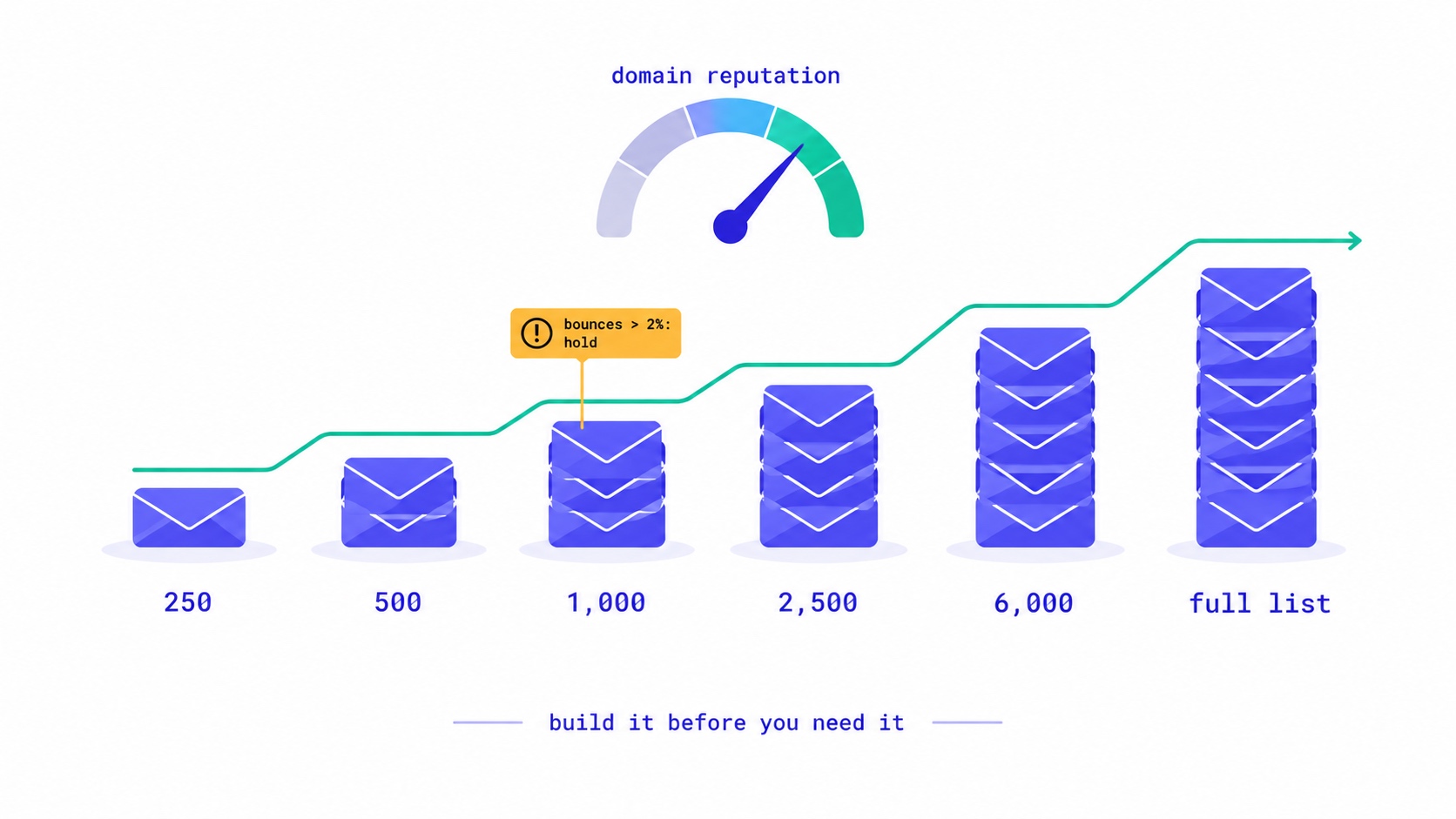
A New Domain Has No Reputation. Here Is How to Build One.
How to warm up a new email domain for a newsletter: authenticate first, send to recent clickers in small batches, and grow only while bounces stay under 2% and complaints under 0.1%. A 20,000-subscriber schedule, the numbers to watch, and what happened when an account skipped it.

Your Readers Can Leave Without Ever Seeing Your Page.
Since 2024, Gmail and Yahoo require one-click unsubscribe. A mail-app button removes the reader instantly, with no page, no options and no reason. Your preference centre now reaches only footer-link leavers, so the 'less, not none' options belong inside the email.